


(Photo by RDNE Stock project via Pexels)
By Dean Murray
Humans were present in North America 10,000 years earlier than previously thought, according to a new study.
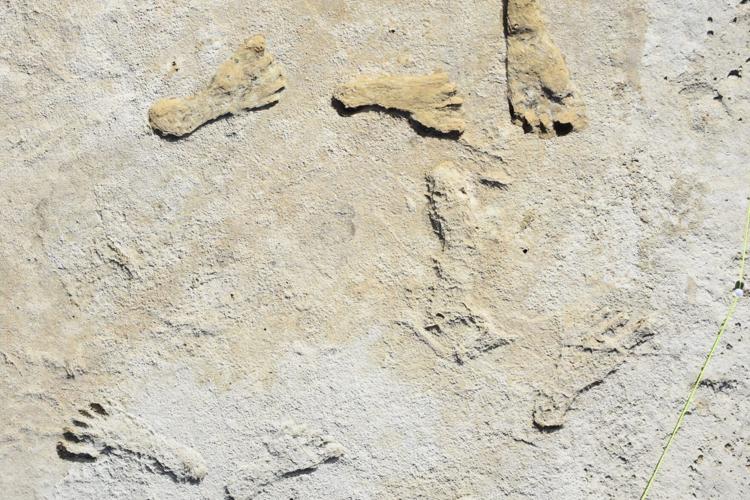
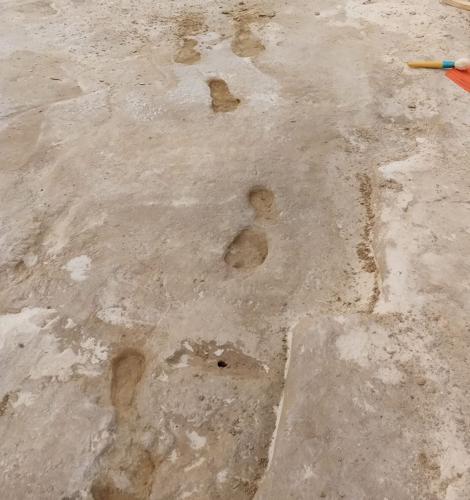
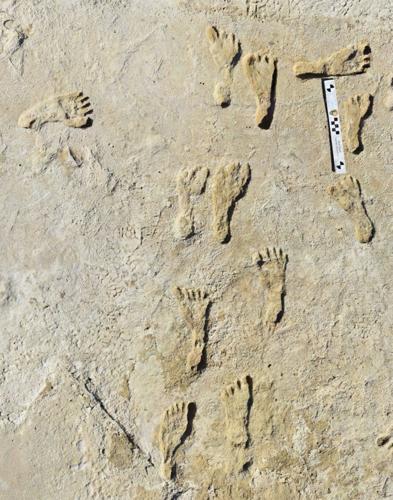
Researchers from the University of Arizona have analyzed fossilized footprints found at White Sands in New Mexico, revealing that people walked the area’s ancient lakebeds between 21,000 and 23,000 years ago.
The research challenges the long-held belief that the Clovis culture, dating to around 13,000 years ago, represented the earliest settlers.

Fossilized footprints were found at White Sands in New Mexico. (NPS via SWNS)
The study, published in Science Advances, used radiocarbon dating of ancient mud layers containing the footprints, and the results were corroborated by independent laboratories.
Three types of material—mud, seeds and pollen—were dated by three separate labs, all producing consistent results.
For the latest study, lead researcher Vance Holliday, a University of Arizona archaeologist and geologist, and Jason Windingstad, a doctoral candidate in environmental science, returned to White Sands in 2022 and 2023 and dug a new series of trenches for a closer look at the geology of the lake beds.







(NPS via SWNS)
Professor Holliday said: "It’s a remarkably consistent record. You get to the point where it’s really hard to explain all this away.
"As I say in the paper, it would be serendipity in the extreme to have all these dates giving you a consistent picture that’s in error."
Windingstad said, "It’s a strange feeling when you go out there and look at the footprints and see them in person. You realize that it basically contradicts everything that you’ve been taught about the peopling of North America."

(NPS via SWNS)
Professor Holliday suggested that early hunter-gatherers may have visited the area briefly, which explains the absence of artifacts or settlements.
The discovery rewrites a significant chapter in the story of human migration to the Americas, offering the earliest direct evidence of people on the continent and prompting fresh debate about how and when the first Americans arrived.
Researchers from Bournemouth University and the US National Park Service excavated the footprints in 2019 and published their paper in 2021.
(0) comments
Welcome to the discussion.
Log In
Keep it Clean. Please avoid obscene, vulgar, lewd, racist or sexually-oriented language.
PLEASE TURN OFF YOUR CAPS LOCK.
Don't Threaten. Threats of harming another person will not be tolerated.
Be Truthful. Don't knowingly lie about anyone or anything.
Be Nice. No racism, sexism or any sort of -ism that is degrading to another person.
Be Proactive. Use the 'Report' link on each comment to let us know of abusive posts.
Share with Us. We'd love to hear eyewitness accounts, the history behind an article.