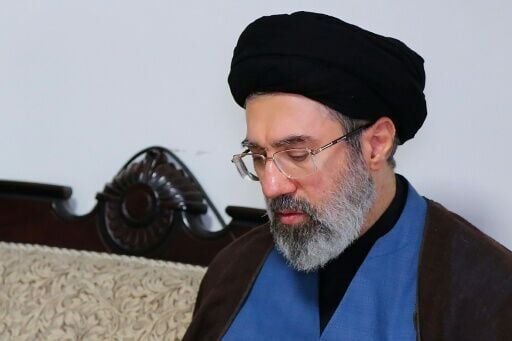
The Iran war sent oil prices soaring on Monday after Tehran, under new leader Mojtaba Khamanei, fired a new barrage of missiles at its Gulf neighbours and signalled that the strategic Strait of Hormuz would likely remain shut.
On the first day in power for Khamanei, the 56-year-old son of slain leader Ali Khamenei, Iranian troops mustered another wave of missile and drone attacks on Saudi Arabia, Bahrain, Qatar, the UAE and Israel.
Another missile was fired at NATO member Turkey, the second such incident in five days, with the alliance's air defences intercepting it before it could hit its target.
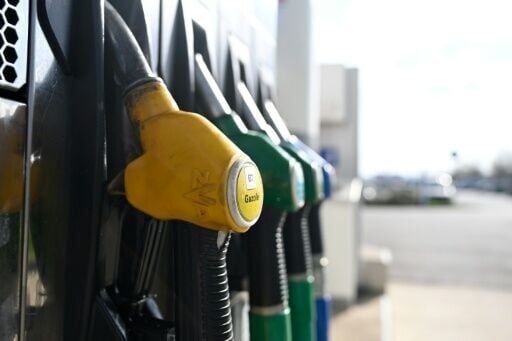
With the Strait of Hormuz off Iran remaining closed to almost all oil tankers, the price of benchmark crude oil contracts rocketed past $100 a barrel on Monday -- their highest levels since Russia's invasion of Ukraine in 2022 -- before edging back slightly.
French President Emmanuel Macron said that his country and its allies were working on a "purely defensive" mission to reopen the strait, through which nearly 20 percent of the world's crude oil usually transits.
The mission would be aimed at escorting ships "after the end of the hottest phase of the conflict", but experts say it would mean putting navy vessels at risk of incoming fire from the nearby Iranian coast.
US President Donald Trump said last Tuesday that American warships would escort oil tankers in a bid to get supplies of crude and liquefied natural gas (LNG) moving again, but no attempts have so far been reported.
Finance ministers from the G7 group of wealthy nations met virtually to discuss releasing strategic oil reserves to try to dampen prices, which are up around 40-50 percent since the US and Israel launched their first attacks.
Following the meeting, however, French Finance Minister Roland Lescure said the group was "not there yet".
US Secretary of State Marco Rubio said on Monday that Iran was "trying to hold the world hostage", but experts had warned for years that Tehran would likely lash out if attacked directly.
As oil prices rise, stock markets around the world are diving, hitting pension funds and savings.
Inflation caused by a sustained oil shock would also push up the price of goods for consumers everywhere.
Queues at petrol stations have been seen as far afield as Vietnam and the Philippines as drivers anticipate higher prices, while Hungary and Croatia in the EU announced fuel price caps.
- 'Brutal aggression' -
Iran faced a fresh blitz of US and Israeli strikes after its Assembly of Experts, the top clerical body, appointed its first new supreme leader in 37 years.
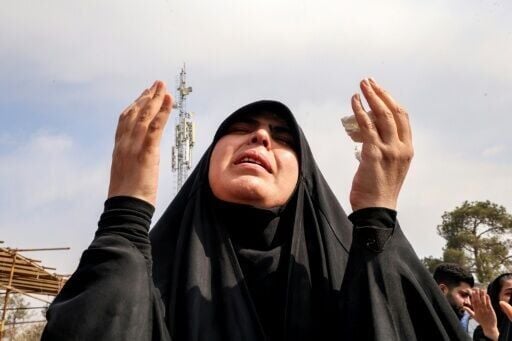
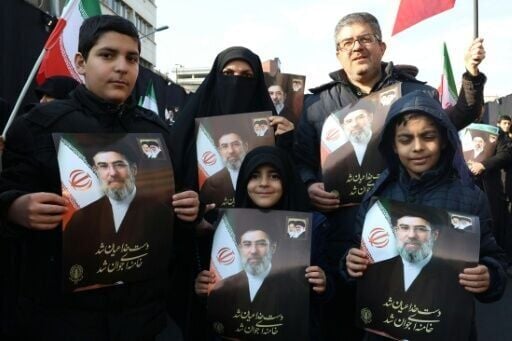
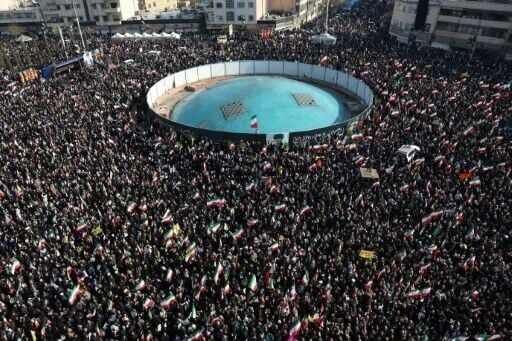
Iranian state media carried images of tens of thousands of people celebrating his selection in central Tehran on Monday, many carrying his picture.
Iran's rebel Houthi allies in Yemen and the Hezbollah armed group in Lebanon pledged allegiance, while Russian President Vladimir Putin on Monday promised "unwavering support".





Unconfirmed US media reports over the weekend said that Moscow has been providing targeting intelligence to the Islamic republic's military.
US President Donald Trump told the New York Post newspaper he was "not happy" about Khamenei's appointment on Monday, after saying on Sunday that "if he doesn't get approval from us he's not going to last long".
In its first official reaction to his selection, Israel's foreign ministry called Khamenei "another tyrant to continue the Iranian regime's brutality".
Ali Ansari, a professor of Iranian history at the University of St Andrews in Scotland, said the new supreme leader was a hardliner who had "been involved in all the most violent repressions that have taken place over the last 15-16 years".
It was possible, but very unlikely, that Khamenei might attempt to make a deal with the Americans and Israelis to end the war, or even take a more modernising approach within Iran, Ansari told AFP.
"But I find it very difficult to imagine because at the moment, the regime is probably thinking 'if we show weakness, we're finished'," he said.
- Oil risks -
Oil traders, policymakers and central bankers are all watching the Middle East for news about Gulf energy infrastructure, which is crucial for the world economy.
After France's leader mentioned plans to reopen Hormuz, Iranian security chief Ali Larijani said security in the strait was unlikely to be restored "amid the fires ignited by the United States and Israel in the region".
About 10 vessels in or near the Strait of Hormuz have come under attack since Iran blocked the waterway in retaliation for the US-Israeli attack.
Following strikes on Bahrain's Al Ma'ameer oil facility that ignited a fire, the country's state-owned energy company Bapco joined its counterparts in Qatar and Kuwait in declaring "force majeure" -- a warning that events beyond its control may lead it to miss export targets.
The Saudi defence ministry said Monday it had thwarted a drone attack targeting an oil field in the kingdom's east, near the Emirati border.
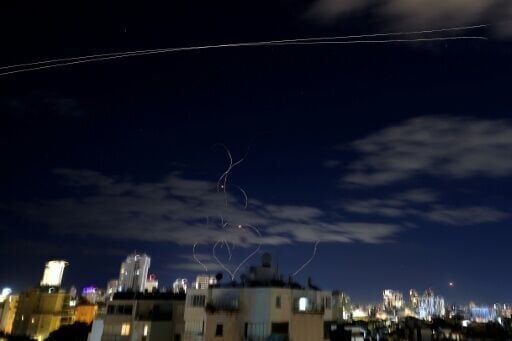
In Israel, around 10 explosions were audible in Tel Aviv after the military announced it had detected missiles inbound from Iran.
At least one Israeli was killed when he was hit by shrapnel, emergency services said.
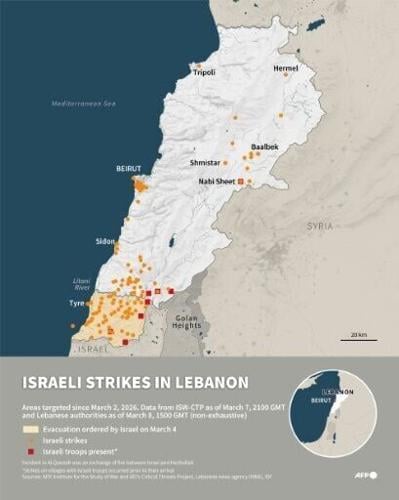
The multi-front war also intensified in Lebanon, which was dragged into the conflict last week.
Iran-backed militants Hezbollah said they were engaging Israeli forces who landed in eastern Lebanon by helicopter, and more strikes hit the southern districts of Beirut.
burs-adp/smw



(0) comments
Welcome to the discussion.
Log In
Keep it Clean. Please avoid obscene, vulgar, lewd, racist or sexually-oriented language.
PLEASE TURN OFF YOUR CAPS LOCK.
Don't Threaten. Threats of harming another person will not be tolerated.
Be Truthful. Don't knowingly lie about anyone or anything.
Be Nice. No racism, sexism or any sort of -ism that is degrading to another person.
Be Proactive. Use the 'Report' link on each comment to let us know of abusive posts.
Share with Us. We'd love to hear eyewitness accounts, the history behind an article.