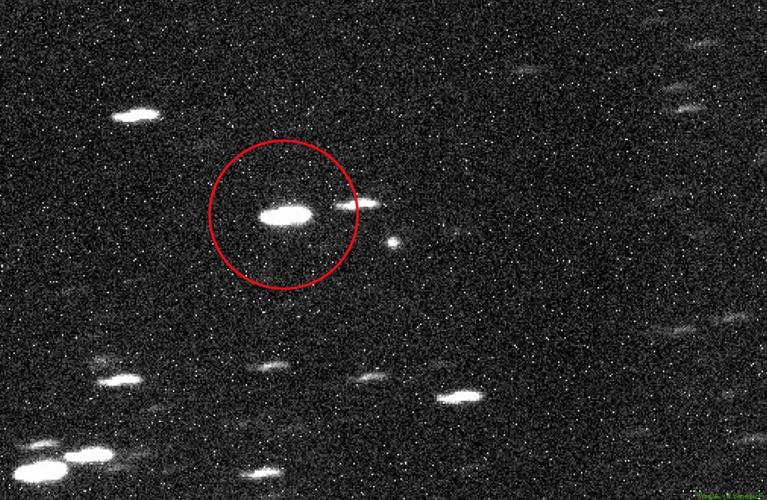
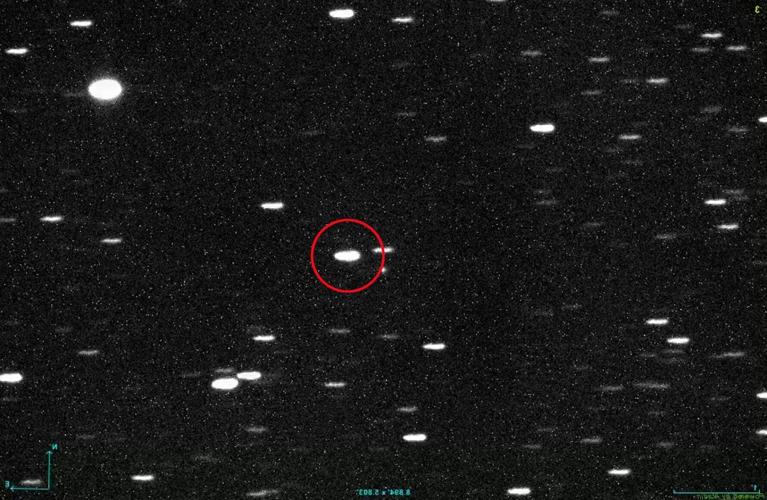

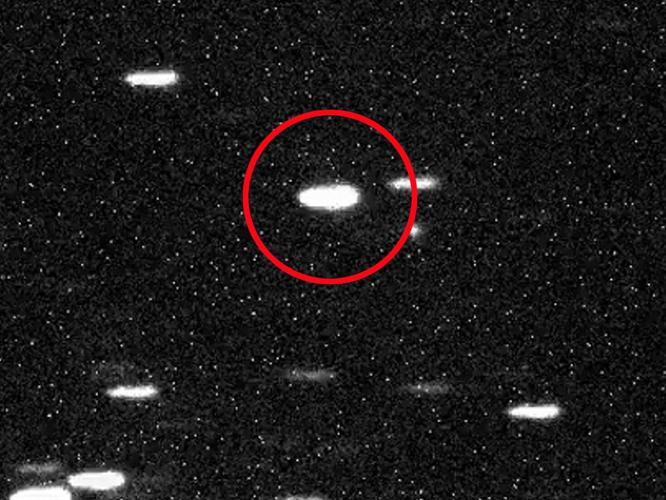
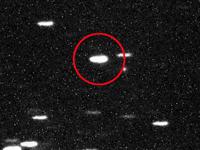
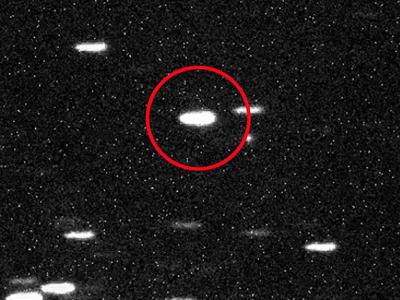

The Deep Random Survey telescope managed to capture images of interstellar object 3I/Atlas. (K Ly/Deep Random Survey via SWNS)
By Dean Murray
A mysterious object the size of Manhattan, originating from outside our Solar System, has been spotted by astronomers.
Experts have confirmed the discovery of this rare interstellar visitor—only the third ever detected—which is currently hurtling through our Solar System at extraordinary speed.
The object, now officially designated 3I/Atlas (previously known as A11pl3Z), is believed to have come from a distant star system and is travelling at over 60 kilometres per second.
Described as likely the largest interstellar visitor yet observed, 3I/Atlas appears to be a comet, with astronomers noting a faint tail and a “fuzzy” appearance, indicating the presence of gas surrounding it.
Estimates suggest it could be between 10 and 20 kilometres wide, though it may be smaller if composed mostly of reflective ice.

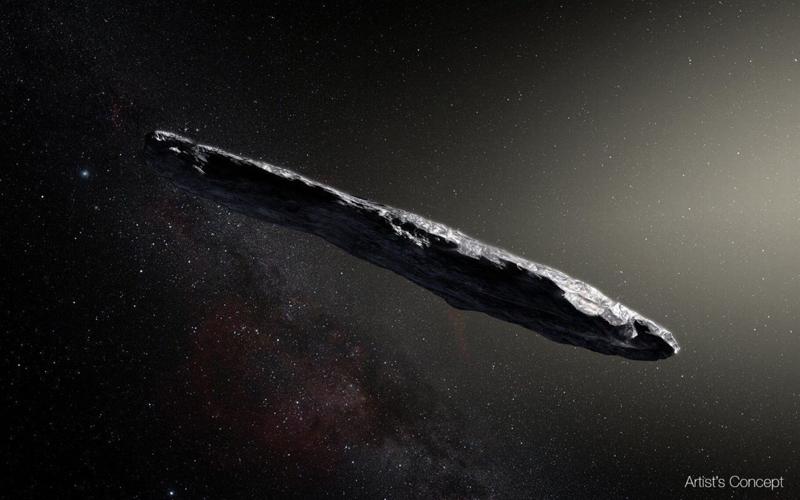
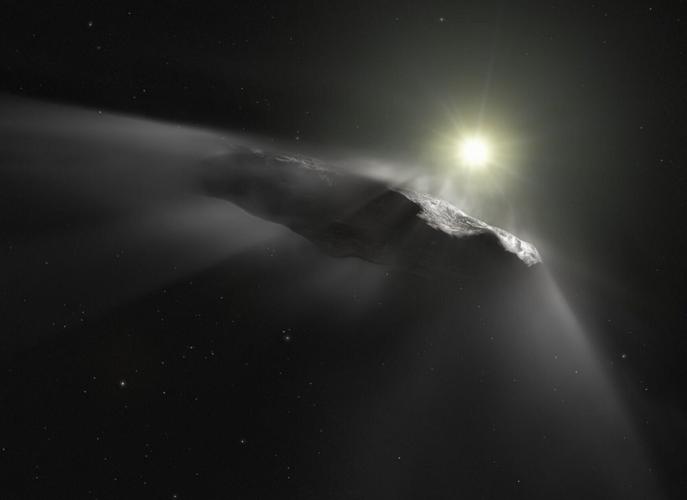
Artist's impression shows the first interstellar object discovered in the Solar System. (NASA / SWNS)
The comet poses no threat to Earth and will remain at a distance of at least 1.6 astronomical units (about 150 million miles, or 240 million kilometres). It is currently about 4.5 AU (416 million miles, or 670 million kilometres) from the Sun.
Its trajectory will take it deep into the Solar System, passing just inside Mars’ orbit before swinging around the Sun and heading back into interstellar space.






It is expected to make its closest approach to the Sun—known as perihelion—on 29 October, offering astronomers a limited but valuable window to study material from beyond our Solar System.

The Deep Random Survey telescope managed to capture images of interstellar object 3I/Atlas. (K Ly/Deep Random Survey via SWNS)
This marks only the third time such an object has been detected, following the discoveries of ‘Oumuamua in 2017 and comet 2I/Borisov in 2019. Unlike those previous visitors, 3I/Atlas is moving even faster, making a detailed study especially challenging.
The discovery was first made by a Chile-based observatory participating in the NASA-funded ATLAS survey, with subsequent analysis tracing its path back to at least mid-June.
Both professional and amateur astronomers worldwide are now racing to observe and analyse the object before it leaves the Solar System for good.

(ESA/Hubble/NASA/ESO/M. Kornmesser via SWNS)
Astrafoxen, an astrophysics undergraduate student in California, managed to capture remarkable images of the object.
They said, “I was one of the people remotely operating the Deep Random Survey telescope.
“The Deep Random Survey is a collaboration of a few amateur astronomers (including me) from various places, including the United States, Germany, India, and more.”
Scientists hope that studying 3I/Atlas will provide new insights into the composition and origins of material from other star systems.



(0) comments
Welcome to the discussion.
Log In
Keep it Clean. Please avoid obscene, vulgar, lewd, racist or sexually-oriented language.
PLEASE TURN OFF YOUR CAPS LOCK.
Don't Threaten. Threats of harming another person will not be tolerated.
Be Truthful. Don't knowingly lie about anyone or anything.
Be Nice. No racism, sexism or any sort of -ism that is degrading to another person.
Be Proactive. Use the 'Report' link on each comment to let us know of abusive posts.
Share with Us. We'd love to hear eyewitness accounts, the history behind an article.