The world celebrates National Chai Day every Sept. 21, a drink with centuries of history behind every cup. While the global appetite for tea continues to rise, chai keeps attracting new audiences. The ready-to-drink chai latte market reached an estimated $1.2 billion last year, according to market research, as more consumers reach for the spiced tea in convenient, modern formats.
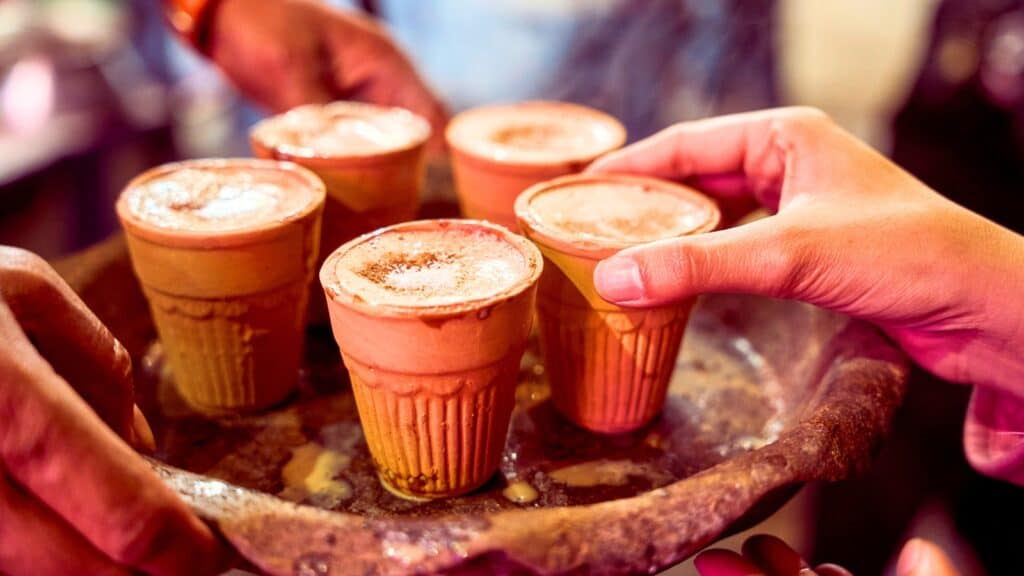
The growth represents only the newest chapter in chai’s much longer story. Within the broad world of tea, chai stands apart for its deep connection to South Asian food culture, where black tea, milk and sweetener meet a fragrant blend of spices that can vary from one household and region to another.
A drink shaped by history
The word “chai” simply means tea, while “masala chai” refers more specifically to tea prepared with a blend of spices. The drink most Americans recognize as chai typically combines black tea with milk, sweetener and aromatic ingredients such as ginger, cardamom, cinnamon, cloves and black pepper.
Masala chai has never been defined by one universal recipe, which is why its global appeal continues to rise. Its familiar ingredients tell the story of different influences meeting in one cup, while its countless variations show how households and communities made the drink their own, much like the many types of tea that have developed across cultures and regions.
That flexibility is part of what makes chai’s history so interesting. Long before black tea became an everyday drink in India, people used spices in traditional beverages and cooking. Tea cultivation expanded dramatically during the 19th century under British colonial rule, which created a much larger tea industry and eventually brought tea into more Indian households. As tea drinking spread, people adapted it to local tastes, combining strong tea with milk, sugar and the spices already familiar in their kitchens.
No 2 cups of chai taste the same
The history of chai helps explain why it is difficult to define with a single recipe. One preparation may put ginger at the forefront, while another leans on spices. The balance of tea, milk and sweetness can shift just as much, and regional traditions add another layer of variety.
In Kashmir, noon chai, or pink chai, is made with green tea, bicarbonate of soda, milk and salt, while kahwa is a delicate green tea flavored with saffron and almonds and traditionally served without milk. Elsewhere, Hyderabad’s milky Irani chai reflects Persian influence, while Sulaimani is a black, milk-free tea often flavored with lime and spices. These variations show why calling masala chai simply “Indian tea” overlooks the tradition’s depth.
The spices matter






The spices in chai do more than make the drink taste warm and fragrant. They connect the cup to a broader South Asian culinary tradition in which ingredients such as ginger, cardamom, cinnamon, cloves and black pepper are used across both sweet and savory foods. That makes chai feel less like a flavored version of tea and more like an extension of the kitchen itself.
The combination also gives chai a distinctive sensory identity. Black tea provides bitterness and tannins, milk softens those sharper notes, sweetness rounds out the flavor, and spices add layers of heat, aroma and complexity. Change the balance of even one element and the drink’s character can change.
That may be one reason chai has translated so easily across cultures. People can recognize its basic profile while adapting it to the ingredients and tastes they already know. A familiar cup can therefore become something new without losing the qualities that make it recognizable as chai.
Chai takes on modern audiences
Modern drink culture has given chai another chapter. Cafes now serve it iced, topped with cold foam or blended with other flavors, while home cooks continue to push it beyond the traditional cup. A chai-and-coffee combination, for example, brings together two drinks with their own strong identities in a chai coffee.
That willingness to experiment extends beyond chai itself. Botanical drinks such as a mugwort latte and juniper berry tea are proof of how people continue to explore ingredients outside the standard black, green and herbal tea categories. Chai fits naturally into that broader curiosity, but its modern reinventions build on a tradition that has always allowed room for personal interpretation.
The result is a drink that can move easily between a family kitchen, a roadside tea stall and a specialty cafe without becoming the same thing in each setting. That adaptability is why chai continues to find new audiences while still holding on to the spice, warmth and ritual that made it meaningful in the first place.
Look beyond the usual latte
On National Chai Day, try a regional preparation, brew masala chai at home with a different spice balance or explore another type of tea to see how much the leaves, spices and technique can change the experience. Today’s chai may arrive iced, bottled or blended with coffee, but the drink’s popularity did not begin with the modern cafe menu. Now is the perfect time to look beyond the chai latte and explore how generations of regional traditions, personal recipes and aromatic spices influenced a drink that continues to evolve without losing its history.
Kristen Wood is a photographer, food writer, recipe developer and creator of MOON and spoon and yum. She is also the author of “Vegetarian Family Cookbook,” “Fermented Hot Sauce Cookbook” and “Hot Sauce Cookbook for Beginners.” Her work has been featured in various online and print publications, including NBC, Seattle Times, Elle, Martha Stewart, Forbes, Chicago Sun-Times and more.
The post National Chai Day brings centuries of spice and tradition to the table appeared first on Food Drink Life.
(0) comments
Welcome to the discussion.
Log In
Keep it Clean. Please avoid obscene, vulgar, lewd, racist or sexually-oriented language.
PLEASE TURN OFF YOUR CAPS LOCK.
Don't Threaten. Threats of harming another person will not be tolerated.
Be Truthful. Don't knowingly lie about anyone or anything.
Be Nice. No racism, sexism or any sort of -ism that is degrading to another person.
Be Proactive. Use the 'Report' link on each comment to let us know of abusive posts.
Share with Us. We'd love to hear eyewitness accounts, the history behind an article.