






GlassesShop
Gen Z is the most likely generation to get a gift for someone they actively dislike this holiday season.
That’s according to a new survey of 2,000 Americans who celebrate the holidays, in which 38% of Gen Z respondents said they’re buying a gift for someone they don’t even like, simply because they feel they “should.”
Overall, one in five Americans (20%) said they’re buying a holiday gift for someone they dislike due to spending pressure, and regardless of age, obligation gifts come at a high cost. Respondents expect to spend an average of $202 on gifts for people they dislike this holiday season.
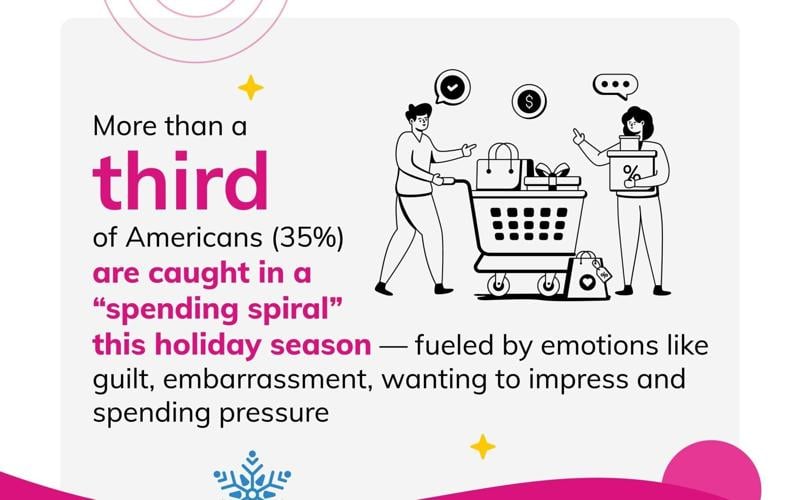
Zooming in on this, 35% of people said they’re caught in a holiday spending spiral fueled by a myriad of complicated emotions: guilt, embarrassment, wanting to impress, feeling spending pressure or just simple poor planning and last-minute scrambling.
The study was conducted by Talker Research and commissioned by Beyond Finance to highlight the pressure, both emotional and financial, that Americans are under this holiday season.

(Talker Research)
In the study, gift givers estimated that an astounding average of 50% of the gifts they’ll give this year are driven by embarrassment, shame, guilt, obligation or pressure.
"The holiday spending spiral often starts with a simple thought: 'I have to buy this because it's expected of me,'" said Dr. Erika Rasure, chief financial wellness advisor at Beyond Finance. "One purchase becomes another, and suddenly people are spending to manage guilt rather than because they genuinely want to give."
The results revealed that pressure is widespread, but no one's feeling it more than Gen Z. In the study, Gen Z was nearly twice as likely as the average respondent to say they’re caught in a spending spiral (62% vs. 35%).
Gen Z was also twice as likely as the average person to report feeling isolated due to spending pressure that they can’t keep up with (22% vs. 11%), and to say their mental health has suffered due to unrealistic spending expectations (21% vs. 11%).
But while Gen Z is struggling the most with spending pressure, no one is exempt. In the study, almost half of respondents (47%) bluntly acknowledged that spending pressure has hurt their enjoyment of this holiday season, with 38% going so far as to say spending expectations have stolen their holiday cheer this year.

Kostiantyn Li






And in fact, Americans estimated they worry about their finances an average of six times per day during the holiday season — or about every other waking hour.
"When the pressure to spend starts affecting your relationships, your mental health and your ability to enjoy the season, it's time to rethink what the holidays are really about," added Dr. Rasure. "You don't have to buy someone's approval, and you don't have to spend money to prove you care. The holidays should strengthen relationships — not leave people feeling trapped by expectations."
According to the findings, a significant number of people (29%) admitted they’re worried about others judging their holiday celebrations or gifts for being smaller or less fancy, compared to years past.
And parents are feeling the perception pressure in a unique way.

(Photo by Utopix Pictures Pictures via Pexels)
In the study, parents confessed they’re worried about their kids not enjoying this holiday season as much as other seasons, because they’re spending less this year on gifts and activities (33%), as well as being stressed about their kids asking why they can’t afford the same things as they have in holiday seasons past (26%).
It turns out that some of the pressure to spend — and the spending itself — is coming from a good place. More than four in 10 Americans surveyed (42%) said they want this holiday to be better than ever for their loved ones, to make up for 2026 being so difficult and challenging.
However, for many, the finances just don’t line up, and debt is the only way to make it happen.
Fourteen percent are still paying off holiday debt from last year. And almost half (45%) have already taken on holiday debt this year, or anticipate they will. Most of this group (55%) believes it will be April 2027 or later when they’ll finally pay off this year’s holiday debt.
Research methodology:
Talker Research surveyed 2,000 Americans who celebrate a winter holiday who have access to the internet; the survey was commissioned by Beyond Finance and administered and conducted online by Talker Research between Oct. 16 and Oct. 20, 2026. A link to the questionnaire can be found here.
To view the complete methodology as part of AAPOR’s Transparency Initiative, please visit the Talker Research Process and Methodology page.
(0) comments
Welcome to the discussion.
Log In
Keep it Clean. Please avoid obscene, vulgar, lewd, racist or sexually-oriented language.
PLEASE TURN OFF YOUR CAPS LOCK.
Don't Threaten. Threats of harming another person will not be tolerated.
Be Truthful. Don't knowingly lie about anyone or anything.
Be Nice. No racism, sexism or any sort of -ism that is degrading to another person.
Be Proactive. Use the 'Report' link on each comment to let us know of abusive posts.
Share with Us. We'd love to hear eyewitness accounts, the history behind an article.