More than 52 million North American households camped last year, surpassing pre-pandemic participation levels. A wave of first-time campers arrived between 2020 and 2022 and largely stayed, growing a market that now generates $66 billion in local community spending. What that boom has not produced, for many of those newer participants, is any working knowledge of how shared outdoor spaces actually function.
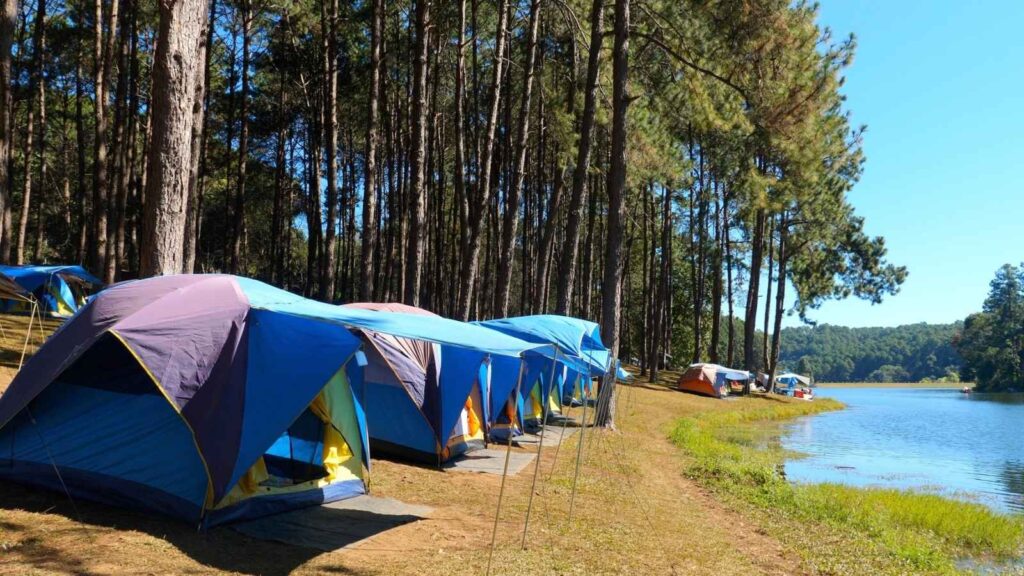
Campground etiquette has never been a formal curriculum, but something learned over years of family trips and repeat visits, passed down among experienced campers who grew up with it. Compressing that learning into two pandemic summers meant millions of people arrived at campgrounds enthusiastic and completely unprepared. Data from this year shows 77% of campers say simply being in nature is enough: no programming, no structure, no guided anything. That instinct toward simplicity is right. It also makes it easier to miss what responsible use of shared outdoor spaces actually requires.
Why aren’t the rules written down
Leave No Trace’s seven principles originated in wilderness settings but have expanded over decades into a broadly applicable code for any time you are outdoors in a shared space. Most first-time campground visitors arrive without having encountered them. The knowledge gap between who is showing up and what they know has grown considerably over the six years since that surge began. With 31% of campers planning more nights outdoors this year than last, that gap is not closing on its own.
Unlike hotel check-in or a national park permit, camping comes with no orientation and no required reading. Campgrounds post quiet hours and fire rules on a small sign near the entrance, and that is largely where formal guidance ends. How close to pitch a tent to a neighbor’s site, what to do with cooking grease, whether your dog needs to be leashed on the trail behind the loop; none of that is posted anywhere. It travels by assumption, or it does not travel at all. For generations, that worked because most people camping had camped before. An entirely new class of camper changed that calculus.
The noise, fire and generator violations that affect everyone
Quiet hours, generator shutoff times and fire ring containment are the three categories in which inexperienced campers most consistently create problems for everyone around them. These are not minor courtesies. Fires built outside designated rings spread, and generators run past posted quiet hours, cutting into the silence that most campers have come specifically to find. Check posted signs at each site before assuming any specific hours apply. The fire rule is consistent wherever you camp: use only the provided ring, keep fires manageable and extinguish completely before sleeping or leaving.
What ‘pack it in, pack it out’ actually covers






Most campers recognize the phrase “pack it in, pack it out,” but fewer understand everything it covers. Most people take it to mean trash, and it does. But it also means food scraps, fishing line, bottle caps and gray water poured too close to a water source. Each of those categories causes specific ecological harm, and none comes up naturally in conversation before a first trip.
The same camping hospitality report found that three-quarters of campers view campgrounds as community spaces outside of home and work, places where real social bonds form in a way that most other travel formats do not allow. That social contract depends on everyone treating shared ground as shared.
Your neighbors’ reason for being there
Site boundaries, dog leash rules and trail right-of-way are the etiquette categories most directly connected to someone else’s experience. Nearly half of all campers book trips specifically to improve their mental well-being, which makes campground courtesy more of a health consideration than a politeness standard. Sound, smoke, light and foot traffic all cross invisible lines between sites. The rule beneath all of them is the same: your campsite radius is not yours alone.
Where the outdoor industry goes from here
The outdoor industry has started treating responsible recreation as infrastructure. The inclusion of Leave No Trace guidance in major industry research marks a move toward standardizing what was previously left entirely to word of mouth. Campgrounds that build outdoor education into the arrival experience, not the assumption, will absorb the growth better. The informal era of campground etiquette may be ending, and that is probably overdue.
Jennifer Allen is a retired chef turned traveler, cookbook author and nationally syndicated journalist; she’s also a co-founder of Food Drink Life, where she shares expert travel tips, cruise insights and luxury destination guides. A recognized cruise expert with a deep passion for high-end experiences and off-the-beaten-path destinations, Jennifer explores the world with curiosity, depth and a storyteller’s perspective. Her articles are regularly featured on the Associated Press Wire, The Washington Post, Seattle Times, MSN and more.
The post Record numbers of Americans are camping this summer, and most don’t know the unwritten rules that matter most appeared first on Food Drink Life.

(0) comments
Welcome to the discussion.
Log In
Keep it Clean. Please avoid obscene, vulgar, lewd, racist or sexually-oriented language.
PLEASE TURN OFF YOUR CAPS LOCK.
Don't Threaten. Threats of harming another person will not be tolerated.
Be Truthful. Don't knowingly lie about anyone or anything.
Be Nice. No racism, sexism or any sort of -ism that is degrading to another person.
Be Proactive. Use the 'Report' link on each comment to let us know of abusive posts.
Share with Us. We'd love to hear eyewitness accounts, the history behind an article.