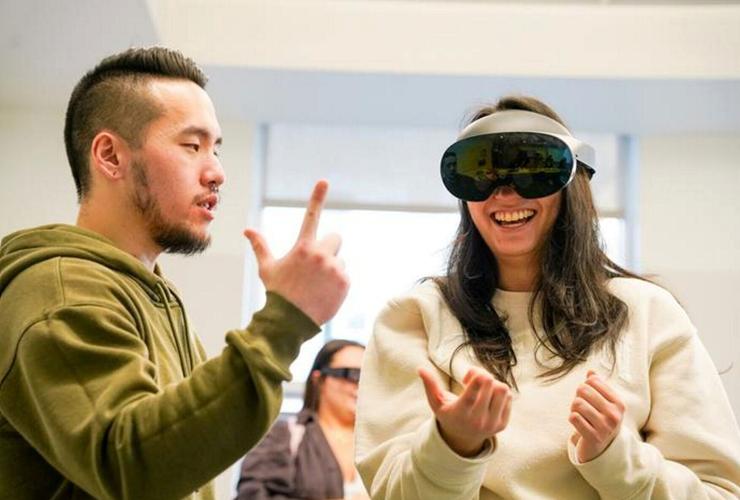


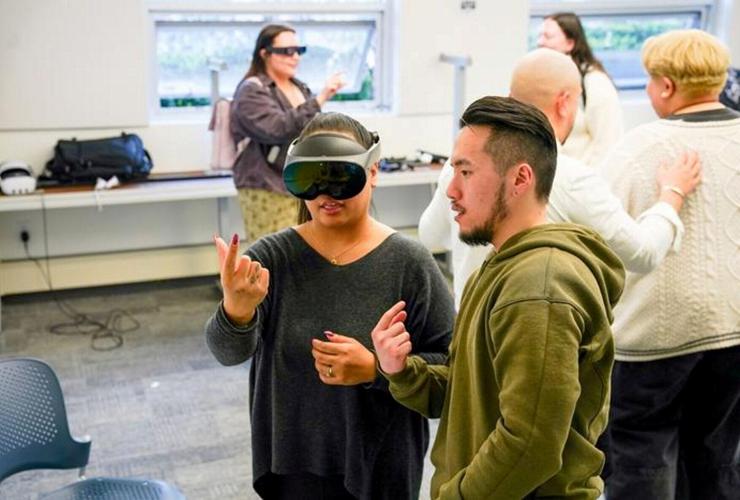


Immersive Media Communication graduate students Isaac Wu (left; game developer) and Leila Okahata (researcher). The student research team tested a prototype of their custom-built virtual reality game at Climate Change Game Night 2025. (Jeremy Henkelman-Parker via SWNS)
By Stephen Beech
Playing virtual reality games can make you a kinder person, according to new research.
They increase a player’s desire to help others, say scientists.
Researchers found that VR games may increase a person’s sense of altruism and influence levels of empathy.
The American study tracked participants’ feelings as played through a virtual reality scenario in which they helped a boy find his lost dog.
The findings, published in the journal Frontiers in Virtual Reality, suggest that immersive games can motivate people to help - even if they can’t directly relate to someone else’s emotions.

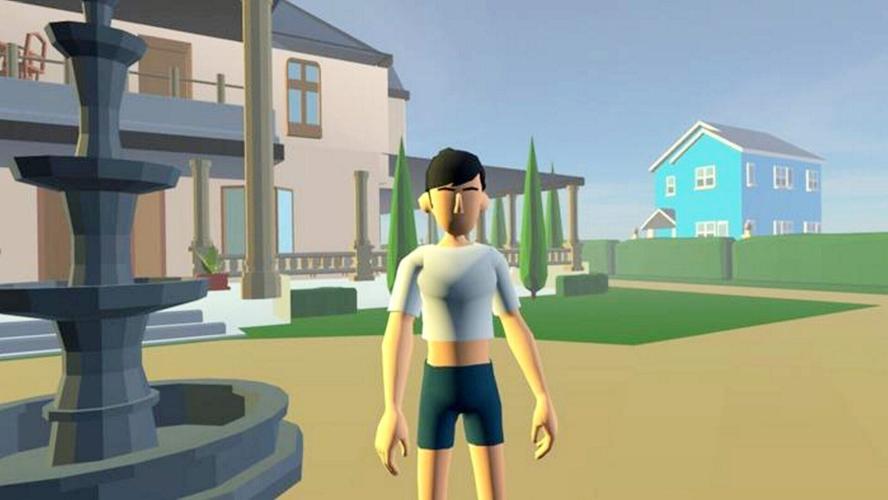
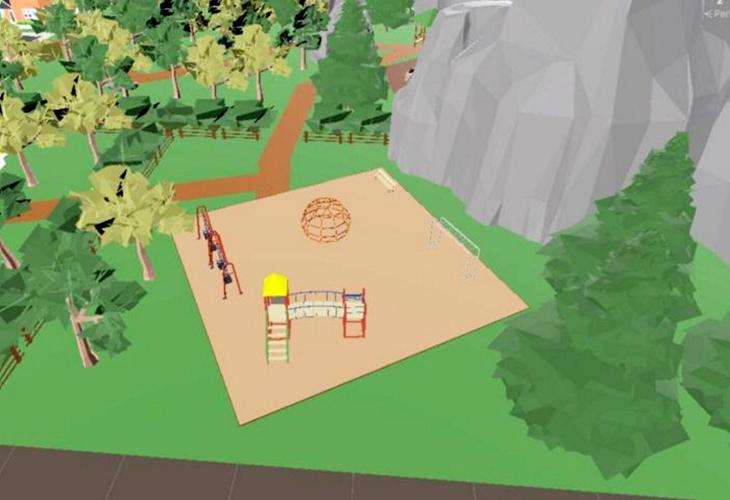
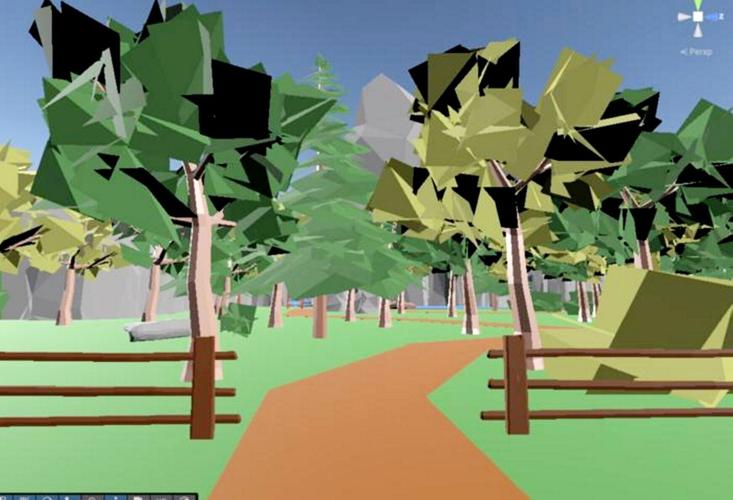
UO researchers tested how virtual reality games and experiences can shape people's sense of empathy and altruism. They built a custom VR game, based in the fictional community Unity Springs, where players helped a little boy find his lost dog. (Samantha Lorenzo via SWNS)
Study leader Dr. Samantha Lorenzo is not a gamer, but has widely studied the social and psychological impacts of different forms of communication.
She has seen how narratives can play a big role in how people understand information.
When Dr. Lorenzo encountered research about how games can be used for social and emotional benefits, she became curious.
She wondered whether narrative-driven games could be used to influence emotional processes, such as altruism and empathy.
Dr. Lorenzo, from the University of Oregon, was particularly interested in VR due to the immersive nature of the platform.

(Samantha Lorenzo via SWNS)
She believed VR could enhance the emotional experience for players, leading to more positive outcomes and longer-lasting effects.
Dr. Lorenzo said: “I had an idea that VR might be an effective tool to influence people's ability to want to help others and better understand other people's perspectives.
“I wanted to explore possible behavioral changes from immersive environments and the underlying mechanisms that foster altruistic engagement within, and beyond, the gaming world.”
She teamed up with Dr. Danny Pimentel who co-directs the Oregon Reality Lab, where students and researchers can develop virtual-, augmented- and mixed-reality media.
The research team developed a narrative-driven VR game that would immerse players in an emotional storyline, so they could analyze whether the gaming experience affected the player’s levels of empathy and altruism.
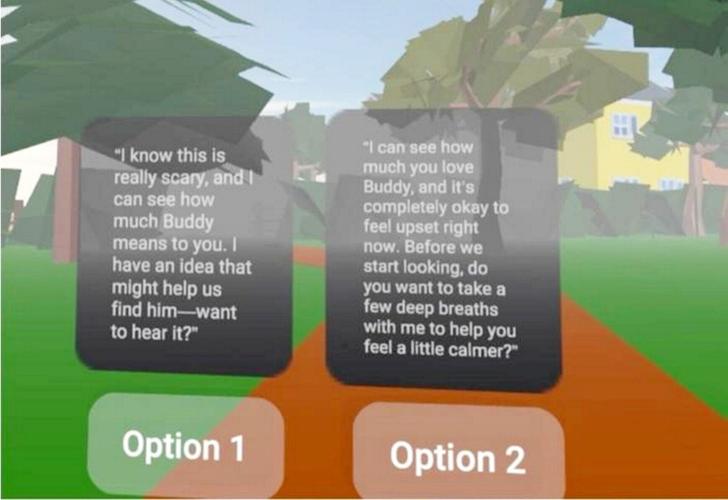
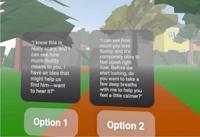
In the game, called Empathy in Action, players enter a neighborhood community where they encounter Alden, a young boy who just lost his dog, Buddy.






Immersive Media Communication graduate students Samantha Lorenzo (left; lead author and researcher) and Isaac Wu (game developer). The student research team tested a prototype of their custom-built virtual reality game at Climate Change Game Night 2025. (Samantha Lorenzo via SWNS)
Players are faced with several tasks, both physical and emotional, including searching for clues and deciding whether, and how, to comfort the distraught child.
Dr. Lorenzo said the research team considered a few different narratives for the game, but chose the lost dog scenario because it felt like a believable storyline that could happen in real life.
The researchers thought that a realistic narrative would be the most effective tool for helping people consider how they would actually react in a similar situation.
Both before and after participants played the game, the research team asked the players a series of questions to gauge whether, and how, the game influenced their levels of empathy and altruism.

(Samantha Lorenzo via SWNS)
Dr. Lorenzo said: “We wanted to see if the game shifted their motivation to help others and if it affected their ability to understand other people’s emotions."
The team were surprised to find that a person’s sense of empathy and altruism don't always increase together.
Dr. Lorenzo said that people’s sense of altruism did go up during the study, but whether they felt greater empathy was more complicated,
The researchers saw significantly higher ratings of "cognitive empathy" - an ability to recognize and understand someone else’s feelings.
However, there was a decline in "affective empathy" - where a person actually feels the sadness that another person is feeling.
The findings suggested that people might feel moved to help, even if they may not feel greater empathy for those in need.

(Samantha Lorenzo via SWNS)
Dr. Lorenzo said: “People knew that this was a sad situation and that's why they wanted to help."
As part of the study, participants suggested potential applications for immersive digital games such as Empathy in Action.
Their recommendations included classrooms and other learning environments, therapeutic or rehab settings, and conflict-resolution training.
Dr. Lorenzo says further research could look at whether different storylines could produce different findings.
She wants to see how immersive, narrative-driven interventions could be used for understanding and coping with medical challenges.
Dr. Lorenzo added: “This gaming technology is new and exciting, and there’s a lot of potential for researchers to keep exploring how immersive media can be leveraged for social good."



(0) comments
Welcome to the discussion.
Log In
Keep it Clean. Please avoid obscene, vulgar, lewd, racist or sexually-oriented language.
PLEASE TURN OFF YOUR CAPS LOCK.
Don't Threaten. Threats of harming another person will not be tolerated.
Be Truthful. Don't knowingly lie about anyone or anything.
Be Nice. No racism, sexism or any sort of -ism that is degrading to another person.
Be Proactive. Use the 'Report' link on each comment to let us know of abusive posts.
Share with Us. We'd love to hear eyewitness accounts, the history behind an article.