
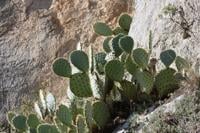



(Charlie Chesney/ UC Santa Cruz via SWNS)
By Stephen Beech
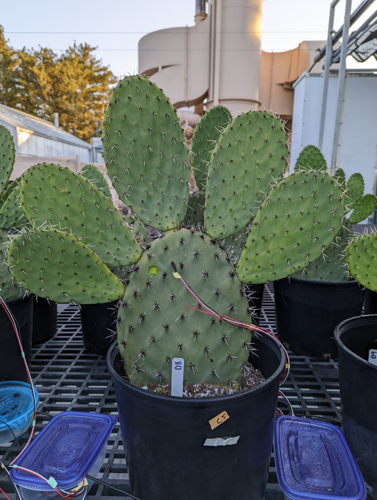
Electricity has been harvested from a prickly pear cactus for the first time.
Scientists have discovered a way to transform the spiky plant into a renewable energy source.
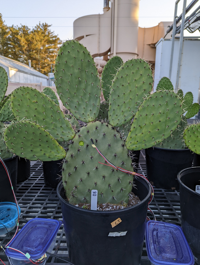
They have converted the stems of prickly pear cacti into living solar panels.
Researchers at the University of California, Santa Cruz, developed the technique to harvest small amounts of power from cacti that takes advantage of the plants' specialized, water-preserving approach to photosynthesis.
They say the green renewable electricity source could power sensors on farms that measure crop conditions amid increasing climate change-related pressures.
Their research, published in the journal Plants, People, Planet, shows how environmental conditions affect cactus voltage strength.
Undergraduate researchers from three academic divisions at UC Santa Cruz worked on the project.
Project leader Charlie Chesney said: "The undergraduate students told me they liked this project so much because it felt whimsical, and like a lighthearted approach to something that is so serious.
"It was a fun way to explore climate solutions that put creativity first."
Michael Loik, an environmental studies professor who has been studying cactus physiology and ecology for around 40 years and who spearheaded the project with Chesney, said: "I've been obsessed with the plant since forever, it seems."

Photo by Tanis deChatillon via Pexels
To transform cacti into power generators, the researchers took advantage of their specialized method for photosynthesis, called crassulacean acid metabolism (CAM).
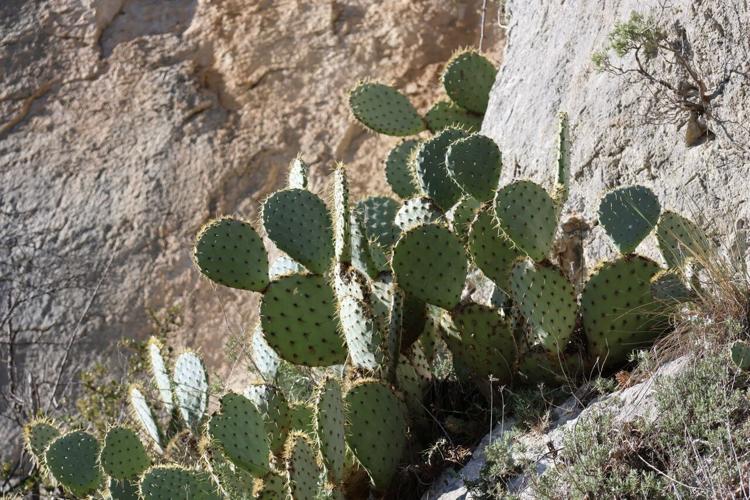
Prickly pear cacti and other plants such as aloe, pineapple and dragon fruit use CAM photosynthesis to preserve water for survival in hot, dry conditions.
CAM plants process carbon dioxide into sugar over the course of 24 hours to take advantage of cooler temperatures during the night, while all other plants only photosynthesize while the sun is out.
Other plants open small pores in their leaves during the day to take in carbon dioxide and use sunlight to convert it to make sugar, but opening up the pores lets water escape.
To preserve precious water, CAM plants only take in CO2 at night, converting it to a chemical called malic acid.
Loik explained that when the sun comes up and hits the cactus, photosynthesis begins to break down the malic acid, but only on the side of the plant facing the light.
That's because CAM plants have thick, opaque stems — another technique to conserve water — which only perform photosynthesis in the outer 2 millimeters (about 0.08 inch) of each side.
The difference in acidity between the sunny and shady side of the plant causes a pH concentration gradient, which creates a voltage that the researchers harvested.
Loik's extensive knowledge of prickly pear cacti led him to predict that electricity production would be possible.
Chesney assembled a team of undergraduate students from the engineering, sciences and social sciences divisions at UC Santa Cruz.
She said: "This was such a cool demonstration of being a really, truly interdisciplinary project, and bringing together so many different undergrads who had different focuses.

Photo by César Guillotel via Pexels
"It was just so nice to have 10 students in a room from all across campus working together on a single project.





"When we're looking at climate solutions, that's what we need."
After years of experimentation, the team found their cactus solar panels could produce up to half a volt, which they harvest via a wired electrode attached into the plant.
The team also pursued methods to increase the voltage by adding multiple wires to harvest energy and connecting cactus stems together.
By linking together eight cactus stems, they generated 4.5 volts of electricity.
By comparison, a standard AA battery generates 1.5 volts.
The team believes that electricity harvested from the prickly pear cacti could be used to charge low-power agricultural monitoring sensors, which are increasingly in demand due to rising pressures on crops from climate change.
By planting prickly pear cacti alongside other crops, they say farmers would have a renewable power source for sensors to monitor field conditions.
The electricity harvesting could also serve to monitor the health of the plant.
Loik said: "There are many commercial applications of cacti where monitoring their health using a low-power system like ours, that is just operating off on the side and is self-powered.
"This could be a really interesting avenue to pursue.
"It could be connected to a plant that acts as sentinel, measuring conditions and sending it back to the base station at the farmer's office."
The researchers believe that their technique could also work with other CAM plants such as pineapple or agave, although some plants may be more sensitive to the wires needed to harvest electricity.

Photo by K via Pexels
They investigated the impact of environmental conditions on voltage production for on-farm cactus sensors.
The team found that the voltage is much higher in the summer when there's lots of sunlight.
Chesney said: "Just how closely the voltage aligned with the sunlight conditions was really surprising.
"Comparing winter to summer voltage, the voltage really follows the same pattern of the amount of sunlight throughout the day."
But too much sunlight can also be a problem.
Chesney said: "If it's too high, then the cactus will start trying to protect itself from a sunburn, which will also decrease the voltage.
"There's a balance, a mid-range of light that causes the voltage to be higher."
The team also investigated the effect of drought.
After leaving the cacti without water for 15 months, not only were the cacti still alive and photosynthesizing, sometimes the voltage in the drought-stressed stems was actually higher than the well-watered stems.
Chesney added: "This was a really surprising result, but also showed how resilient a cactus is — it could still produce electricity even when it seems, to us, like it's near death."
She said adding nitrogen to the prickly pear cacti boosted the plants' supply of malic acid, which meant photosynthesis and voltage production lasted later into the day.
(0) comments
Welcome to the discussion.
Log In
Keep it Clean. Please avoid obscene, vulgar, lewd, racist or sexually-oriented language.
PLEASE TURN OFF YOUR CAPS LOCK.
Don't Threaten. Threats of harming another person will not be tolerated.
Be Truthful. Don't knowingly lie about anyone or anything.
Be Nice. No racism, sexism or any sort of -ism that is degrading to another person.
Be Proactive. Use the 'Report' link on each comment to let us know of abusive posts.
Share with Us. We'd love to hear eyewitness accounts, the history behind an article.