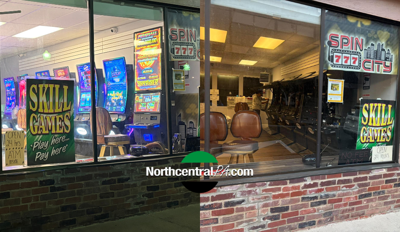

Harrisburg, Pa. — The fight to keep skill games plugged in past next week isn't over yet.
Sen. Gene Yaw, R-Lycoming, and two other state lawmakers are once again asking the Pennsylvania Supreme Court to hold off on enforcement until February, just hours after pulling their first request.


Harrisburg, Pa. — Skill game machines in bars, clubs, and shops across the state could stay safe from police seizure until February if four state lawmakers, primarily Sen. Gene Yaw, R-Lycoming, get their way.
A business group is asking for more time, too. Its filing gives a look at exactly how state police plan to investigate and seize the machines once the deadline hits.
That's two requests in front of the court, with the clock running out. The "safe harbor" protecting skill game owners ends Oct. 13, and enforcement can start Oct. 14.
Round two for lawmakers
Yaw, Sen. Anthony H. Williams, D-Philadelphia, and Rep. Jonathan Fritz, R-Wayne, refiled their request at 6:14 p.m. Wednesday. That's about seven hours after they withdrew the first one, which they filed the night before.
They're asking for the same thing as before: push the deadline to Feb. 10, 2027, and keep the machines protected while the court makes up its mind.
Most of the new filing matches the old one word for word. But a few things are different:
- Burgos is out. Rep. Danilo Burgos, D-Philadelphia, was part of the first request and isn't listed this time.
- The co-sponsor count is gone. The first version included a House memo and an unofficial report showing 103 co-sponsors. The lawmakers had pointed to it as proof the bill had enough support to pass the House. The new version says only that "multiple co-sponsors" are "anticipated."
- They're now the bill's authors. The three describe themselves as the authors of a compromise bill written since the June ruling. They say they "need time to have that legislation introduced."
Neither filing explains why the changes were made.
The bill would regulate skill games and allow more video gaming terminals at truck stops. Players would have to be at least 21, and each machine would carry a $500 monthly fee. The money would go to mass transit, roads and bridges, and volunteer fire companies.
The lawmakers say that if police start seizing machines, it would slow everything down. A machine sitting in an evidence room or stuck in a forfeiture case can't be licensed and put back to work, they argue, and that means no fees or taxes for the state.
They also estimate 40,000 Pennsylvanians "will be adversely affected when enforcement begins," though they don't say how they came up with that number.
Other parties in the case have until Oct. 21 to respond, eight days after the safe harbor runs out.
Business group wants in






The Skill Games Business Consortium filed its request Oct. 6. It's asking to join the case behind the June ruling so it can push for another 120 days. The group's filing doesn't say who its members are.
The consortium's take is that Harrisburg is nowhere near a deal. The group points to six skill game bills stuck in committee: Senate Bill 626 and House Bills 2213, 2557, 2795, 2801, and 2802. With only a handful of session days left, it doesn't think lawmakers can get it done in time.
The group admits it's filing "perilously close" to the deadline. It says that's because its members thought the Legislature would act first. Members are already pulling machines or shutting them off, the group says, but it calls collecting every machine in the state a "herculean task."

How police plan to enforce it
Attached to the consortium's filing is a Sept. 3 memo from state police's chief counsel Brendan O'Malley and deputy chief counsel Christopher Herrington to the state's district attorneys. It walks officers through what to do after the deadline.
Officers who find a working machine are told to play it themselves. That means putting in at least $5, trying to win more than they bet, and cashing out. If they can do all that, it's enough to prove the machine is a slot machine that can be seized, according to the memo.
The memo also tells officers to:
- Seize the kiosks that pay out winnings, since that's where the money is
- Get a search warrant soon after playing a machine
- Mark machines so they know it's the same one when they come back
- Get permission or a warrant before turning on an unplugged machine
- Hold off on seizing machines if every one at a business is out of commission
It's not just skill games, either. The memo says the ruling covers any device that fits the legal definition of a slot machine, including video poker machines.
And the memo doesn't hold back about the lower courts that had found the games legal. Those rulings hinged on an optional memory game that let players win back a losing bet. According to the memo, it was a game "no one ever purposefully played."
What it means here, what's next
In Lycoming County alone, Pennsylvania Skill games sit in 112 locations, according to the Williamsport/Lycoming Chamber of Commerce. That includes bars and restaurants, private clubs, smoke shops, and convenience stores.


The court hasn't ruled on either request. If neither the court nor lawmakers act, police can start enforcing Wednesday, Oct. 14.
(0) comments
Welcome to the discussion.
Log In
Keep it Clean. Please avoid obscene, vulgar, lewd, racist or sexually-oriented language.
PLEASE TURN OFF YOUR CAPS LOCK.
Don't Threaten. Threats of harming another person will not be tolerated.
Be Truthful. Don't knowingly lie about anyone or anything.
Be Nice. No racism, sexism or any sort of -ism that is degrading to another person.
Be Proactive. Use the 'Report' link on each comment to let us know of abusive posts.
Share with Us. We'd love to hear eyewitness accounts, the history behind an article.