


(Photo by Ketut Subiyanto via Pexels)
By Stephen Beech
A new smart shoe can help track changes in how people walk.
The prototype, which needs no batteries, counts steps, estimates calories burned and tracks movement with 95.4% accuracy.
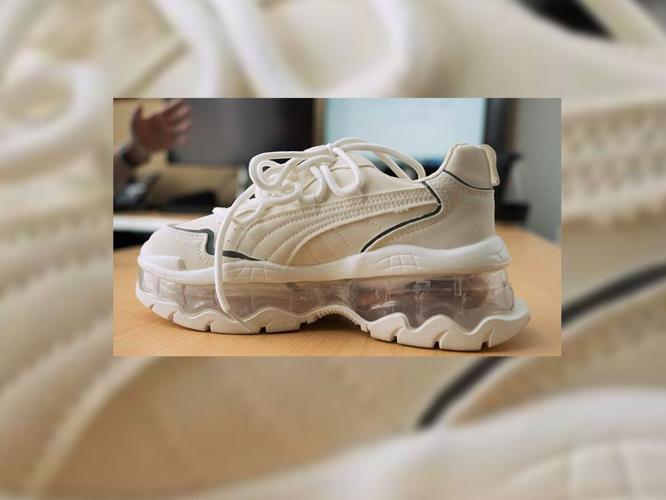
The white athletic shoes, which conceal electronics in the heels, could help monitor people with Parkinson's disease, spinal cord injuries, traumatic brain injuries and other movement disorders, say American scientists.
Research leader Simiao Niu says what makes the shoe unusual is that it powers the analysis with energy generated from the wearer's footsteps, meaning there is no battery to recharge.
He said: "When you are walking or running, you automatically have biomechanical energy available, so you can harvest this energy."
Niu, a biomedical engineer at Rutgers University in New Jersey, says a shoe was a natural target, because walking produces the information the researchers want to analyze and the energy needed to study it.
He added: "When you sit down, there is no energy available, but you don't need gait monitoring."
A device embedded in the sole produces electricity from the pressure and friction of each step.
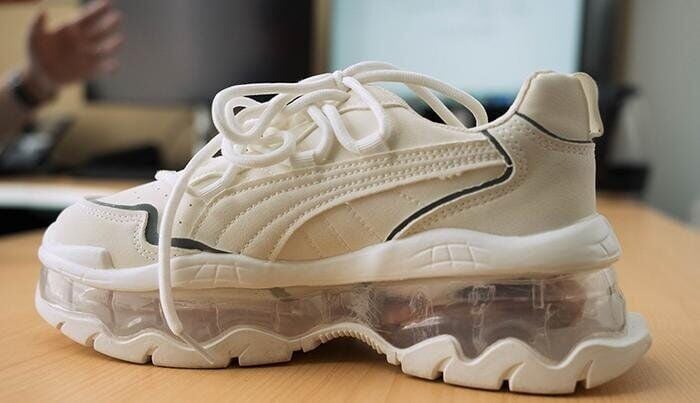
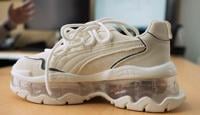
A Rutgers smart shoe prototype analyzes movement and could one day help track changes in how people walk. (Veronica Mendez / Rutgers University via SWNS)
The process — known as the triboelectric effect — is related to the static electricity created when different materials rub together.
The electricity arrives in irregular bursts that the electronics cannot use directly.
The research team designed a power-management circuit that converts it into a useful form, increasing the usable energy by as much as 120 times compared with a conventional method.
When studying walking information, scientists use "gait" to describe a person's pattern of walking, including balance, speed, stride and rhythm.
Changes can offer clues about disease progression, fall risk or rehabilitation.
Niu said: "Gait is one of the most significant biomarkers for a lot of diseases."
Doctors often evaluate gait by watching a patient walk briefly in a clinic or laboratory.
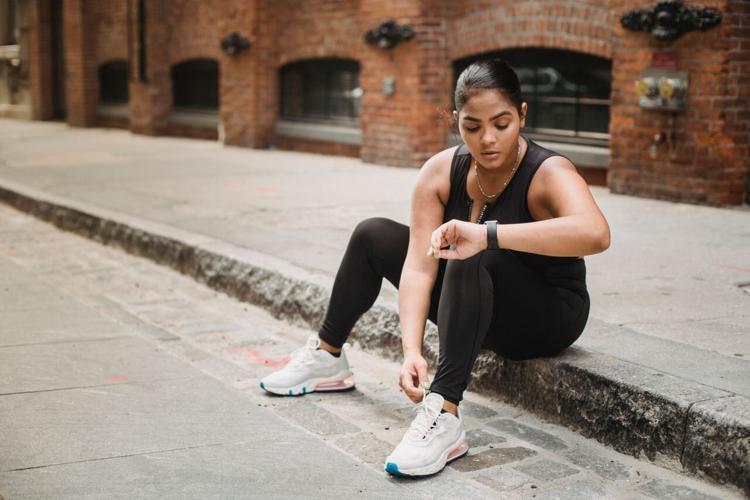
A wearable device could eventually measure movement over longer periods as people go about their daily lives.

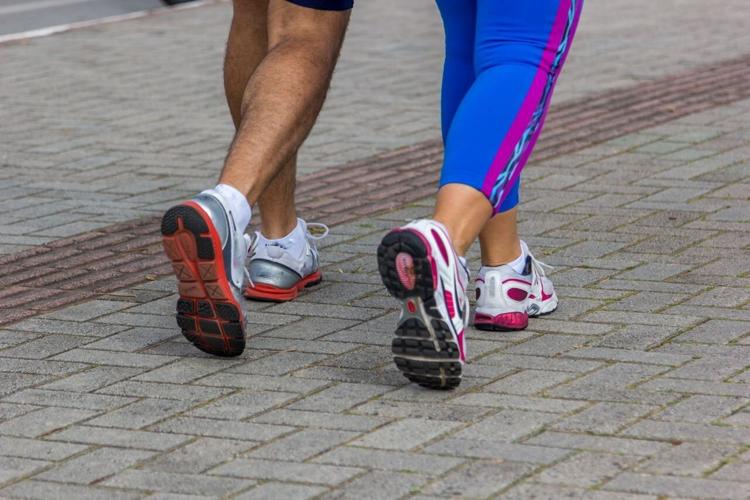
(Photo by Ketut Subiyanto via Pexels)
Niu said: "If you are able to use what I call the 'worry-free shoes' we've developed, patients can just wear them, and the shoes can automatically collect their gait pattern."
With further development and clinical testing, he says similar shoes might one day assess fall risk, detect unusual walking patterns or follow recovery after a brain or spinal cord injury.
The design, described in the journal Science Advances, might also be adapted to monitor heart activity, biochemical signals or other aspects of health.
Niu said the current version is an early prototype, not a medical device, as it can't yet diagnose disease, predict a fall or determine whether a treatment is working.
But it shows basic walking patterns can be analyzed without a rechargeable battery.
Niu says that could address a weakness in existing health wearable devices.
Smartwatches and other devices can gather large amounts of information, and artificial intelligence (AI) can turn those measurements into useful findings.
But AI requires energy and, as wearables become more intelligent, they may drain their batteries faster.






Niu calls the problem the "energy-intelligence bottleneck."
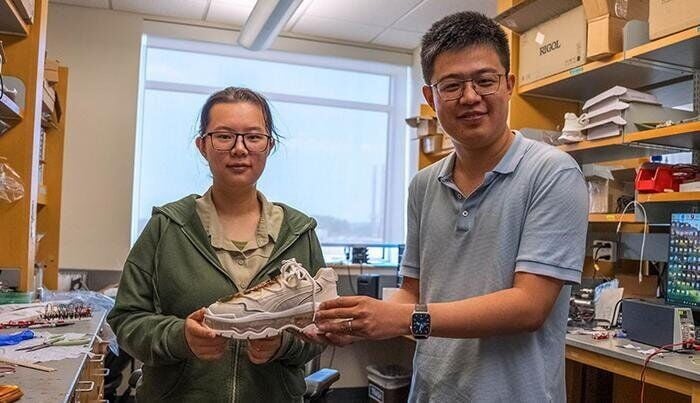
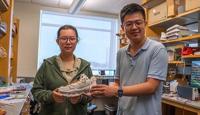
Simiao Niu, an assistant professor of biomedical engineering in the Rutgers School of Engineering (at right), and doctoral student Fuying Dong work in the lab on a smart shoe powered by the wearer’s footsteps.(Veronica Mendez / Rutgers University via SWNS)
He said: "We want to solve the fundamental bottleneck in current wearable devices.
"We are developing a smart wearable with integrated AI functionality that can harvest energy on its own, so you don't need to worry about charging."
Niu encountered the problem while working at Apple, where he helped develop an electrocardiogram sensor for the Apple Watch.
Monitoring stops when a health device is removed for charging, and users may forget to put it back on.
Niu said: "Once you put it onto the charger, you typically forget about it, and then you don't wear it.
"Those wearables cannot monitor your health if you just leave them in your drawer."
An accelerometer measures the foot's movement along three axes.
A tiny processor uses AI to analyze patterns in those measurements and classifies each 15-second segment as one of four activities: slow walking, fast walking, running or climbing stairs.

(Photo by Jari Lobo via Pexels)
It displays the results on a screen attached to the shoe.
The analysis occurs inside the wearable, an approach known as "edge AI."
Because the shoe doesn't continuously send raw information to a phone, computer or cloud server, Niu says it requires significantly less energy.
Making the AI algorithm small enough to fit the processor's limited memory was another challenge.
The original model examined 21 characteristics of movement and achieved 98.1% accuracy, but required more memory than the shoe's processor could hold.
The researchers found that the variation in movement along the three axes provided most of the information the AI algorithm needed.
The smaller model achieved 95.4% accuracy while running about 15 times faster and using about one-sixth as much current.

(Photo by Styves Exantus via Pexels)
The sensor and AI algorithm together consume 86 microwatts, a fraction of the power used by many wearable AI systems.
In lab tests, even slow walking generated enough electricity to keep the complete system operating.
Study first author Fuying Dong, a Rutgers biomedical engineering doctoral student, added: "The idea of how to co-design the whole system is the best thing I learned from this project.
"You break a huge project into smaller pieces, finish them one by one, and try to figure out what's the biggest story behind it."
The prototype was developed using data from four healthy volunteers ages 23 to 26.
So far, the AI algorithm has been trained and tested just on activities included in the study.
It has yet to be tested in older adults, people with movement disorders or patients undergoing rehabilitation.
(0) comments
Welcome to the discussion.
Log In
Keep it Clean. Please avoid obscene, vulgar, lewd, racist or sexually-oriented language.
PLEASE TURN OFF YOUR CAPS LOCK.
Don't Threaten. Threats of harming another person will not be tolerated.
Be Truthful. Don't knowingly lie about anyone or anything.
Be Nice. No racism, sexism or any sort of -ism that is degrading to another person.
Be Proactive. Use the 'Report' link on each comment to let us know of abusive posts.
Share with Us. We'd love to hear eyewitness accounts, the history behind an article.