
(Sacha Dench / Conservation Witho via SWNS)
By Lauren Beavis
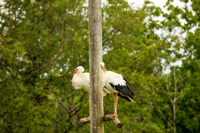
Storks have returned to part of the UK after 600 years thanks to an "extraordinary" rewilding effort.
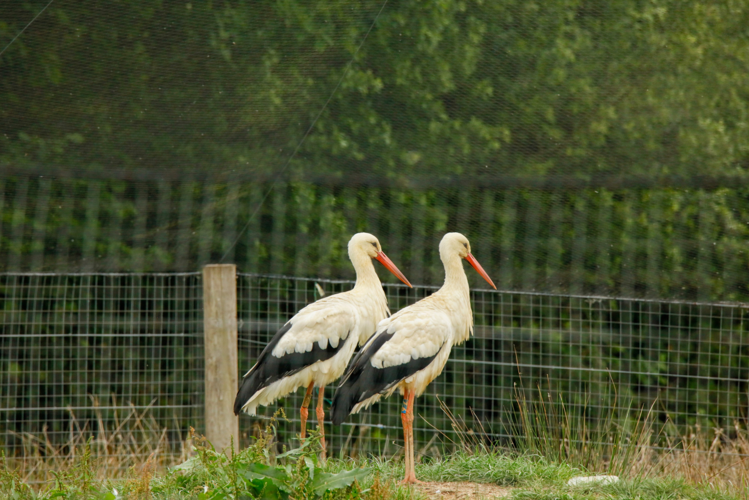
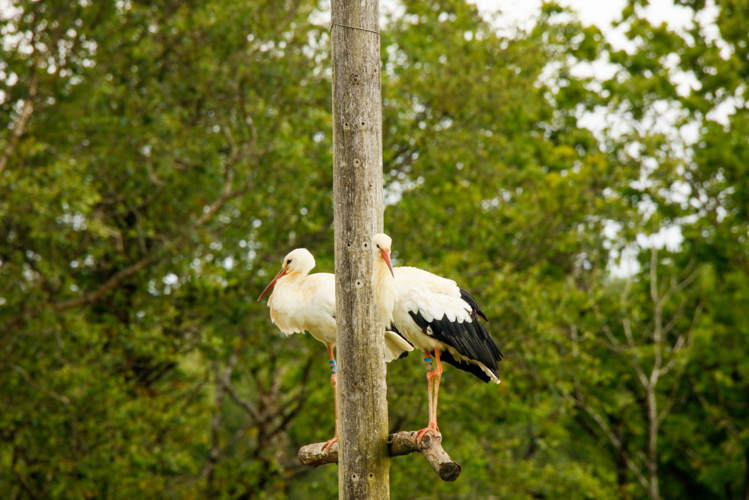
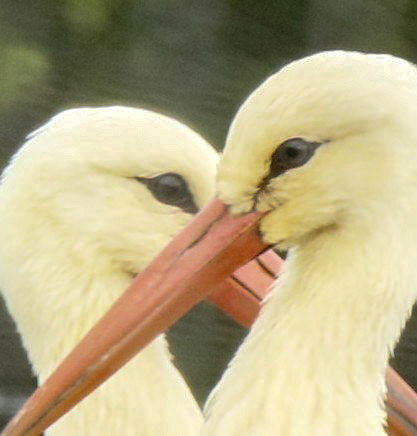
Ten white storks have been released at a satellite site of the Keep It Wild Species Recovery Centre in north Devon.
The site, which lies within a privately owned rewilded farm, marks the first successful reintroduction of the birds in this part of the UK for hundreds of years.
Storks, tall wading birds known for their black-and-white plumage and impressive wingspan, were extinct in Britain by the 1400s due to hunting and habitat loss.
Now Devon has joined a movement across Europe which has seen areas, including Sussex, restoring the birds' wild populations.
The birds were raised in two large aviaries at the South West site, where footage shows landowner Dorette Engi feeding them in the open aviary before the soft release.
(Poul Brix / Conservation Without via SWNS)
Dorette and her children have spent several years rewilding her land, which now includes recreated wetlands, mixed grasslands and restored woodlands.
She explained: "These birds haven’t lived freely here in over 600 years, yet as soon as they were given the choice, they stepped out into the landscape like it had always been theirs.
“They've taken to the thermals, they’re foraging confidently - they seem utterly at home.
"It makes you realize just how ready the land was to welcome them back.”
Locals are already reporting sightings of the birds.
Dorette added: “Seeing them above the tree line, circling with effortless grace, it takes your breath away.
“It feels like new life, and hope.”





Some of the birds were bred at the Rewilding Coombeshead site near Lifton, in partnership with maverick ecologist and reintroduction expert Derek Gow.
Derek, known for his work restoring species such as beavers, wildcats and water voles, is based at his Rewilding Coombeshead site.

(Poul Brix / Conservation Without via SWNS)
He says storks have a key role to play in reshaping how we think about wildlife in Britain.
Derek said: “We don’t need to manage every moment of a wild animal’s life, we need to give them the space and conditions to manage themselves.
“Storks are scavengers, foragers, and brilliant natural indicators of healthy ecosystems.
"If they thrive here, it means the land is coming back to life.
“These birds connect us to a time when wild animals were part of the living countryside.
“But it’s not about nostalgia - it’s about function, and restoring the full richness of our ecosystems.”
This project has been intentionally kept quiet to allow the birds to settle without disturbance, and the storks released from the North Devon site are not tracked with GPS - which the recovery center says allows the animals "full autonomy."
But early signs suggest the birds are staying close, building their strength and confidence in the rising spring thermals over the rewilded farm.
Nick Viney, Director at Keep It Wild, said: "My hope is that more and more landowners will see these magnificent birds and be able to reimagine the land in their stewardship, into one where we can all thrive.
"Farming and nature must go hand in hand or there is no future for us.
"Improving biodiversity, food and living space so that these birds can grow strong enough to eventually migrate is a direct reflection on the health of our land and our society."
The reintroduction was carried out as part of a long-term private rewilding and species recovery project in partnership with Keep It Wild Species Recovery Centre.

(0) comments
Welcome to the discussion.
Log In
Keep it Clean. Please avoid obscene, vulgar, lewd, racist or sexually-oriented language.
PLEASE TURN OFF YOUR CAPS LOCK.
Don't Threaten. Threats of harming another person will not be tolerated.
Be Truthful. Don't knowingly lie about anyone or anything.
Be Nice. No racism, sexism or any sort of -ism that is degrading to another person.
Be Proactive. Use the 'Report' link on each comment to let us know of abusive posts.
Share with Us. We'd love to hear eyewitness accounts, the history behind an article.