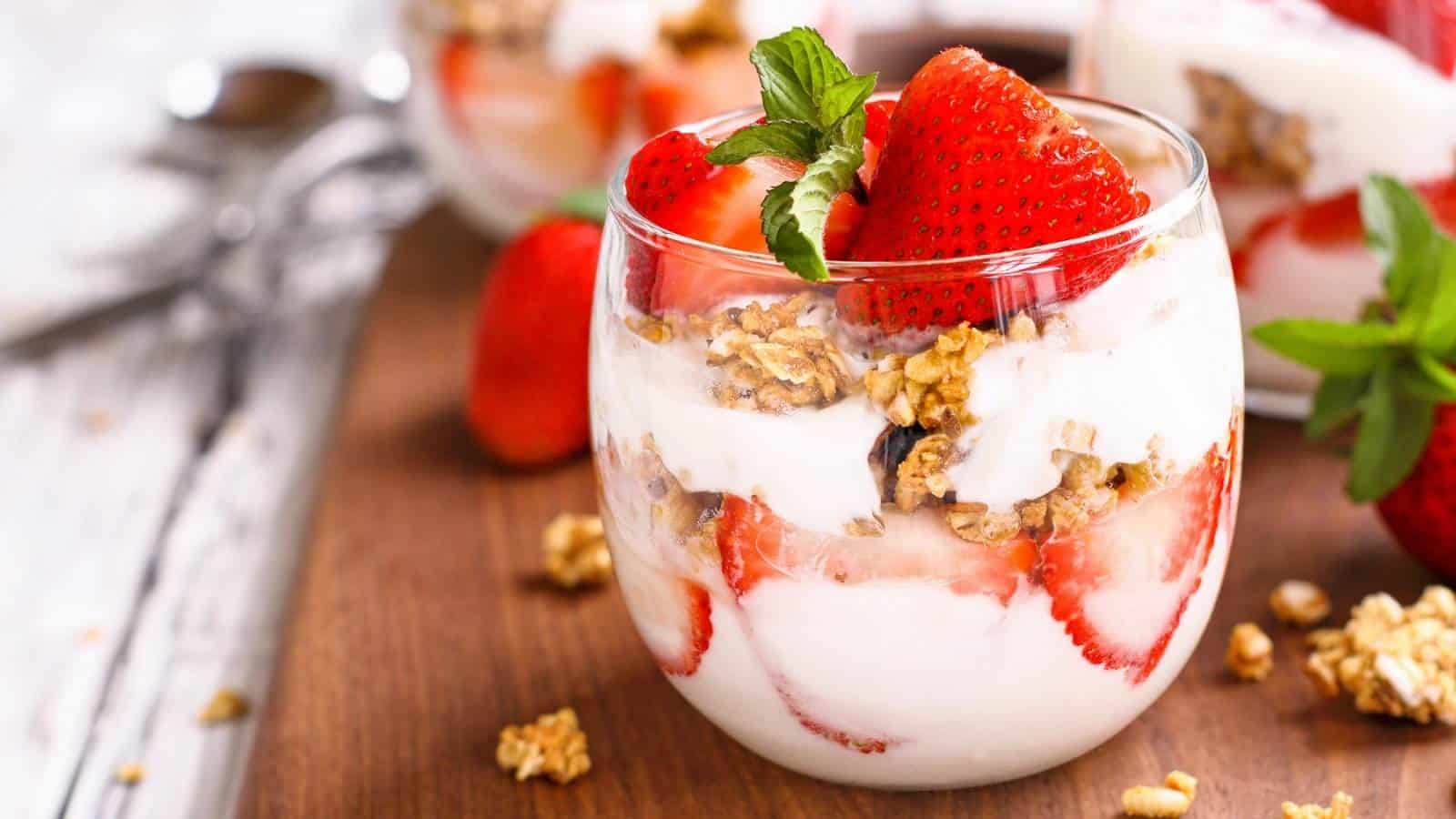
Is a strawberry parfait breakfast or dessert? Layer yogurt, granola and fresh fruit in a bowl, and the answer is obvious; but layer those same ingredients in a tall glass with a drizzle of honey and a spoonful of cream, and suddenly it is not. The parfait has always refused to pick a side, and right now, with National Strawberry Day falling on June 25 this year, that refusal looks less like a quirk and more like a competitive advantage.
The category confusion around strawberry parfaits is part of its appeal as Americans become less tied to traditional meal times. More than 7 in 10 consumers reported in a January 2026 survey that they had skipped at least one traditional meal in the past month, showing how common flexible eating habits have become. In that environment, a food that works equally well at 7 a.m. and 9 p.m. without changing a single ingredient is not just convenient, but exactly what a fragmented eating culture needs.
A breakfast that never agreed to be just breakfast
The parfait’s ambiguity is structural, not incidental. Yogurt, granola and fresh fruit are unambiguously breakfast ingredients: protein, fiber and whole food. Put them in a breakfast bowl, and the eating occasion is settled. Put them in a glass, layer them deliberately and let the colors show through, and those same ingredients cross into dessert territory without a single recipe change.
That crossover works because each component carries dual citizenship. Yogurt is protein-forward enough to justify itself at any hour but creamy enough to satisfy a dessert craving. Granola reads as wholesome at breakfast and as a textural contrast at dinner. Strawberries bring an acidity that cuts richness, a quality that works in a morning parfait just as well as it does alongside cream in a dessert course. The parfait is not pretending to be two things, because it genuinely is.
Peak-season strawberries determine the balance
The strawberry is where the parfait’s identity question gets most interesting, and June is when it gets most honest. The average American eats around 8 pounds of strawberries a year, a figure expected to rise, with peak season in the continental United States running roughly May through July. The fruit at a farmer’s market right now is a different product than what ships in February: smaller, deeply red, with an acidity sharp enough to cut through fat and a sweetness concentrated enough to satisfy without anything added.
That acidity is what tips the glass in either direction. A tart June strawberry pulls the parfait toward breakfast, brightening the yogurt, cutting the granola’s sweetness and keeping the whole thing from reading as indulgent. Macerate those same berries with a little sugar, then let them soften into cream, and the parfait becomes unambiguously dessert. The strawberry is the dial, and in June, home cooks have access to a version of that ingredient that most months only reaches restaurant kitchens.






People build it differently now
Access to better ingredients shows up in how consumers are shopping for the parfait’s components more broadly. The U.S. yogurt market is projected to reach $12.87 billion this year, with growth driven by consumers moving toward higher-protein formats, an accelerating move into plant-based alternatives and gains in shelf-stable drinkable products.
Nondairy alternatives alone are projected to expand at a 6.63% CAGR through 2031. That is not a narrow trend. It is the base of the parfait being actively reconsidered by a large portion of the market.
Swap conventional yogurt for a thick oat-based or coconut alternative, and the flavor profile changes: less tang, more neutral creaminess, which changes which occasion the parfait belongs to. Granola made with oats and honey reads as breakfast; one built with toasted nuts, seeds and dark chocolate edges toward dessert.
The June strawberry, deeply acidic from a local farm, can pull either version back toward morning or push it firmly into evening, depending on how it is prepared. The parfait is one of the few formats where a single ingredient decision changes what meal it is.
The parfait gets right what most foods don’t
Most foods come with an assigned role: a croissant for breakfast, a creme brulee for dessert and a protein bar for a meal replacement. Each works within its lane and struggles outside it. The parfait was never given a lane, which turned out to be its greatest strength. In a food culture that pulls away from fixed meal structures, a format that holds up at 7 a.m., at 3 p.m. and after dinner without modification is rarer than it looks. National Strawberry Parfait Day is a reasonable occasion to notice that the food industry has spent years trying to build what the parfait already is.
Jennifer Allen is a retired professional chef and long-time writer. Her work appears in dozens of publications, including MSN, Yahoo, The Washington Post and The Seattle Times. These days, she’s busy in the kitchen developing recipes and traveling the world, and you can find all her best creations at Cook What You Love.
The post The biggest dessert trend right now isn’t a new flavor. It’s layers. appeared first on Food Drink Life.

(0) comments
Welcome to the discussion.
Log In
Keep it Clean. Please avoid obscene, vulgar, lewd, racist or sexually-oriented language.
PLEASE TURN OFF YOUR CAPS LOCK.
Don't Threaten. Threats of harming another person will not be tolerated.
Be Truthful. Don't knowingly lie about anyone or anything.
Be Nice. No racism, sexism or any sort of -ism that is degrading to another person.
Be Proactive. Use the 'Report' link on each comment to let us know of abusive posts.
Share with Us. We'd love to hear eyewitness accounts, the history behind an article.