
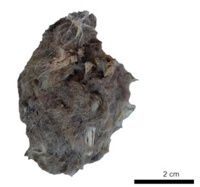

Photo by Nuh Isa Nada El Carillo via Pexels
By Stephen Beech
Man's ancestors learned to use fire as early as 1.7 million years ago — much sooner than previously known, according to a new study.
Researchers have uncovered evidence that early humans were using fire in Wonderwerk Cave in South Africa between 1.07 and 1.79 million years ago.
By applying a new method that detects traces of burning in fossil bones, scientists found signs of "repeated" fire use deep inside the cave, far beyond the reach of natural wildfires.
Their findings, published in the journal PLOS One, suggest that early humans were bringing naturally occurring fire into the cave and maintaining it there.
The discovery provides new insights into how our ancestors first began to harness one of the most important tools in human history.
The study was part of an ongoing collaboration between Liora Kolska Horwitz, co-director of the Wonderwerk Cave project, and an international team of researchers.
The new research combines methods from archaeology, paleontology, geology and a range of scientific techniques to investigate early use of fire.
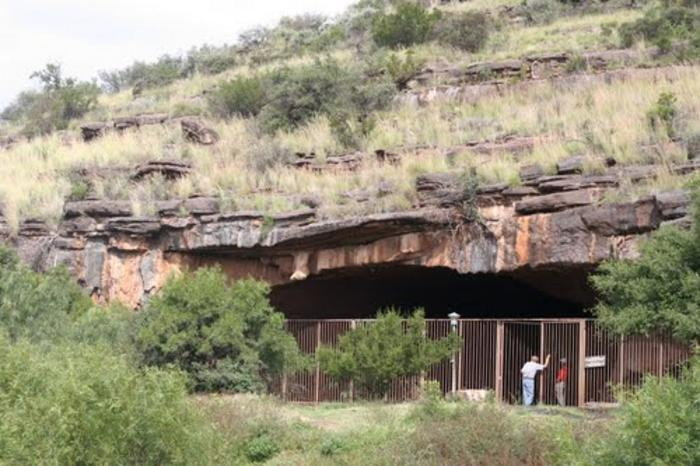
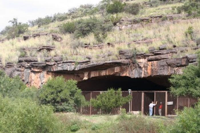
(Wonderwerk Cave Project via SWNS)
The study builds on the previous discovery of early fire at Wonderwerk Cave, located in the Kalahari Desert, that was dated to around 1 million years ago, providing the oldest evidence for intentional use of fire worldwide.
Continuing research at Wonderwerk Cave has now pushed the date for early fire back further, with new evidence for traces of fire use in archaeological deposits dating between 1.07 and 1.79 million years ago, extending the chronology of one of the earliest known records of fire use associated with hominins.
The researchers say fire provided warmth, protection from predators, and light after sunset, and eventually enabled cooking.
But determining exactly when humans first began using fire has remained one of archaeology's most challenging questions.
Horwitz said: "Evidence of fire from such ancient sites is often subtle and difficult to detect.
"Our study provides new tools for identifying traces of ancient burning and reveals that fire was repeatedly present deep inside Wonderwerk Cave."
The study also introduced a new method based on the light-emitting properties of burned bone.
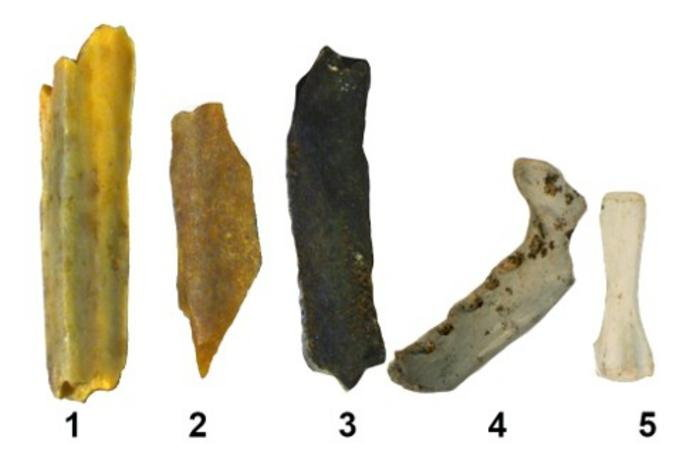
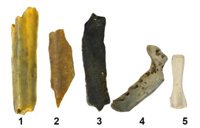
(Wonderwerk Cave Project via SWNS)






When illuminated with specific wavelengths of light, bones that have been exposed to intense heat emit a distinctive glow.
By combining the non-destructive luminescence technique with established chemical analysis, the researchers were able to identify burned animal bones with a high degree of confidence.
Horwitz said: "The method is non-invasive, portable, and can be applied to large collections of fossils without damaging them."
The new research applied the method to examine traces of burning on hundreds of tiny fossil bones left behind by owls that once roosted in the cave.
Because the remains accumulated naturally on the cave floor, the researchers explained that they provide an independent, non-anthropogenic record of ancient events.
The team found "clear signs" of burning in an archaeological layer associated with artifacts from the initial Acheulean, likely associated with Homo erectus.
The burned remains were discovered around 30 meters (100 feet) inside the cave — far beyond the reach of natural wildfires, and in a layer lacking remains of guano which rules out spontaneous combustion.
But Horwitz said the findings do not indicate that early humans could create fire at will.

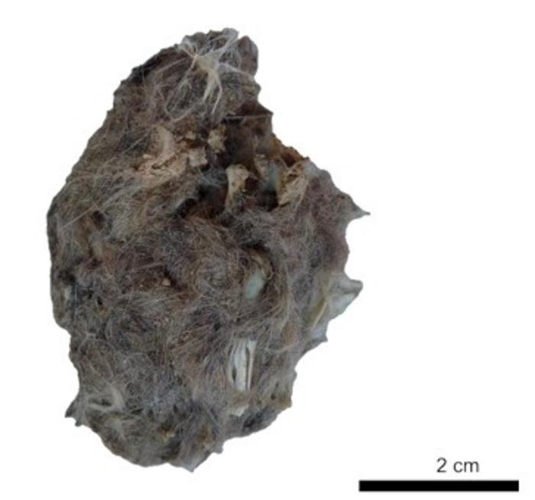
(Wonderwerk Cave Project via SWNS)
In addition, she said the evidence points to the use of naturally occurring fires, such as those sparked by lightning or wildfires on the African savanna.
Horwitz said: "The early humans introduced this fire into the cave on multiple occasions and maintained it there before it eventually died out."
The team suggests that they may have used the owl pellets as fuel, resulting in burning of the tiny bones of rodents that were in the pellets.
But Horwitz said bringing fire into a cave and maintaining it represents a "significant" behavioral achievement.
She added: "These discoveries show that early humans were not simply passive observers of natural fires.
"They were actively engaging with fire and incorporating it into their lives."
Archaeologists have previously found not only traces of fire usage, but also the oldest likely evidence for cooking of food in the Golan Heights dating to around 780,000 years ago.
The oldest definitive evidence for igniting a fire dates to around 400,000 years ago at a site in Barnham, Suffolk.

(0) comments
Welcome to the discussion.
Log In
Keep it Clean. Please avoid obscene, vulgar, lewd, racist or sexually-oriented language.
PLEASE TURN OFF YOUR CAPS LOCK.
Don't Threaten. Threats of harming another person will not be tolerated.
Be Truthful. Don't knowingly lie about anyone or anything.
Be Nice. No racism, sexism or any sort of -ism that is degrading to another person.
Be Proactive. Use the 'Report' link on each comment to let us know of abusive posts.
Share with Us. We'd love to hear eyewitness accounts, the history behind an article.