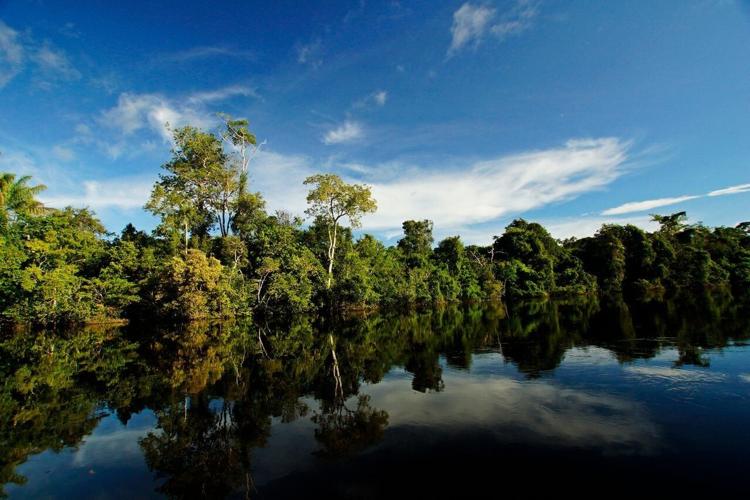

Photo by Christopher Borges via Pexels
By Stephen Beech
Trees may be more adaptable to droughts than previously believed, according to a new study.
The discovery offers "unexpected hope" for the future amid global warming, say scientists.
Tropical forests store enormous amounts of carbon and harbor most of the world's terrestrial biodiversity.
But ecologists fear that increasingly severe droughts threaten their ability to survive and continue absorbing carbon from the atmosphere.
However, the new findings, published in the journal Nature, show that tropical trees may be more adaptable to drought than scientists had previously believed.
Researchers from the United States, Sweden and Australia measured 11 hydraulic traits - the properties that determine how trees transport and conserve water - in nearly 300 trees representing 18 tropical species across Puerto Rico's major climate zones.
They ranged from "everwet" tropical forests - which receive 4,000 millimeters (157 inches) of rain per year - to dry tropical forests, which receive 1,000 millimeters (39 inches) of rain per year.
The team found that 17 of the 18 tree species adjusted their hydraulic traits to match local water availability, becoming more drought-resistant in drier forests.
For years, ecologists assumed the hydraulic traits were largely fixed within species, since studies in temperate forests had found little variation.






But the new study shows the opposite: tropical tree species exhibit substantial variation within species, allowing many of them to thrive across very different rainfall conditions.

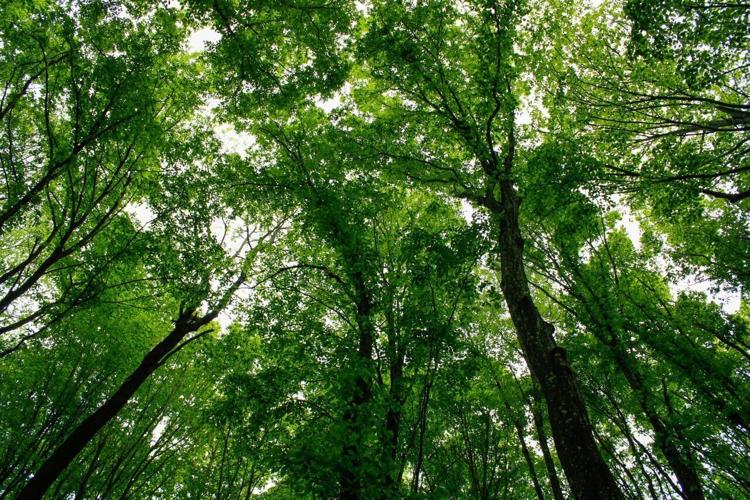
Photo by BAB2056 via Pexels
Study senior author Maria Uriarte, of Columbia University, New York, said: "The prevailing view has been that these critical drought-resistance traits don't change much within species.
"We found exactly the opposite.
"Most tropical tree species can adjust their water transport systems to local conditions, suggesting they have greater capacity to cope with increasingly severe droughts than we previously recognized."
The researchers measured traits related to both drought tolerance - a tree's ability to survive water shortages - and drought avoidance: strategies that conserve water before damage sets in.
Trees in drier forests consistently showed greater resistance to hydraulic failure and larger safety margins against drought stress, whereas trees in the wetter forests tended to have higher water-storing capacity.
Study leader Chris Smith-Martin, from the University of Minnesota, says current ecosystem and climate models generally assume hydraulic traits stay constant within species.
He said the study suggests that building tree flexibility into prediction models could "sharpen" understanding of forest resilience, carbon storage, and how species composition shifts as the climate changes.
Uriarte added: "This study shows that we need to think about adaptation not only in terms of which tree species are present in a forest, but also how individual species adjust to local environments.
"That flexibility could prove critical as droughts become more frequent and severe."

(0) comments
Welcome to the discussion.
Log In
Keep it Clean. Please avoid obscene, vulgar, lewd, racist or sexually-oriented language.
PLEASE TURN OFF YOUR CAPS LOCK.
Don't Threaten. Threats of harming another person will not be tolerated.
Be Truthful. Don't knowingly lie about anyone or anything.
Be Nice. No racism, sexism or any sort of -ism that is degrading to another person.
Be Proactive. Use the 'Report' link on each comment to let us know of abusive posts.
Share with Us. We'd love to hear eyewitness accounts, the history behind an article.