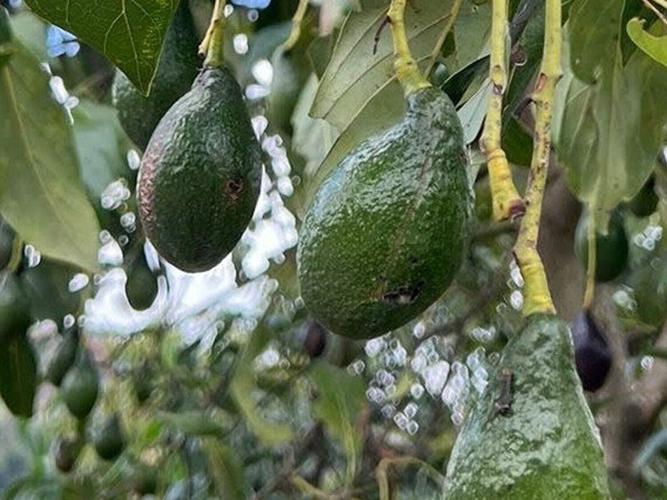
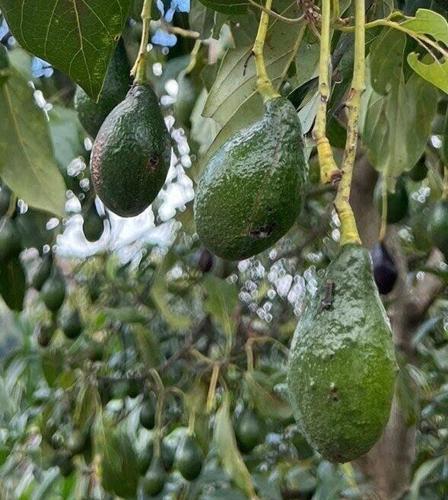
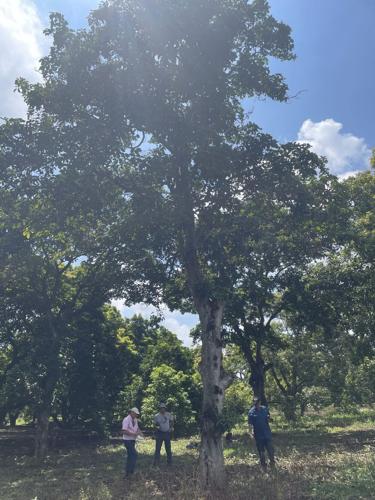
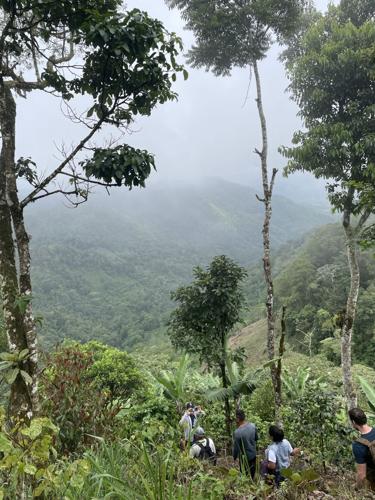
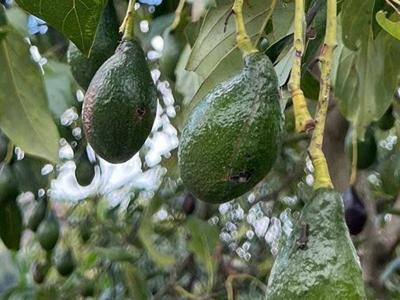

Some of the special avocados growing in Nicaragua. (Kevin Wann via SWNS)
By Stephen Beech
Genetically distinct avocados discovered in Nicaragua could lead to more "superfood" varieties.
The fruit was first transported hundreds of miles to Central America from South America around 5,000 years ago, suggests a new study.
The newly discovered "hotbed" of avocado diversity could boost sustainable agriculture and commercial varieties of the trendy fruit, say scientists.
American researchers uncovered genetic traces of ancient migration in DNA from avocados growing in Nicaragua.
They found evidence that, around 5,000 years ago, people migrating north from South America carried the oversized seeds of avocados.
As the seeds were dispersed throughout the humid lowlands of Central America, they hybridized with native varieties, producing a diversity of avocado varieties that produce the large, smooth-skinned berries that are now enjoyed around Central America.
Despite resembling the avocados found in humid regions such as Florida and the Caribbean, the local varieties are genetically distinct from the commercially grown fruits found in guacamole.
The team examined DNA from avocado leaves collected in Nicaragua, Honduras and southern Mexico.
They also spoke with the farmers and gardeners to learn how they cultivate these local avocados.

Farmers and gardeners taught researchers how they cultivate these local avocados. (Kevin Wann via SWNS)
Study leader archaeobotanist Kevin Wann said: "There is a much wider breadth of avocado diversity that science had not yet documented.
"We could potentially tap into this genetic diversity to conserve commercial avocado plants that are vulnerable to disease."
The natural range of avocado trees extends from Mexico to Peru.
For more than 10,000 years, humans in the region have coveted the plant's fruit, whose yellowish-green flesh is packed with nutrients and fats.
The "superfoods" are now cultivated around the world and, in 2024, growers produced more than 11 million metric tons of avocados.
More than 80% of these avocados were a single variety known as the Hass avocado.
The large, long-lasting avocados are produced through clonal grafting, where a branch is taken off one Hass avocado tree and attached to another tree to bear the same exact fruit.
As a result, most avocados in grocery stores are genetically indistinguishable.
That makes all Hass avocados vulnerable to the same threats.
A single disease or change in temperature or precipitation can wipe out an entire population of Hass avocados.
Increasing the genetic diversity of avocados is crucial to protecting the multi-billion-dollar industry.
Wann, a doctoral student at Texas A&M University, says the muggy lowlands of countries such as Nicaragua and Honduras are rich in avocado diversity.
Traditional agricultural practices have honed the region's native avocado varieties, also known as landraces, for thousands of years.
Wann and his colleagues collected leaf samples from dozens of varieties in southern Mexico, Nicaragua and coastal Honduras.
The research team also interviewed local gardeners and farmers in Nicaragua and Honduras to learn more about native avocado varieties.






Study senior author Logan Kistler, of the Smithsonian's National Museum of Natural History in Washington, said: "You can't think about biodiversity without considering agriculture, because it's one of the most impactful ecological activities we do.
"Traditional agricultural practices have shaped these plants for thousands of years."
During a tour of one grove in Nicaragua, a farmer offered Wann an avocado, unaware that he'd never tasted the fruit he studied.
He said: "I wanted to see how far I could go into my dissertation studying avocados without ever eating one.
"I made it four years but when one of the native farmers offered me one, I couldn't turn him down.
"And it was delicious."

The avocado diversity preserved in Central America's lowlands could help protect commercial avocados from the fate of other crops like bananas. (Kevin Wann via SWNS)
Locals confirmed that the lowland avocado landraces had not experienced root rot, the most common disease affecting commercial avocados.
The researchers extracted and analyzed DNA from the harvested leaf samples.
They collected DNA from 47 native avocado landraces, 32 of which came from Nicaragua.
The scientists compared the DNA from the various landraces with previously published genetic data from more than 200 other avocado lineages.
The findings, published in the journal Plants People Planet, showed that the avocado samples collected in southern Mexico were closely related to ancestral highland populations found in other parts of Mexico as well as commercial varieties.
In contrast, the landraces sampled in the lowlands of Nicaragua were genetically tied to avocados found farther south, including populations along the coast of Colombia.
This revealed that many local landraces in that part of Central America are planted from fruits originally grown in South America.
The researchers believe that human populations brought their local avocado varieties with them as they migrated through the Americas.
Based on the genetics, this avocado relocation likely occurred around 5,000 years ago, which is around when other South American crops, such as chocolate and certain varieties of maize, appear in the Central American archaeological record.
Kistler thinks varieties of this fleshy fruit continued to move back and forth as ancient communities migrated over thousands of years.
He said: "It was a very connected landscape throughout Central and South America.
"It's not one big episode of people moving avocados and other food species around, it's a constant interchange."
Wann believes the trove of avocado diversity preserved in Central America's lowlands could help protect commercial avocados from the fate of other clonal crops such as bananas, which have been devastated by fungal pathogens in the past.
The region's local landraces are also adapted to warmer and wetter climates.
But some of the local avocado varieties are at risk.
The researchers were told that several Nicaraguan farmers have chopped down some avocado trees to make more space for commercial varieties.
Reducing ancient avocado diversity could threaten the fruit's future, according to the researchers.
Wann added: "These locally grown fruit trees are vital to the longevity of avocados as a species.
"Their high levels of genetic diversity makes them more prepared to face potential shifts in climate or diseases compared to the ones you'd buy at a supermarket."

(0) comments
Welcome to the discussion.
Log In
Keep it Clean. Please avoid obscene, vulgar, lewd, racist or sexually-oriented language.
PLEASE TURN OFF YOUR CAPS LOCK.
Don't Threaten. Threats of harming another person will not be tolerated.
Be Truthful. Don't knowingly lie about anyone or anything.
Be Nice. No racism, sexism or any sort of -ism that is degrading to another person.
Be Proactive. Use the 'Report' link on each comment to let us know of abusive posts.
Share with Us. We'd love to hear eyewitness accounts, the history behind an article.