The US Federal Reserve opened its two-day meeting on Tuesday with policymakers expected to keep interest rates steady, as the war on Iran's effects on energy prices and supply chains ripple through the world's largest economy.
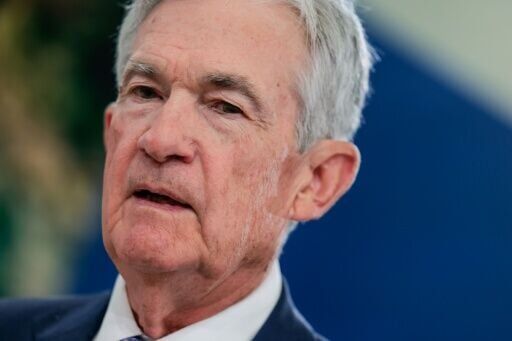
The meeting is expected to be Jerome Powell's last as chairman of the US central bank, a term that has seen President Donald Trump frequently insult and criticize him over the last year.
On Friday, Trump's Justice Department said it was dropping -- for now -- a criminal probe into Powell over cost overruns on a building renovation project.
The case has been a key flashpoint, with Powell calling the investigation a pressure tactic to influence the independent Fed on rate-setting policy.
Fed officials are set to keep rates steady at a range between 3.50 percent and 3.75 percent, extending their pause on rate cuts since the start of the year. Their decision will be announced on Wednesday.
The US central bank has a dual mandate to keep inflation to its long-term two-percent target and to ensure maximum employment.
US inflation, however, has soared well above that level for years. It initially spiked in the pandemic but prices have not stabilized since, leaving consumers battered by years of higher-than-expected price increases.
In March, consumer inflation rose sharply to 3.3 percent year-on-year, driven by higher energy prices as a result of the Iran war.
The Middle East has been plunged into violence since the United States and Israel launched the war on February 28 with wide-ranging airstrikes, prompting Iranian retaliatory action.
Iran has virtually blocked the key Strait of Hormuz, through which about a fifth of the world's oil and gas normally flows, spiking energy prices and leading to widespread supply shortages.
Fed policymakers have signalled that they are concerned about the knock-on effects of the energy price increases fuelling overall inflation and potentially slowing the economy due to production cost increases.




On Tuesday, The Conference Board's consumer confidence data showed Americans remained wary of the war's effects on their personal budgets, with inflation expectations still high and overall confidence near its lowest levels in five years.
Markets overwhelmingly expect the Fed to keep rates unchanged, however, as the central bank waits to see on which side of its mandate it will need to intervene.
- Powell's last meeting? -
While the rate decision has not drawn much speculation this month, all eyes on Wednesday will be on Fed Chair Powell's press conference.
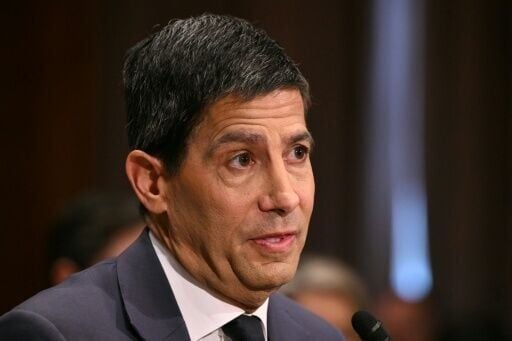
Powell's term as chair ends in May, and his successor -- Trump nominee Kevin Warsh -- has faced a rocky road to confirmation.
On Friday, a key obstacle on that road was removed when the US Justice Department said it was dropping -- for now -- the criminal probe into Powell over the renovation project's cost overruns.
Days later, Republican Senator Thom Tillis -- who had vowed to hold up Warsh's nomination while the probe against Powell was ongoing -- said he would support the confirmation.
If Warsh is confirmed he would succeed Powell in May as chair. The outgoing Fed chief could, however, stay on as a member of the board, in what would be an unusual but not unprecedented move.
Powell's term on the board ends in January 2028.
aha/ksb

(0) comments
Welcome to the discussion.
Log In
Keep it Clean. Please avoid obscene, vulgar, lewd, racist or sexually-oriented language.
PLEASE TURN OFF YOUR CAPS LOCK.
Don't Threaten. Threats of harming another person will not be tolerated.
Be Truthful. Don't knowingly lie about anyone or anything.
Be Nice. No racism, sexism or any sort of -ism that is degrading to another person.
Be Proactive. Use the 'Report' link on each comment to let us know of abusive posts.
Share with Us. We'd love to hear eyewitness accounts, the history behind an article.