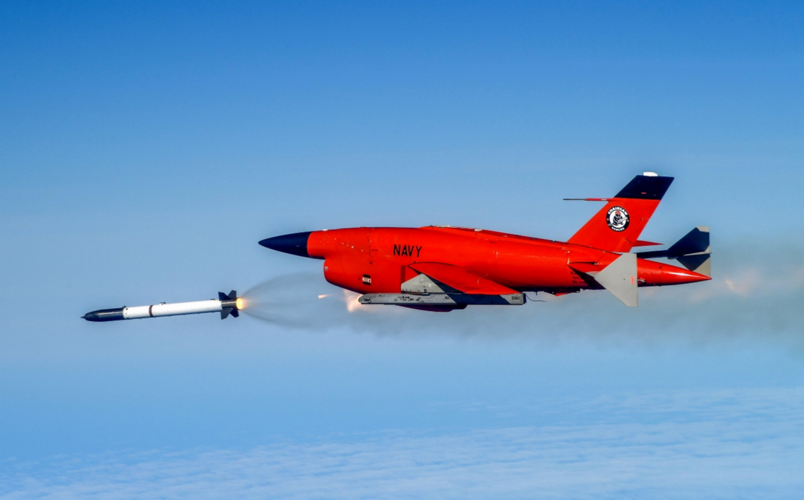
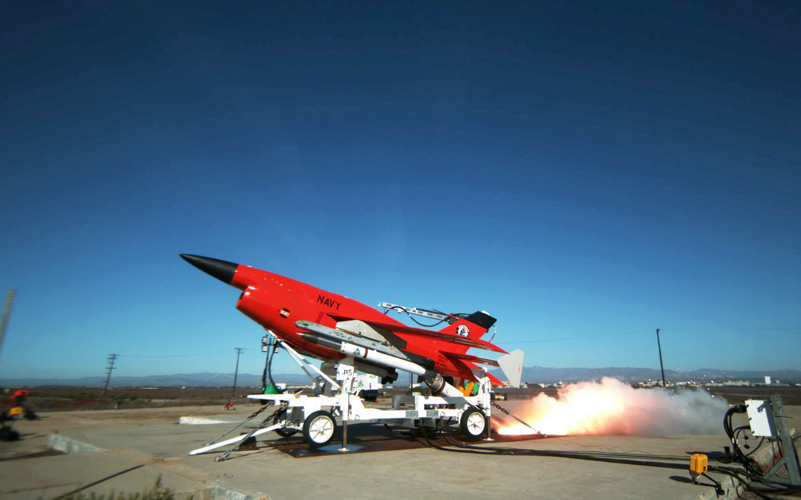
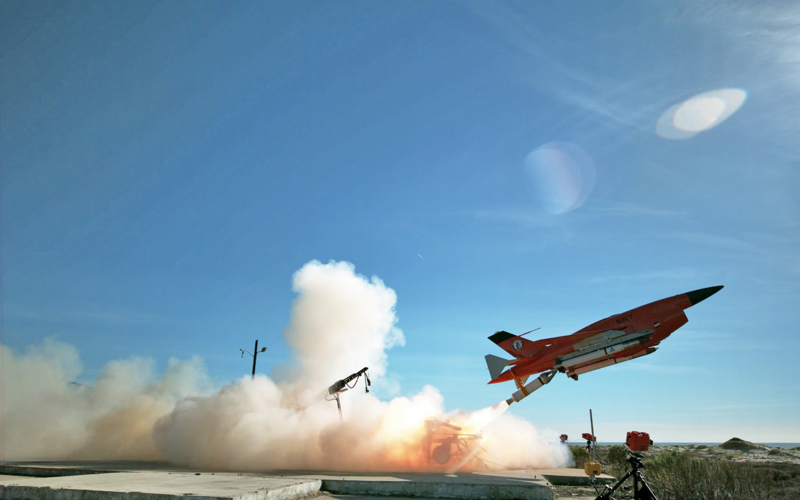
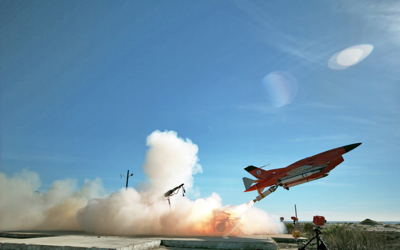

A BQM-34 unmanned aerial target, which is remotely piloted during flight, releases a test missile over the Point Mugu Sea Range. (NAWCWD via SWNS)
By Dean Murray
The U.S. military has shown off a 'game-changing' rocket - based on 1960s tech.
A test saw a ramjet missile engine weapon fired from an unmanned aircraft - a development set to allow greater range and speed.
The Naval Air Warfare Center Weapons Division (NAWCWD) successfully air-launched the Solid Fuel Integral Rocket Ramjet (SFIRR) from an unmanned vehicle for the first time, which they say is "one step toward modernising missile technology."
A BQM-34 unmanned aerial target, which is remotely piloted during flight, released the test missile over California's Point Mugu Sea Range.

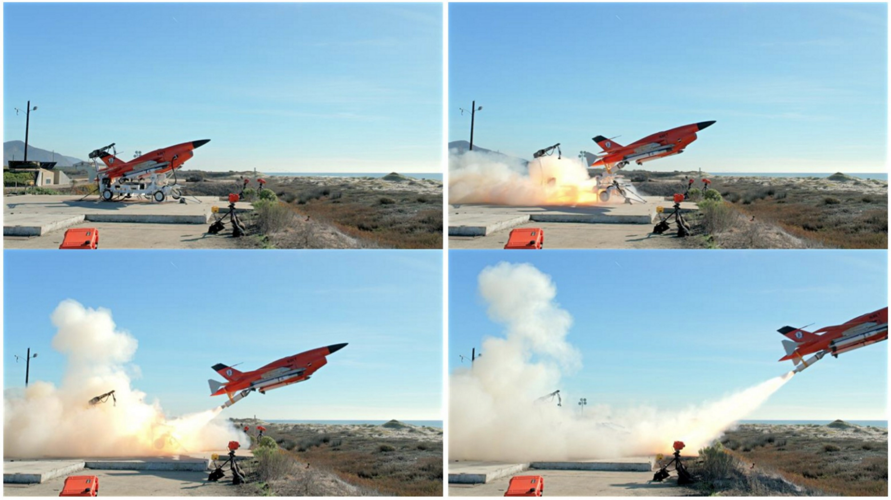
A BQM-34 unmanned aerial vehicle launches from Point Mugu during a test of the Navy’s Solid Fuel Integral Rocket Ramjet (SFIRR) demonstrator, developed by Naval Air Warfare Center Weapons Division. (NAWCWD via SWNS)
SFIRR technology, dating back to at least the early 1960s, is a simple air-breathing jet engine with no moving parts that uses the vehicle’s high-speed forward motion to compress incoming air for combustion, producing thrust efficiently at supersonic speeds.





Abbey Horning, product director of NAWCWD's Advanced Concepts, Prototyping and Experimentation office, said: "We're not just revisiting an old idea; we're refining and modernising it to fit today's mission.
"This successful integration validates key aspects of our design and moves us closer to delivering an advanced propulsion system that will provide warfighters with greater range and speed."
SFIRR simplifies missile propulsion by eliminating the complexity found in liquid fuel ramjet propulsion. This significantly reduces weight, allowing missiles to carry more payload and travel greater distances with increased manoeuvrability.

A BQM-34 unmanned aerial vehicle launches from Point Mugu during a test of the Navy’s Solid Fuel Integral Rocket Ramjet (SFIRR) demonstrator. (NAWCWD via SWNS)
Ephraim Washburn, deputy director for energetics at NAWCWD, noted that technology evolution occurs across many industries. He compared SFIRR advancements to automotive improvements, where early designs laid a foundation, and ongoing developments continue to enhance performance.
He said, "We've been driving cars since the early 1900s, but that doesn't mean we stopped improving them. Solid fuel ramjet technology had significant investment in the 1970s and 1980s, but we're making it a modern propulsion solution for the fleet today.
"This is a combat-credible technology. We are working to refine its range, endurance, and targeting capabilities."
Michael Smith, a NAWCWD spokesperson, added: "Like cars, rockets evolve: Navy’s ramjet test proves game-changing potential."
(0) comments
Welcome to the discussion.
Log In
Keep it Clean. Please avoid obscene, vulgar, lewd, racist or sexually-oriented language.
PLEASE TURN OFF YOUR CAPS LOCK.
Don't Threaten. Threats of harming another person will not be tolerated.
Be Truthful. Don't knowingly lie about anyone or anything.
Be Nice. No racism, sexism or any sort of -ism that is degrading to another person.
Be Proactive. Use the 'Report' link on each comment to let us know of abusive posts.
Share with Us. We'd love to hear eyewitness accounts, the history behind an article.