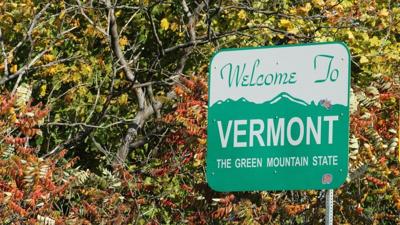

Welcome to Vermont sign - Photo credit: Unsplash+ License.
Farm visits are no longer just a quick stop for maple syrup, a hayride, a U-pick afternoon, or a photo beside a red barn.
As agritourism grows in the U.S., travelers are looking for more. They want to meet the people behind the food, understand how farms work and feel connected to local communities.
California may show the scale of America's agritourism boom, but Vermont shows another side of the trend.
Agritourism Is More Established In Europe, But The U.S. Is Catching Up
Agritourism is not new. The term "agritourism" itself is traced to Italy in the 1980s, when travelers escaped summer heat by spending time in rural mountain areas.
In Europe, rural holidays have been part of travel culture for generations, especially in countries such as France, Italy, Spain, Germany and England.
A 2025 working paper from Iowa State University's Center for Agricultural and Rural Development notes that Europe remains the largest agritourism market globally, accounting for 47.02% of the world's agritourism market in 2024.
France, Spain and Italy are among the region's leaders, with experiences built around wine, cheese-making, olive oil production, farm stays and rural food traditions. Italy alone has more than 24,000 farms offering agritourism services.
The same Iowa State paper traces American agritourism to the Great Depression, when city residents looked for affordable farm getaways and farmers used visitors as a source of extra income.
Later, pick-your-own farms, pumpkin patches, corn mazes, and wine tours helped make agritourism part of American rural travel.
Now, visitors are no longer only interested in buying local products; they are looking for ways to learn why they exist, who makes them, and what kind of landscape supports them.
California Shows The Scale, But Vermont Shows The Small-Farm Model
California is leading America's agritourism boom in scale.
The state has 63,134 farms with 62% covering fewer than 50 acres and 90% family-owned, according to the 2022 Census published by the United States Department of Agriculture's (USDA) National Agricultural Statistics Service (NASS).
Agritourism in California is nearly a $100 million industry, with more than 2,000 farms and ranches offering agritourism activities, according to the University of California Agriculture and Natural Resources.






Vermont offers a different lens.
For Dr. Lisa Chase, director of the Vermont Tourism Research Center at the University of Vermont, Vermont's role in the agritourism conversation is not about size.
"While every state in the U.S. offers some agritourism, and California is notable as a large state offering many types of visitor experiences, what makes Vermont unique is the way that our farms are embedded in our rural communities," says Dr. Chase in an email interview.
The state's agricultural identity has long been tied to maple syrup, dairy farms, orchards, cheese, cider and small-scale food production.
Vermont has 6,537 farms, of which 323 earned income from agritourism and recreational services, according to the latest USDA Census of Agriculture. Those Vermont farms reported $4.671 million in agritourism and recreational services income in 2022, up from $1.709 million in 2017.
Dr. Chase also notes that Vermont has the highest percentage of farms offering agritourism, often through personalized, immersive, and educational experiences, which differs from "agritainment," where large numbers of visitors move through activities that are not always closely connected to agricultural production.
What Makes Vermont Agritourism Different
In Vermont, the farm visit is often smaller, slower and more personal.
"Being a small state with closely-knit rural communities, Vermont farmers love sharing our agricultural heritage and traditions with visitors from near and far," says Dr. Chase.
That is one reason Vermont has drawn attention beyond the U.S. Dr. Chase says her colleagues from Italy were impressed when they traveled to Burlington in 2022 for the Global Agritourism Conference at the University of Vermont.
Farms, orchards and vineyards across Vermont have expanded beyond production to offer pick-your-own berries, harvest festivals, sugarhouse tours during maple season, overnight farm stays and farm-to-table meals.
For travelers, that can mean moving beyond a scenic drive and into a more sensory experience of rural life. Dr. Chase points to tasting fresh cider at an orchard, smelling maple syrup boiling when the sap is running, collecting warm eggs from under a hen or seeing a lamb being born in early spring.
Vermont's agritourism network also has a formal support system, the Vermont Agritourism Collaborative, a partnership between UVM Extension, the Vermont Agency of Agriculture, the Vermont Department of Tourism and Marketing, the Farm-Based Education Network and other organizations that support farmers.
Dr. Chase says the collaborative provides technical assistance and training for farmers interested in agritourism, farm-based education and direct sales.
That support matters because welcoming visitors is not as simple as opening a barn door. Farms need to consider safety, marketing, liability, visitor flow, storytelling, and how tourism fits into the larger farm business.

(0) comments
Welcome to the discussion.
Log In
Keep it Clean. Please avoid obscene, vulgar, lewd, racist or sexually-oriented language.
PLEASE TURN OFF YOUR CAPS LOCK.
Don't Threaten. Threats of harming another person will not be tolerated.
Be Truthful. Don't knowingly lie about anyone or anything.
Be Nice. No racism, sexism or any sort of -ism that is degrading to another person.
Be Proactive. Use the 'Report' link on each comment to let us know of abusive posts.
Share with Us. We'd love to hear eyewitness accounts, the history behind an article.