The latest developments in the Middle East war:
- Iran says no trust -
Iran's parliament speaker Mohammad Bagher Ghalibaf, who took part in peace talks with the United States this weekend, said that Washington was "unable" to win Tehran's trust during the discussions.
"My colleagues in the Iranian delegation... put forward constructive initiatives but ultimately the other side was unable to gain the trust of the Iranian delegation in this round of negotiations," Ghalibaf said in a post on X.
- US attempting to 'dictate' terms -
Iran's former foreign minister Mohammad Javad Zarif, who led his country's delegation at 2015 nuclear talks, blamed the failure of negotiations to end the Middle East war on US attempts to "dictate" its terms.
"No negotiations - at least with Iran - will succeed based on 'our/your terms'," said Zarif, one of the architects of the nuclear deal with the United States and other world powers, which was abandoned in 2018 by US President Donald Trump.
- UK disappointed -
UK health minister Wes Streeting said it was "disappointing" that negotiations between the United States and Iran in Islamabad had stalled, and criticised Trump's "incendiary" rhetoric during the conflict.
"It's obviously disappointing that we haven't yet seen a breakthrough in negotiations and an end to this war in Iran that is a sustainable one," Streeting told Sky News.
- Key Saudi pipeline back -
Saudi Arabia's energy ministry said that its key east-west oil pipeline and other facilities had been restored following attacks by Iran on infrastructure across the Gulf.
Citing an energy ministry statement, the official Saudi Press Agency reported that the attacks had led to a "loss of approximately 700,000 barrels per day of pumping capacity through the east-west pipeline" and work was under way to restore full production capacity at the kingdom's Khurais oil field.
- Tehran downplays no-deal finish -
Iran's foreign ministry said no one had held any expectation that talks with the United States could have reached an agreement within one session after the negotiations in Islamabad stalled.





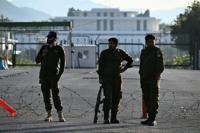
"Naturally, from the beginning we should not have expected to reach an agreement in a single session. No one had such an expectation," ministry spokesperson Esmaeil Baqaei said, according to state broadcaster IRIB.
- Talks' end 'disappointing' Australia -
"The priority now must be to continue the ceasefire and return to negotiations," Australian Foreign Minister Penny Wong said in a statement, adding it was "disappointing that the Islamabad talks between the United States and Iran have ended without agreement".
- Pakistan urges US, Iran -
Pakistan's foreign minister insisted that Washington and Tehran must uphold a ceasefire agreement, after marathon talks between the two sides to end the war in the Middle East ended without a deal.
"It is imperative that the parties continue to uphold their commitment to ceasefire," said Ishaq Dar, whose government hosted the talks and acted as a mediator.
- Vance leaves without deal -
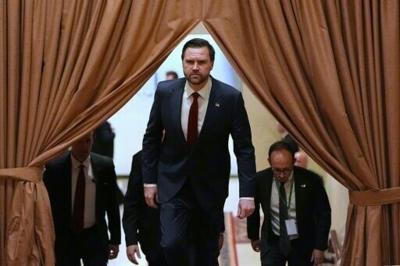
US Vice President JD Vance departed Pakistan aboard Air Force Two soon after saying that talks with Iran failed to reach an agreement after he put forward a "final and best offer".
"The simple fact is that we need to see an affirmative commitment that they will not seek a nuclear weapon and will not seek the tools that would enable them to quickly achieve a nuclear weapon," he told reporters in Islamabad, on the main sticking point for talks moving ahead.
- Iran calls US 'unreasonable' -
"The Iranian delegation negotiated continuously and intensively for 21 hours in order to protect the national interests of the Iranian people; despite various initiatives from the Iranian delegation, the unreasonable demands of the American side prevented the progress of the negotiations. Thus the negotiations ended," Iranian state broadcaster IRIB said.
- Iran says talks hinged on avoiding 'excessive demands' -
The success of peace talks between the United States and Iran depended on Washington avoiding "excessive" and "unlawful" demands, the Iranian foreign ministry's spokesman said early on Sunday after marathon talks in Islamabad.
"The success of this diplomatic process depends on the seriousness and good faith of the opposing side, refraining from excessive demands and unlawful requests, and the acceptance of Iran's legitimate rights and interests," Esmaeil Baqaei wrote on X.
burs-sbk/cw
(0) comments
Welcome to the discussion.
Log In
Keep it Clean. Please avoid obscene, vulgar, lewd, racist or sexually-oriented language.
PLEASE TURN OFF YOUR CAPS LOCK.
Don't Threaten. Threats of harming another person will not be tolerated.
Be Truthful. Don't knowingly lie about anyone or anything.
Be Nice. No racism, sexism or any sort of -ism that is degrading to another person.
Be Proactive. Use the 'Report' link on each comment to let us know of abusive posts.
Share with Us. We'd love to hear eyewitness accounts, the history behind an article.