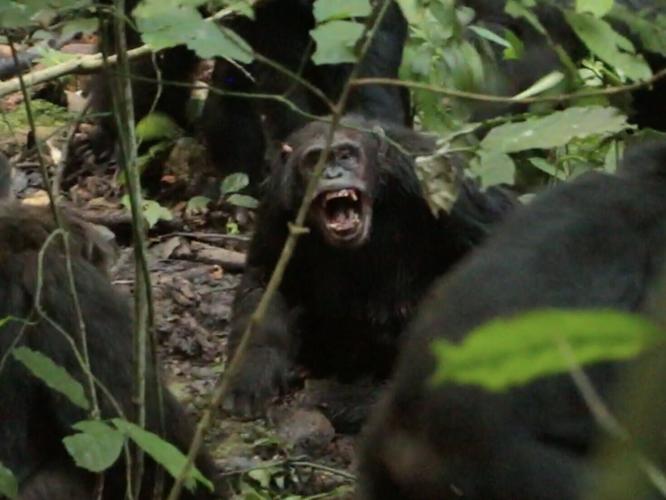
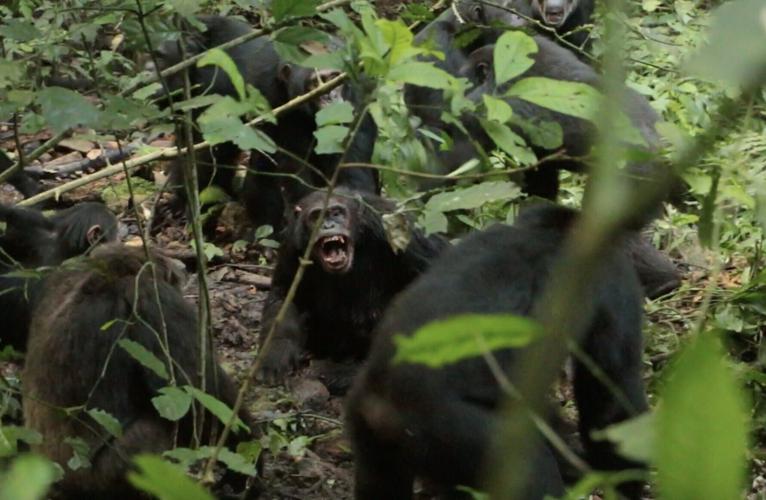
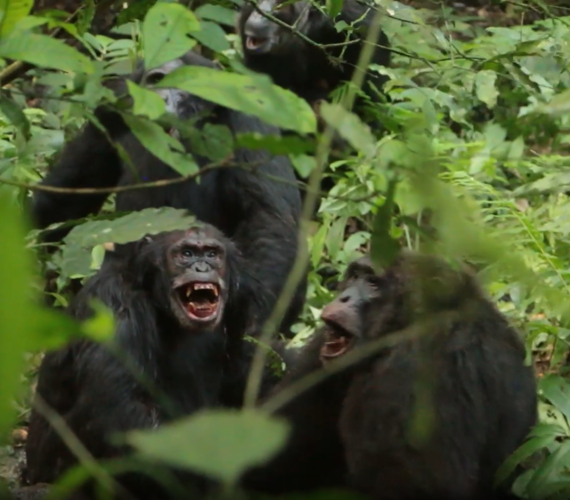
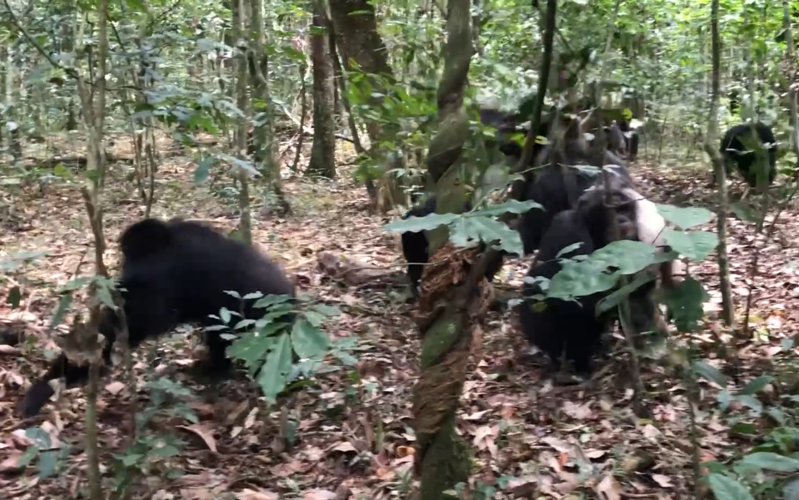
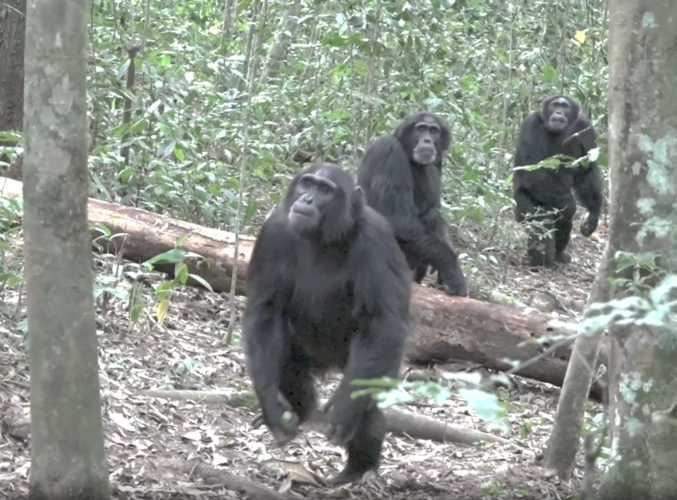
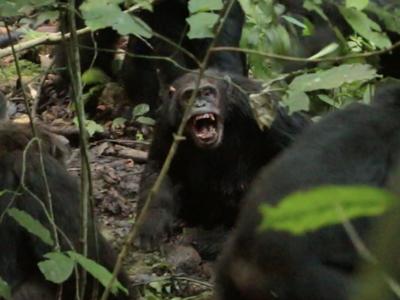

Western males attack Basie in 2019. (Aaron Sandel via SWNS)
By Stephen Beech
Chimps are at war — with each other.
A deadly "civil war" has broken out among the largest group of wild chimpanzees known to scientists, resulting in a permanent split into two camps.
Researchers say it is the first clearly documented permanent fission in wild chimps and the sustained intergroup violence that followed.
The study drew on three decades of field observations of the Ngogo chimpanzees in Kibale National Park, Uganda.
Chimps are one of the two closest living relatives to humans, and the Ngogo population has featured in the Netflix documentary series "Chimp Empire."

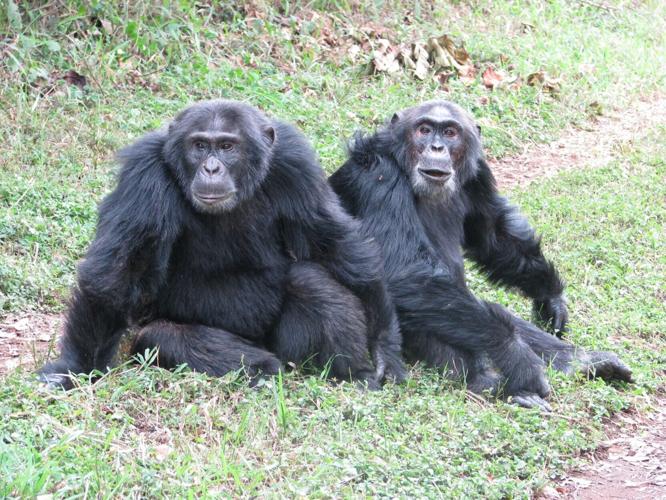
Central male Morton (left) and Western male Garrison (right). (John Mitani via SWNS)
Scientists say their findings, published in the journal Science, show that shifting social ties alone can break up a once unified group and ignite sustained, deadly conflict among former allies.
The research team estimate such "chimp wars" occur only once every 500 years.
They say that, beginning around 2015, the Ngogo chimpanzee community began to rapidly split from a single cohesive group into two distinct polarized clusters — a social "rupture" that was matched by spatial and reproductive separation.
By 2018, the split was complete and enduring, with no remaining ties between the two groups dubbed "Western" and "Central" by scientists — with separate territories.
As the division solidified, aggression between the two groups escalated.
Following the 2018 split, the Western group launched "sustained and coordinated attacks" on Central, marking a clear shift to lethal conflict among former group members.
The raids resulted in multiple killings of adult males and, beginning in 2021, expanded to frequent infanticide, averaging several deaths per year.
Between 2018 and 2024, researchers observed or inferred with high confidence seven attacks on adult males and 17 on infants.

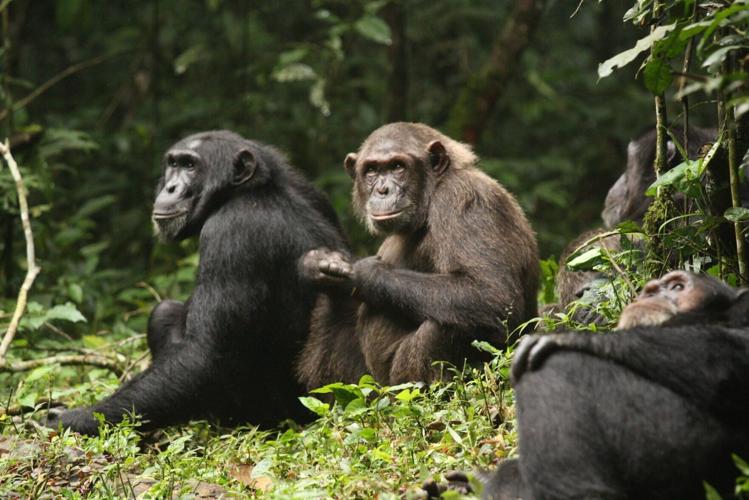
Prior to the permanent fission, chimpanzees from different social clusters interacted. (Aaron Sandel via SWNS)
The research team believe that the true toll of the violence is likely higher than observed, as many individuals disappeared without clear cause, suggesting additional unrecorded attacks.
Chimpanzees who had long cooperated and bonded turned on one another after the split, which the scientists say indicates that group identity can be redefined beyond mere familiarity.
Study lead author anthropology Professor Aaron Sandel, from The University of Texas at Austin, said: "What's especially striking is that the chimpanzees are killing former group members.






"The new group identities are overriding cooperative relationships that had existed for years."
In many primate species, he explained that large groups regularly split into smaller ones, often reducing competition for resources.
But in chimpanzees, permanent fissions are "extraordinarily rare" with genetic evidence suggesting they occur around once every 500 years.

The findings "challenge" the hypothesis that human warfare is driven primarily by cultural markers of group identity. (Aaron Sandel via SWNS)
The only previously reported case took place in the 1970s at Gombe, Tanzania, during Jane Goodall's long-term study.
But that case has remained a subject of debate in part because the chimps there were provisioned with food by researchers.
But at Ngogo, the chimps were never provisioned, and the picture is more complete, thanks to nearly three decades of study by Professor John Mitani, from the University of Michigan, and a large team of researchers and Ugandan field staff.
Sandel said: "I would caution against anyone calling this a civil war.
"But the polarization and collective violence that we have observed with these chimpanzees may give us insight into our own species."

The research team estimate such "chimp wars" occur only once every 500 years. (Aaron Sandel via SWNS)
The research team describe their findings as a "challenge" to the hypothesis that human warfare, including civil war, is driven primarily by cultural markers of group identity such as ethnic or religious differences.
Sandel said: "If relational dynamics alone can drive polarization and lethal conflict in chimps without language, ethnicity, or ideology, then in humans, those cultural markers might be secondary to something more basic.
"If that's true, then we may have the potential to reduce societal conflicts in our personal lives, and that gives me hope.
"As our paper concludes, it may be in the small, daily acts of reconciliation and reunion between individuals that we find opportunities for peace."

The only previously reported case took place in the 1970s at Gombe, Tanzania, during Jane Goodall's long-term study. (Aaron Sandel via SWNS)
Researchers believe that factors such as unusually large group size, competition over food and reproduction, deaths of key individuals, leadership changes, and disease may have "destabilized" social ties and contributed to the division of the Ngogo chimps.
Commenting on the findings, Dr. James Brooks, of the cooperative evolution laboratory at the German Primate Center, said: "A hostile split among wild chimpanzees is a reminder of the danger that group divisions can present to human societies.
"The study also reinforces the importance of maintaining long-term field research sites and of preserving endangered species."
He added: "Many valuable scientific insights have only been possible because of the commitment and sustained cooperation of those who study and support these species in the wild."
(0) comments
Welcome to the discussion.
Log In
Keep it Clean. Please avoid obscene, vulgar, lewd, racist or sexually-oriented language.
PLEASE TURN OFF YOUR CAPS LOCK.
Don't Threaten. Threats of harming another person will not be tolerated.
Be Truthful. Don't knowingly lie about anyone or anything.
Be Nice. No racism, sexism or any sort of -ism that is degrading to another person.
Be Proactive. Use the 'Report' link on each comment to let us know of abusive posts.
Share with Us. We'd love to hear eyewitness accounts, the history behind an article.