For most Americans, the night sky never fully goes dark anymore, and their bodies have registered the difference. Researchers have linked artificial light at night to disrupted sleep and weight gain, and preliminary findings now point to cardiovascular risk, too. The evidence concerns nighttime light exposure broadly, not only light from screens. There’s hope; several low-cost steps to address it start at home.
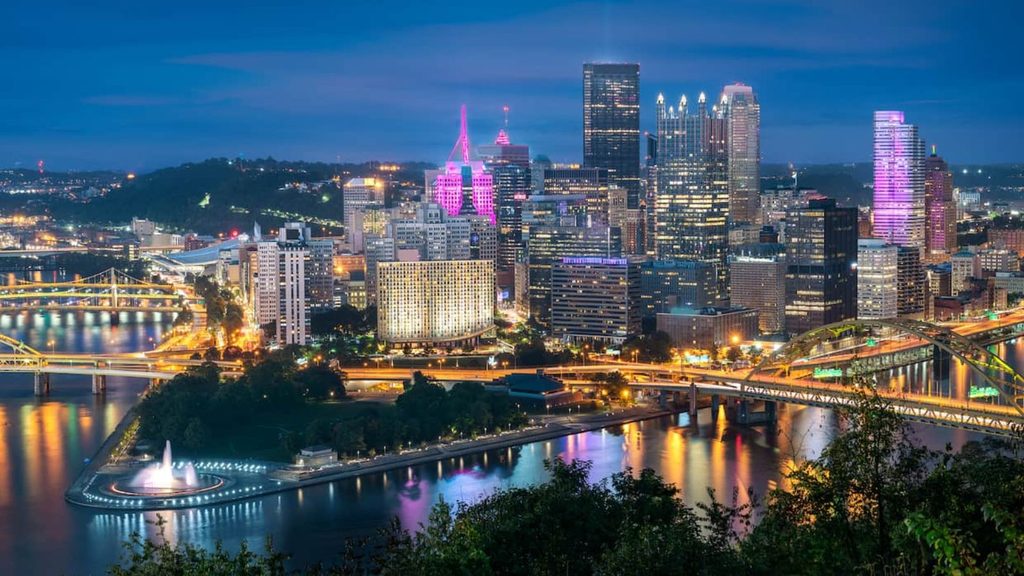
True darkness disappeared so gradually that most people never noticed it going. The amber ceiling or the streetlight through the gap in the blinds. The neighbor’s motion sensor tripping at 2 a.m.; all of it became the new normal, unremarkable enough that nobody questioned it. Darkness became one of those things, like silence or clean air, that became a luxury before most people realized it was slipping away.
One man’s search for actual darkness
Writer Craig Childs spent nine nights riding a bicycle out of Las Vegas to find out what happens when the lights actually give out. He started amid the brightest urban skies, commonly classified near the top of the Bortle scale, a nine-point measurement of sky brightness that runs from blinding urban white down to true wilderness black, and traveled roughly 200 miles north into the Mojave Desert, watching the sky change each night as the city fell further behind.
By the end of the trip, he described the sky as looking less like a ceiling and more like space. That distinction, between the washed-out ceiling most people sleep under and a sky with actual depth and dimension, is something researchers, lawmakers and astronomers are now working to measure and, in some cases, reverse. The trip became the basis for his book The Wild Dark, which Science Friday selected for its July and August 2026 Book Club.
A sky that keeps getting brighter
Sky brightness as seen by the human eye grew at an estimated 9.6% per year worldwide, based on a 2023 study tracking citizen observations from 2011 to 2022. If that average rate continued, brightness would double in roughly 7.5 years, though the estimate reflects participating observation sites rather than a universal forecast. A 2016 global atlas found that more than 99% of the populations of the United States and Europe were already living under light-polluted skies, and nearly 80% of North Americans were estimated to live where the Milky Way was no longer visible.
Objects in orbit, including satellites, are an emerging additional source of artificial brightness in the night sky, a finding flagged in a major 2026 review of artificial light research. The spread of LEDs has not eliminated light pollution; in many places, total outdoor illumination has continued to expand.
What the research is finding
A preliminary study presented at a November 2025 cardiology conference found associations between ambient nighttime light exposure estimated from satellite data around participants’ residences and measurable signs of cardiovascular stress. The study involved 450 adults and combined brain imaging with satellite nighttime light data, finding higher brain stress activity and arterial inflammation in people with greater light exposure.




The researchers said nighttime light should be investigated alongside other environmental exposures such as air and noise pollution. The study was presented as a preliminary conference abstract and had not yet undergone peer review; the researchers made it clear that it does not establish cause and effect.
Among 43,722 women followed over five years, those who slept with a light or television on in the room were 17% more likely to gain at least 11 pounds than those who slept in darkness. Researchers have proposed that nighttime light could affect circadian rhythms, including melatonin signaling, but the observational study did not test that mechanism directly. The study found associations, not certainties, and the researchers framed reducing light during sleep as something worth considering rather than a clinical directive.
What’s coming through the window
Blinds and curtains can leave gaps around the edges through which ambient light enters even when fully closed. Blackout curtains can block most incoming light, though performance varies by fabric and installation, and light can still enter around the edges.
For outdoor fixtures, warmer-color sources may reduce short-wavelength exposure when outdoor lighting is necessary, but direction, intensity and duration also matter. A properly aimed motion-sensor fixture can reduce how long an outdoor light stays on through the night, particularly when paired with a lower brightness setting. Small indicator lights can be noticeable in a dark bedroom; covering or unplugging them is an inexpensive way to reduce unwanted light.
The dark sky movement is going mainstream
Mexico has incorporated light-pollution provisions into federal environmental law, while France regulates artificial-light emissions and nuisance through its Environmental Code. Maine enacted a statewide outdoor-lighting law in 2026, with standards applying to covered public lighting installed or replaced after Oct. 1. The U.S. Senate unanimously passed a bipartisan resolution on April 29 recognizing National Dark Sky Week, with senators from Arizona, Nevada and Utah among those sponsoring it. DarkSky International certified its 250th International Dark Sky Place in 2025, marking the milestone with the designation of Lapalala Wilderness in South Africa.
The most striking dark-sky encounters tend to happen far from observatories and research posts. At the Grand Canyon, visitors can still experience remarkably dark skies and see the Milky Way on a clear, moonless night. The distance between that sky and most bedroom ceilings is shorter than people think, and the conversation about reclaiming it has moved well past astronomers and into doctors’ offices, legislative chambers and front porches across the country.
Jennifer Allen is a retired professional chef and long-time writer. Her work appears in dozens of publications, including MSN, Yahoo, The Washington Post and The Seattle Times. These days, she’s busy in the kitchen developing recipes and traveling the world, and you can find all her best creations at Cook What You Love.
The post We’re living in a world that never gets fully dark, and paying a price for it appeared first on Food Drink Life.
(0) comments
Welcome to the discussion.
Log In
Keep it Clean. Please avoid obscene, vulgar, lewd, racist or sexually-oriented language.
PLEASE TURN OFF YOUR CAPS LOCK.
Don't Threaten. Threats of harming another person will not be tolerated.
Be Truthful. Don't knowingly lie about anyone or anything.
Be Nice. No racism, sexism or any sort of -ism that is degrading to another person.
Be Proactive. Use the 'Report' link on each comment to let us know of abusive posts.
Share with Us. We'd love to hear eyewitness accounts, the history behind an article.