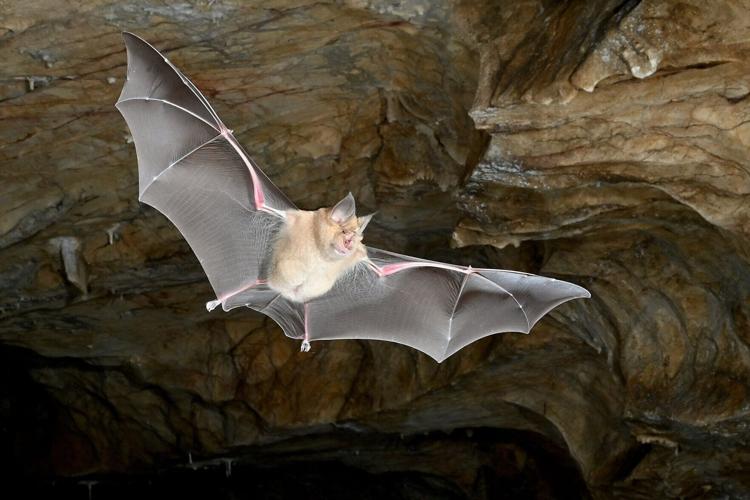
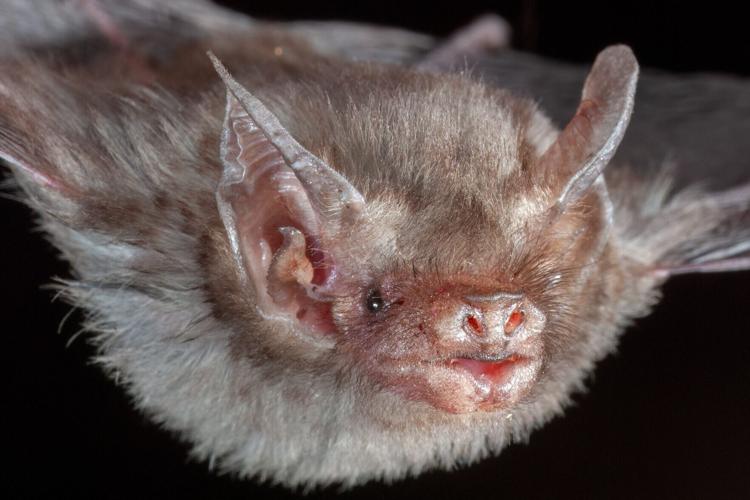
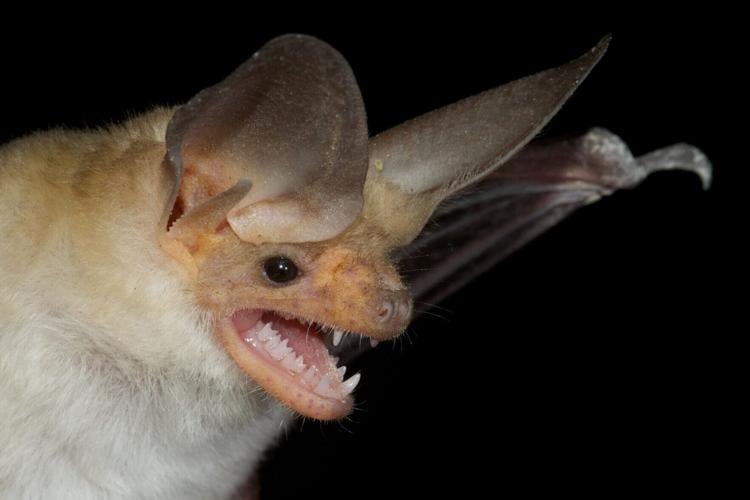
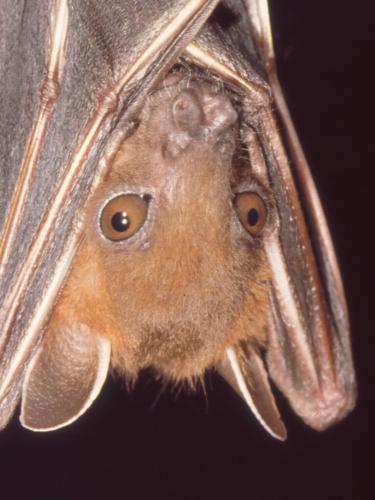
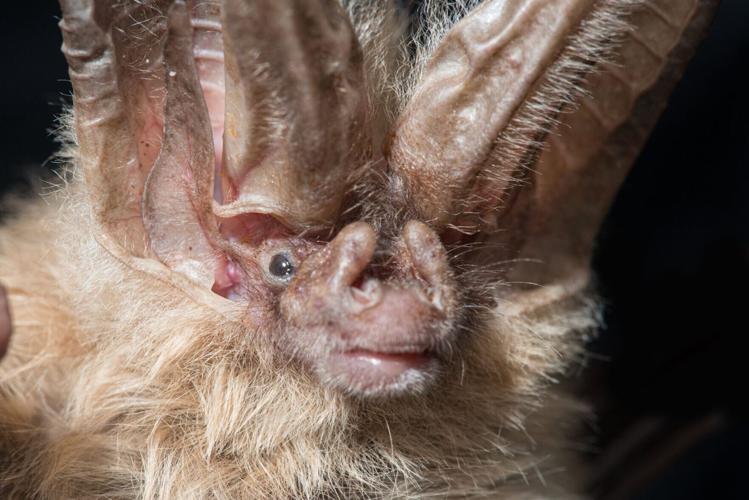

Rhinolophus ferrumequinum takes flight. (Daniel Whitby via SWNS)
By Stephen Beech
Bats originated in Europe around 65 million years ago, reveals new research.
The groundbreaking study, which rewrites the world's only flying mammals' family tree, contradicts long-held assumptions that the species arose in Asia, Africa or North America.
Scientists led by researchers from the University of St Andrews in Scotland have created the largest combined bat genome and fossil study ever undertaken.
Their findings show that bats most likely originated in Europe about 65 million years ago, before spreading around the world.
The study also reveals that echolocation, like flight, evolved near the dawn of bat evolution.

Craseonycteris thonglongyai from Thailand. (Charles Francis via SWNS)
The research team says their findings, published in the journal Nature, las the foundations for further study into the genetic basis of bats' exceptional longevity and disease resistance — with potential to boost human health.
An international team of 137 researchers from 64 countries, working together as part of the Bat1K consortium, combined genomic and fossil evidence.
The results overturned previous theories proposing Asian, African or North American origins for the iconic species.

Antrozous pallidus from the USA. (Elizabeth Clare via SWNS)
The new study suggests that the first bats' earliest descendants dispersed into Africa, establishing a Europe-Africa hub from which bats then expanded into Asia, the Americas and Australia.
Covering 103 species and representing every one of the currently recognized 21 bat families, the researchers assembled the largest collection of high-quality bat genomes to date.
The team combined state-of-the-art DNA sequencing and computational methods to generate and compare the genomes and identify the genes they contained.
They combined them with 44 fossil bats from across the globe to reconstruct their evolutionary history.
Building the dataset required samples collected over decades from bats around the world, including representatives of some of the rarest and most unusual bat families, found in the most remote locations.






With more than 1,500 bat species distributed around the globe, they account for 20% of all living mammals and play vital roles in maintaining healthy ecosystems by pollinating plants, dispersing seeds, and consuming vast numbers of insect pests.

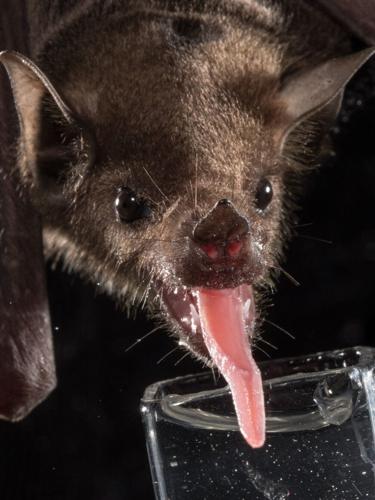
Leptonycteris yerbabuenae type of bat. (Brock and Sherri Fenton via SWNS)
The study sheds new light on their origins.
The team analyzed the genomes and fossils using new methods and revised the bat evolutionary tree, resolving several long-running debates about how the major bat groups are related.
Study senior author and Bat1K director Sonja Vernes, from the University of St Andrews, said: "Bats constantly surprise us.
"They are one of evolution's greatest experiments.

Cynopterus sphinx from Vietnam. (Charles Francis via SWNS)
"This extraordinary genomic resource - the culmination of years of international cooperation of Bat1K - is finally allowing us to understand how their remarkable biology evolved,"
She says many bat species show "remarkable" resistance to disease and live exceptionally long lives for their size.
Now, the genomic resource built for the study gives scientists the first robust evolutionary framework to investigate the genes behind those traits.
The researcher say their work could eventually inform human research into aging, immunity and disease resistance.
Senior author Liliana Dávalos, from Stony Brook University in the U.S., said: "The approach we used to model the evolution of fossil and living species together can do what other methods cannot: identify the oldest group of fossil bats while taking the genomic data into account, and uncover when and where bats originated."
The research team said fossil evidence also provides important clues to when bats first evolved echolocation.

Bats originated in Europe around 65 million years ago, reveals new research. (SWNS)
Vernes said: "The placement of the fossil bat Vielasia within the oldest branch of the bat family tree indicates that echolocation predates the diversification of modern bats."
She added: "The finding suggests that two of the defining characteristics of bat biology, echolocation and powered flight, were established near the origin of the group itself, helping explain the extraordinary evolutionary success of bats over the subsequent 65 million years."
The team also reconstructed the genome of the bat ancestor, showing what the first genome of a mammal capable of flight would have looked like.
(0) comments
Welcome to the discussion.
Log In
Keep it Clean. Please avoid obscene, vulgar, lewd, racist or sexually-oriented language.
PLEASE TURN OFF YOUR CAPS LOCK.
Don't Threaten. Threats of harming another person will not be tolerated.
Be Truthful. Don't knowingly lie about anyone or anything.
Be Nice. No racism, sexism or any sort of -ism that is degrading to another person.
Be Proactive. Use the 'Report' link on each comment to let us know of abusive posts.
Share with Us. We'd love to hear eyewitness accounts, the history behind an article.