



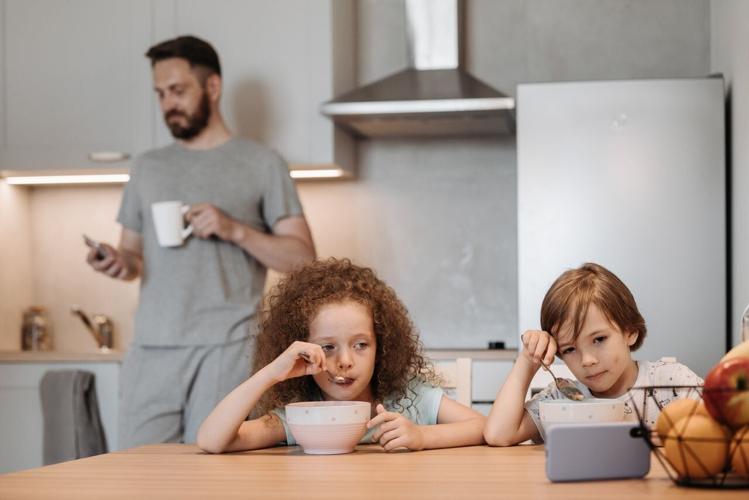


Photo by cottonbro studio via Pexels
By Stephen Beech
Three out of four parents struggle to get their children to eat a healthy breakfast before school, reveals new research.
Time constraints, picky eating and morning moods are among the challenges moms and dads face when trying to start the day with a nutritious meal, according to the study.
As millions of families reset their back-to-school routines, researchers found that getting children to eat a healthy breakfast is a major task for many.
Three-quarters of parents report at least one barrier to their child starting the day with a healthy meal on a typical school day, according to the findings.
The most common challenges were picky eating (44%), children being slow or grumpy in the morning (33%) and not having enough time to eat (30%), while one-in-nine parents cited TV or screen time as being a distraction (11%).
Around one in five parents also said their child's breakfast rarely includes key nutritional components, according to the University of Michigan Health C.S. Mott Children's Hospital National Poll.
Poll co-director and pediatrician Dr. Susan Woolford said: "Breakfast is an important opportunity to give children foods that can help them feel satisfied and ready to start their day, but families are often trying to make that happen in a short window of time.
"The goal does not have to be a perfect breakfast every morning.
"Small, realistic changes that add protein, fiber or fruit to foods children already enjoy can make a difference."
The findings were based on responses from 1,037 American moms and dads with at least one child aged six- to 12-year-old.

Photo by Lisa Fotios via Pexels
The research showed that most children do eat breakfast on school days, with about two-thirds of parents saying their child usually eats breakfast at home while nearly one in four say their child eats at school.
Fewer say their child eats on the way to school or doesn't usually eat breakfast.
But even when kids eat breakfast, time can be tight.
One in three parents say their child has just 15 minutes or less for breakfast before school.
Nearly half said their child has 15 to 25 minutes to eat and about one in five said they have 30 minutes or more.
Key nutritional components are not consistently part of many children's breakfasts, suggest the findings.
Less than half of parents say their child's breakfast includes protein, fiber or whole or cut fruit most days of the week.
Only one-in-three parents say their child usually has a breakfast low in added sugar most days.





Parents polled place a high value on making breakfast appealing and manageable.
More than two-thirds said it is "very important" to offer something their child likes, while two in five say quick and convenient foods are very important.
Another one in four parents place a high priority on foods their child can prepare independently.
Among parents whose children eat breakfast at home or on the way to school, just over half said their child usually decides what to eat.
When buying breakfast cereal, parents also most often consider their child's preference, followed by nutritional content such as protein or fiber.
Other factors included calories or added sugar, cost and artificial coloring.
But parents who let children take the lead when it comes to choosing what to eat also reported fewer days when breakfast includes protein, fiber or fruit or is low in added sugar.
Dr. Woolford said: "Children having a say in what they eat can be a positive part of developing independence, but parents can still shape the choices that are available.
"Instead of making breakfast a battle, parents should provide nutritious options and then let the child decide which of these foods they want to eat."

Photo by Pavel Danilyuk via Pexels
She says healthier breakfasts don't necessarily require more time.
Dr. Woolford said parents can keep convenient options such as fruit readily available or make simple changes to foods children already enjoy.
For example, whole-grain bread can replace white bread, or peanut butter can be added to toast, while a smoothie made with whole or cut fruit can also be an alternative to juice.
Dr. Woolford said: "Parents do not need to completely reinvent breakfast to make it healthier.
"Even one small change could add nutritional value, like choosing a higher-fiber cereal, adding vegetables to an omelette or having a fruit along with their typical breakfast."
She says breakfast can also be an opportunity for family connection, although busy school mornings don't always make that possible.
Around two-thirds of parents say their child typically eats breakfast with a sibling, while about half say they eat with a parent.
But around one in six said their child usually eats breakfast alone.
If families need more time in the morning, Dr. Woolford suggests parents can consider preparing breakfast in advance when possible.
She added: "There is no single breakfast routine that will work for every family.
"A realistic goal is to find foods that fit the family's schedule, provide nutritional value and that a child will actually eat."

(0) comments
Welcome to the discussion.
Log In
Keep it Clean. Please avoid obscene, vulgar, lewd, racist or sexually-oriented language.
PLEASE TURN OFF YOUR CAPS LOCK.
Don't Threaten. Threats of harming another person will not be tolerated.
Be Truthful. Don't knowingly lie about anyone or anything.
Be Nice. No racism, sexism or any sort of -ism that is degrading to another person.
Be Proactive. Use the 'Report' link on each comment to let us know of abusive posts.
Share with Us. We'd love to hear eyewitness accounts, the history behind an article.