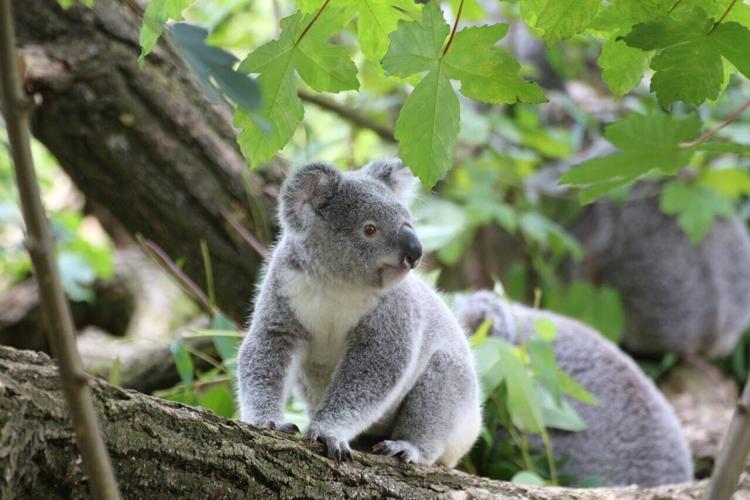
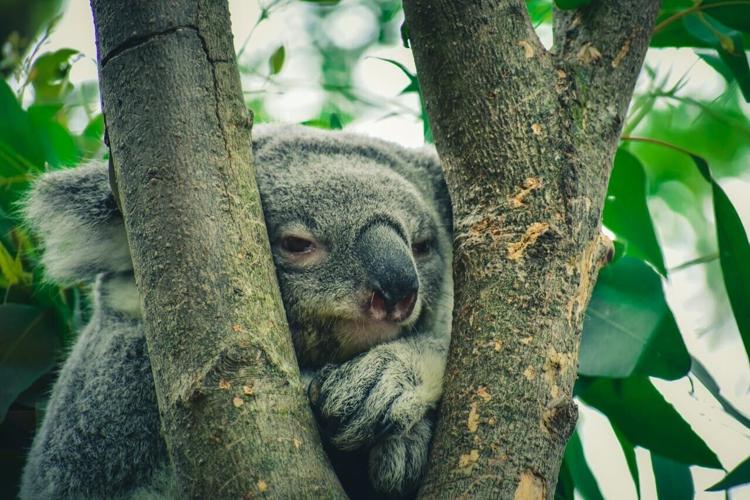


Photo by Pixabay via Pexels
By Stephen Beech
Koalas spend just 1% of their life on the ground - but it’s killing them, warns a new study.
The cuddly Aussie marsupials only spend around 10 minutes per day at ground level, but researchers found that period is associated with two-thirds of recorded koala deaths.
Koalas are listed as "endangered" in parts of their native Australia and their numbers are in "rapid" decline due to habitat loss, fragmentation, and disease.
But very little was known about their movements – especially when they’re on the ground.
The new research revealed that two-thirds of recorded koala deaths occur during the brief period they spend on the ground.
Study author Gabriella Sparkes said: “Koalas are mostly tree-dwelling, but due to extensive land clearing, they’re increasingly forced to travel on the ground, which puts them at serious risk of injury and death.
“I wanted to better understand what koalas do during these ground movements.”
Previous studies have shown that around 66% of all koala deaths occur while they’re on the ground, mostly due to dog attacks and vehicle strikes, yet surprisingly little was known about their ground-based behavior.

Photo by Pixabay via Pexels
Sparkes, a PhD student at the University of Queensland in Australia, said: “We don’t yet have a clear understanding of how often koalas come down from trees, how far or fast they move, how long they stay on the ground, or what influences those decisions.
“These are critical knowledge gaps if we want to identify high-risk areas or times and develop strategies to reduce threats during these vulnerable moments.”
To analyze the movement of the marsupials, Sparkes and her team fitted wild koalas with collars containing GPS loggers and six-axis accelerometers in a landscape that has largely been cleared for farming.
Their locations were recorded every five minutes, which increased to five-second bursts during ground travel.





The accelerometers allowed Sparkes to identify different types of movement - such as walking, climbing and sitting - which helped her to classify both tree-based and ground-based behavior patterns on a fine scale.
She said: “When paired with GPS tracks, this gives us an incredibly detailed view of how koalas move through their habitat."
The study revealed that, unsurprisingly, koalas spend most of their time in trees, sleeping and feeding – but the true scale of their tree-hugging was shocking even for the researchers
Sparkes said: “What surprised us was how infrequently and briefly they use the ground - just two or three times per night, averaging around 10 minutes in total, or less than 1% of their day."

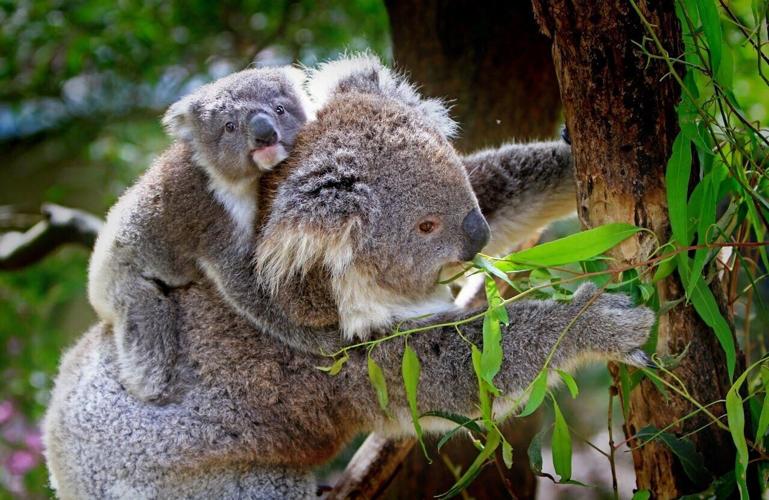
(Photo by Chris F via Pexels
The team also found that koalas on the ground move with very little urgency.
Sparkes said: “They spent nearly as much time sitting and pausing as they did walking, and only about 7% of their time on the ground was spent bounding.
“This may indicate that koalas are carefully assessing their environment as they move, possibly evaluating trees before selecting one to climb, or it may reflect the energetic costs of bounding.”
The study is the first to document such fine-scale ground movements in wild koalas, and it has opened further questions about how they navigate increasingly fragmented habitats.
Sparkes said: “We’re now looking at environmental features that influence how long koalas stay in trees.
“If we can identify the kinds of trees or habitat conditions that encourage koalas to remain in trees for longer, we may be able to design or manage landscapes in ways that reduce the need for ground travel.”
Sparkes and her team hope to influence koala conservation efforts, which could include prioritizing certain vegetation types, improving canopy connectivity, or reducing gaps between safe trees - all of which she says could help keep koalas off the ground and out of danger.
She added: “This research is just one piece of the puzzle, but it adds an important layer to our understanding of how koalas interact with increasingly human-altered environments."
The findings were presented at the Society for Experimental Biology annual conference in Antwerp, Belgium.

(0) comments
Welcome to the discussion.
Log In
Keep it Clean. Please avoid obscene, vulgar, lewd, racist or sexually-oriented language.
PLEASE TURN OFF YOUR CAPS LOCK.
Don't Threaten. Threats of harming another person will not be tolerated.
Be Truthful. Don't knowingly lie about anyone or anything.
Be Nice. No racism, sexism or any sort of -ism that is degrading to another person.
Be Proactive. Use the 'Report' link on each comment to let us know of abusive posts.
Share with Us. We'd love to hear eyewitness accounts, the history behind an article.