Americans have long treated soup like a winter coat: something to pull out when the temperature drops, but for the rest of the world, soups are a year-round dish. From chilled gazpacho to spicy pho and brothy noodle soups, soup has always been enjoyed in every season, and American eating habits are beginning to catch up. New consumer data suggests the calendar is losing its grip on soup, as globally inspired flavors and protein-rich bowls make the category harder to confine to cold weather.
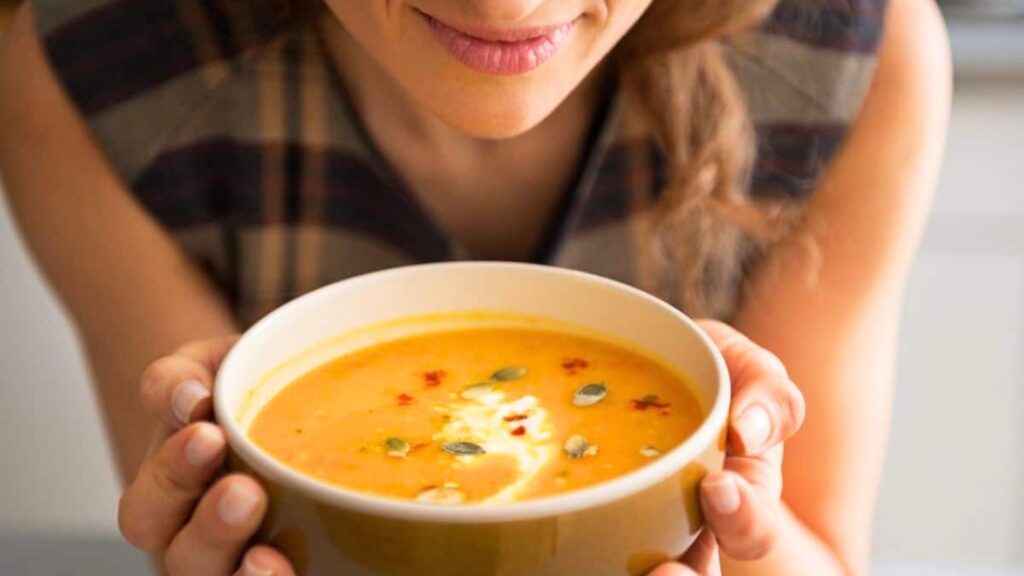
The change isn’t really about people suddenly deciding they want soup in July. It’s about what they want their soup to do. A bowl of lentil soup can be a protein-rich lunch, miso can deliver a quick savory meal, and black bean soup can turn pantry staples into dinner. As convenience, nutrition and global flavors increasingly shape what Americans eat, soup is becoming less of a seasonal comfort food and more of an everyday meal.
The calendar is losing its grip on what Americans eat
The old food calendar is getting harder to follow. The latest U.S. consumer data shows autumn is still the country’s biggest seasonal food signal, but its share has fallen 8.6% in the past year. Meanwhile, weather cues are gaining ground: demand signals tied to hot weather rose 22.2%, while cold-weather signals climbed 11.5%. The pattern suggests Americans are increasingly responding to what the day calls for rather than what the calendar says they should eat.
That helps explain why soup is becoming harder to classify as a fall or winter food. A chilly day can still prompt a steaming bowl, but so can a busy weekday, a craving for something savory or a desire for a particular flavor. Tastewise found weekday seasonal eating up 14.4%, another indication that the occasion itself is becoming a stronger food signal.
Soup stopped waiting for fall
The soup category is moving past its seasonal reputation faster than the cultural label has kept up. Meal-replacement soup usage grew 18% year over year, with people reaching for soup as a substitute for skipped lunches and prepared meals on weekdays. Broth-based formats are expanding roughly twice as fast as cream-heavy varieties, and single-serve formats climbed 15%, with consumption increasingly tied to predictable weekday routines. A single-serve cup of tomato bisque grabbed between meetings fits the pattern the numbers describe.
Soup conversation spikes in winter but continues through the other months, suggesting that soup peaks seasonally without disappearing from the rotation. Health and recovery-related soup content rose 24% over the same period, which means the motivations behind soup are broadening well beyond cold-weather comfort.
Americans started eating for function
Fresh and high in protein now lead the criteria Americans use to define a healthy food, at 40% and 33%, respectively. For the first time in that survey’s 21-year history, convenience surpassed healthfulness as a driver of food purchase. Taste and price still lead all categories, but convenience pulling ahead of healthfulness indicates that Americans are prioritizing meals they can assemble fast, which is exactly where a pot of soup delivers.






Lentil soup is a good example, and so is a quick black bean soup or a red pepper bisque. A basic meal can come together in under half an hour and, depending on what goes in, deliver protein and fiber without a long ingredient list. When speed and satiety become more important, the time of year may matter less. The same bowl that feels like comfort in January works as a fast weeknight meal in July.
Global flavors came without a season attached
Consumer conversation around soup skews heavily toward global flavor profiles, with Indian references at 21%, Japanese at 20% and broader Asian flavors at 15%. Italian and American profiles both trail below 10%.
Those flavor preferences point toward food traditions in which soup and broth-based dishes are not limited to cold weather. In South India, rasam is commonly part of everyday meals, including lunch. Miso soup has long been part of the traditional Japanese breakfast. Vietnamese pho is eaten year-round across the country, Thai tom yum is eaten in a tropical climate where warm weather predominates, and Spanish gazpacho is perhaps the clearest example of soup adapted for hot weather rather than abandoned during it.
A pot of dal, a bowl of tom kha rich with coconut milk and lemongrass, a simple turmeric-ginger broth. These are the soups the flavor data points to, and none of them came with a calendar attached. As American cooks gravitate toward these flavors, the assumption that soup has an off-season becomes harder to maintain.
The seasonal label is fading
The way Americans talk about soup and the way they actually eat it have been out of sync for a while. The data is catching the gap. Demand signals suggest soup interest is broadening beyond the fall-winter window, functional motivations becoming more prominent alongside seasonal ones, and global flavor preferences carrying habits that never recognized a soup calendar in the first place. Soup season may survive as a social media aesthetic, but the cooking behavior underneath it looks less tied to the calendar every year.
August is a good month for soup. So is every other one. Cooks in warm climates figured out a long time ago that soup didn’t need a season, and the American kitchen is catching up one pot at a time. A pot of broth does not check the forecast before it starts simmering, and neither should the person standing over it.
Jennifer Allen is a retired professional chef and long-time writer. Her work appears in dozens of publications, including MSN, Yahoo, The Washington Post and The Seattle Times. These days, she’s busy in the kitchen developing recipes and traveling the world, and you can find all her best creations at Cook What You Love
The post Why soup season starts before fall does appeared first on Food Drink Life.

(0) comments
Welcome to the discussion.
Log In
Keep it Clean. Please avoid obscene, vulgar, lewd, racist or sexually-oriented language.
PLEASE TURN OFF YOUR CAPS LOCK.
Don't Threaten. Threats of harming another person will not be tolerated.
Be Truthful. Don't knowingly lie about anyone or anything.
Be Nice. No racism, sexism or any sort of -ism that is degrading to another person.
Be Proactive. Use the 'Report' link on each comment to let us know of abusive posts.
Share with Us. We'd love to hear eyewitness accounts, the history behind an article.