
(Photo by Jonathan Cooper via Pexels)
By Stephen Beech
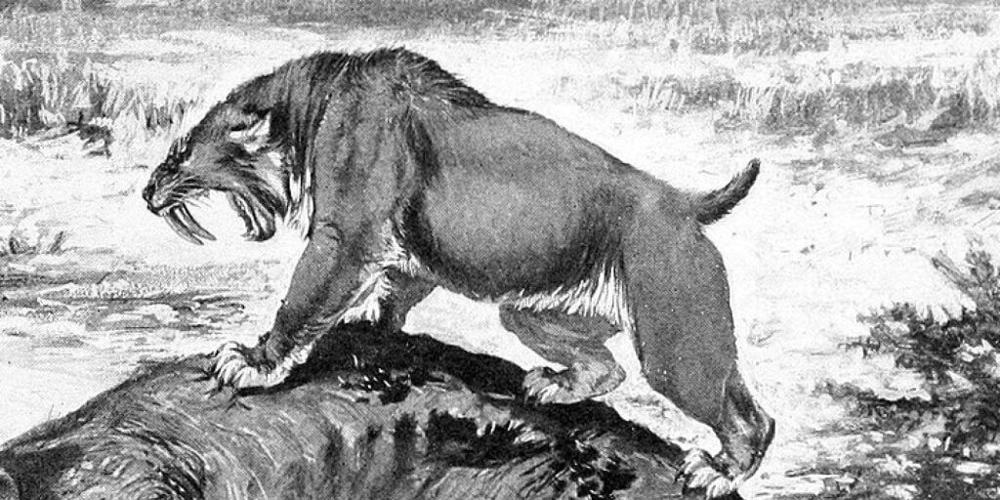
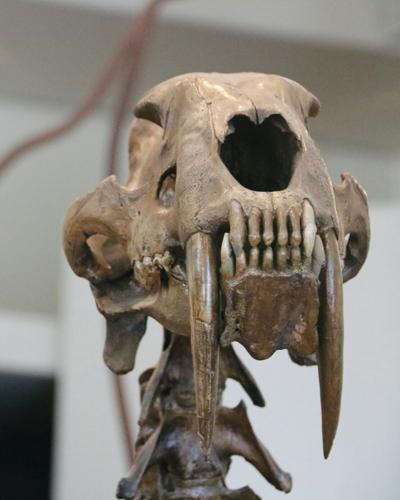
Giant species such as saber-tooth tigers triggered "ripple effects" still felt today when they vanished thousands of years ago, say scientists.
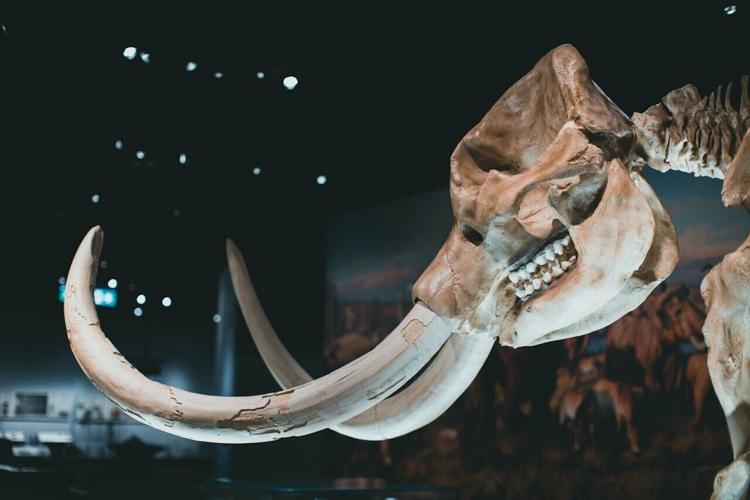
Many of the world's largest mammals — also including woolly mammoths plus giant sloths and wombats — became extinct between 50,000 and 10,000 years ago.
A new study reveals how their disappearance "fundamentally reshaped" food webs for the species that remain today, and why the changes were more pronounced in some parts of the world than others.
The American research team explained that when any species goes extinct, it's not just the animal that vanishes — the web of relationships among the surviving species often shifts in complex ways too.
Study senior author Lydia Beaudrot says that when predators disappear, their prey can multiply unchecked, causing a series of cascading effects.

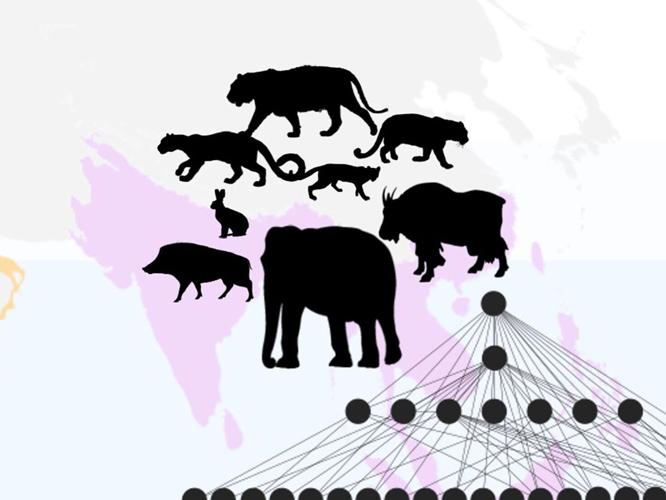
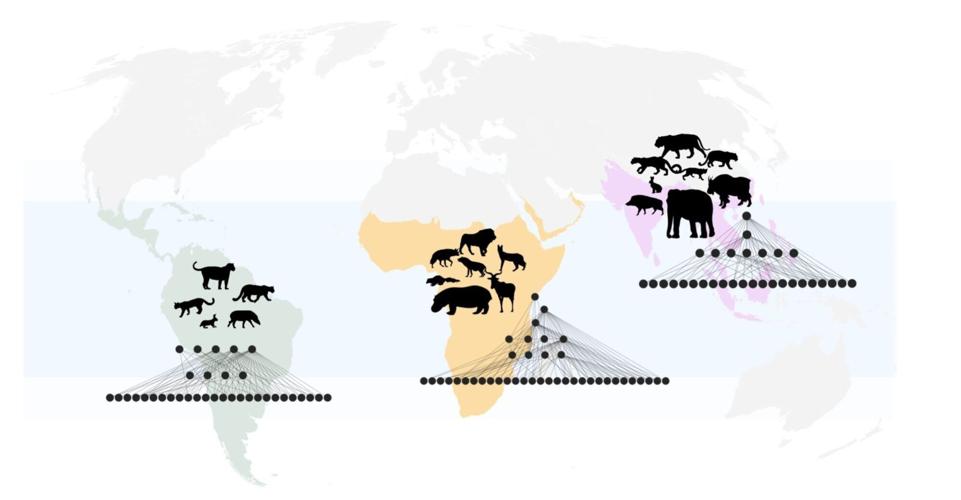
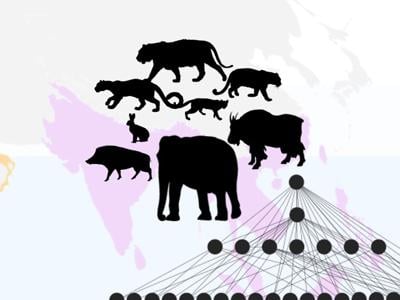
(Michigan State University / PNAS via SWNS)
She had a hunch based on some of her previous research that the extinction of large mammals tens of thousands of years ago could have had long-lasting effects on food webs — the often complex networks of who eats whom.
But Beaudrot, an assistant professor of integrative biology at Michigan State University (MSU), said: "There weren't that many data points."
So she and her colleagues set about developing methods for synthesizing more data at larger scales.
For the new study, a team led by Beaudrot and first author Chia Hsieh analyzed recent data on predator-prey relationships at 389 sites across tropical and subtropical regions of the Americas, Africa and Asia.
The study, published in the journal Proceedings of the National Academy of Sciences (PNAS), included more than 440 species of mammal including bears, wolves, elephants and lions.

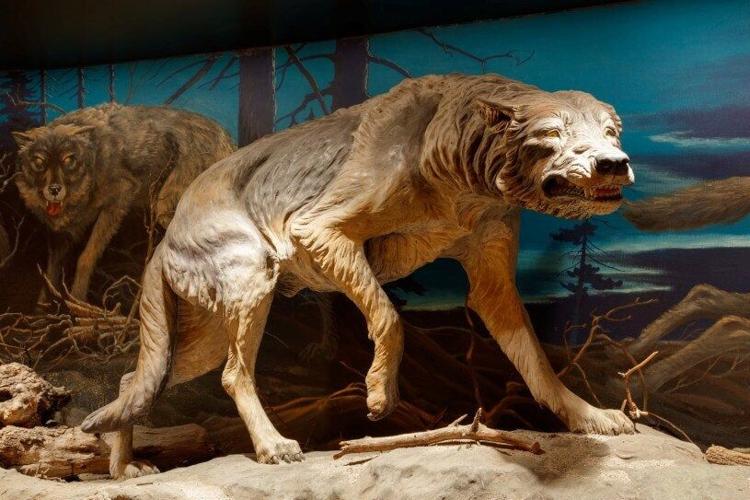
A dire wolf reconstruction on exhibit at the La Brea Tar Pits & Museum. (La Brea Tar Pits and Museum & Natural History Museum of Los Angeles County via SWNS)
Beaudrot said food webs around the world all have the same basic trophic levels: animals that eat and are in turn eaten by others.
But the number and types of species vary greatly between different areas.
Overall, the researchers found that food webs today have fewer, smaller prey in the Americas than in Africa and Asia.






And when the team looked at prey characteristics — such as body mass and activity patterns — they found that predators in the Americas stuck to prey with a narrower range of traits, with less overlap among them.
Hsieh, a postdoctoral fellow at MSU, said the differences among regions didn't just stem from current factors such as weather or the seasons.
Instead, the team found that differences in the severity of past extinctions played a significant role.

saber-toothed
Hsieh said each region suffered their share of losses, but the Americas got hit the hardest — losing more than three-quarters of all mammals weighing more than 100 pounds during the last 50,000 years.
For example, South America was once home to several giant deer.
Their extinction left fewer prey for predators such as saber-toothed cats and dire wolves, essentially flattening and thinning out the food web.
Hsieh said: "A lot of the lower part of the food web was lost."
But why the most massive mammals disappeared is still a subject of debate.
Some scientists say climate and environmental stresses played a role in the loss of mammoths and other giants.

Zoshua Colah
Others say the spread of humans out of Africa to other parts of the world is to blame for their demise.
But whatever the cause, the new study confirms that their disappearance has had long-lasting consequences.
The researchers say their findings are important because it helps scientists understand the potential long-term impacts of species facing extinction today.
Beaudrot said: "Around the planet, nearly half of all mammals weighing more than 20 pounds are considered vulnerable, endangered or critically endangered by the International Union for the Conservation of Nature."
She says the team plans to look at whether historical extinctions could make certain communities more vulnerable going forward.
Hsieh added: "By studying the past, we can also try to understand what to expect in the future."

(0) comments
Welcome to the discussion.
Log In
Keep it Clean. Please avoid obscene, vulgar, lewd, racist or sexually-oriented language.
PLEASE TURN OFF YOUR CAPS LOCK.
Don't Threaten. Threats of harming another person will not be tolerated.
Be Truthful. Don't knowingly lie about anyone or anything.
Be Nice. No racism, sexism or any sort of -ism that is degrading to another person.
Be Proactive. Use the 'Report' link on each comment to let us know of abusive posts.
Share with Us. We'd love to hear eyewitness accounts, the history behind an article.