A friend in Washington State sent an article on a divisive issue in a small tourist town east of the Cascade Mountains. We seem to be hearing more about small town divisions across the country, usually turmoil swirling around politics, religion or both at the same time. What do you suppose is causing people to be so cross with each other? You guessed it: a cross. A town resident in his 80’s is leading the charge after building a seven-story cross visible from the town. As frequently happens when there’s pushback from the community over something like this, the immediate reaction is: “Anti-Christian bias! We’re being persecuted!” That’s rarely the case. If many townsfolk, even many Christians, don’t want to see a huge, illuminated cross every day and night, why should they have to?
Reflecting on these showy displays of religiosity, I was thinking: maybe other faiths could claim a hilltop as well. Buddhists could erect a seven-story Buddha; Muslims build a huge crescent; Jews might construct a star of David. Then it occurred to me, The Satanic Temple, that often challenges religious privilege in the public square, would no doubt be willing to place a devilish statue looming over the town as well. Shocking? Sure, that’s what they do, when one religion claims a dominant position or public space for themselves. I wonder how the cross-builders would feel about that? We can already hear them cry: “Persecution!” But it’s not anti-Christian or anti-god to claim religious freedom under the secular Constitution that protects everyone from any one religion enjoying preference, privilege and power in the public square.
Have you noticed the “national prayer” gatherings? The annual National Prayer Breakfast, attended by members of Congress and the President, is organized and led by Evangelical Christians. There’s nothing wrong with this, except … prayers are almost exclusively Christian, revealing the dominance of one faith, without including the rest of the country. Where are citizens representing Jewish, Muslim, Buddhist, Hindu, and other faiths? When nearly 30 percent of the American public is “unaffiliated” with any faith tradition, why are they left out from a “national” event where elected leaders seem to favor one faith? People can certainly meet in a church and hold all the prayer services they wish. But when these “national” events are held in “The Peoples’ House”—gatherings of Christians who claim to speak for the nation (or speak for God)—this is not only disrespectful to most Americans but dishonors the rich religious traditions that make up America.
The so-called “War on Christians,” claimed by some of the fearfully faithful, is a figment of their wild imagination. Nearly every report I’ve seen of “Christian persecution” is little more than a tantrum over the loss of privilege. Take the tiresome annual tirade about “The War on Christmas.” A city has always put a Christmas tree in the middle of the town square and a nativity scene in front of town hall. Kids sing Christmas carols about Jesus and Bethlehem in public school. One December season, a handful of non-Christian parents suggest placing a menorah, Solstice display or Hindu “Holi” statue by the tree and the town hall. The majority of the town is up in arms, charging: “This is an attack on our faith.” When we step back, it’s fairly easy to see the privilege of the majority. Oddly enough, the one celebrated at Christmas spoke quite clearly about treating others as you wish to be treated and loving your neighbor as yourself (he also never commanded celebrating his birthday). Thankfully, some towns decide to be more inclusive of neighbors and allow more symbols. Others dig in and won’t allow anything else: “This is OUR season!” Personally I’m happy to see non-religious organizations challenge this kind of privilege in petition or court.
Understandably, some people don’t like religion, and don’t want to hear or see it. It’s fine to challenge preference for religion by public officials, but they can’t normally remove signs or symbols of faith from private land. With congregations spread over cities and towns, and with many politicians inserting their faith into speeches and legislation, some rightly raise Constitutional questions. I think it’s a healthy conversation to have across the country. We need to struggle with the meaning of the First Amendment, what “no establishment of religion” means, what “free exercise” means.
It’s appropriate to question why some faith groups are so pushy and showy, insisting that all of us see them, hear them and obey their sectarian rules. Are they claiming exceptional privilege? Do they believe they should have power over everyone in the name of their God? More people ought to remind these folks the public square is for everyone. As Americans United proclaims: “Freedom without favor; Equality without exception.”
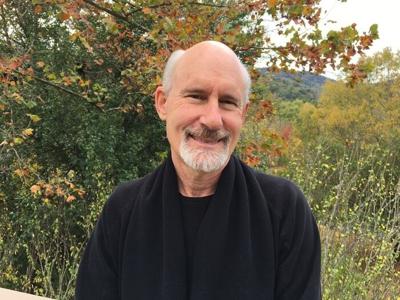
Chris Highland was a Protestant minister and interfaith chaplain for many years before becoming a humanist celebrant and author of many books. He lives in Asheville, North Carolina. His website is www.chighland.com.
(0) comments
Welcome to the discussion.
Log In
Keep it Clean. Please avoid obscene, vulgar, lewd, racist or sexually-oriented language.
PLEASE TURN OFF YOUR CAPS LOCK.
Don't Threaten. Threats of harming another person will not be tolerated.
Be Truthful. Don't knowingly lie about anyone or anything.
Be Nice. No racism, sexism or any sort of -ism that is degrading to another person.
Be Proactive. Use the 'Report' link on each comment to let us know of abusive posts.
Share with Us. We'd love to hear eyewitness accounts, the history behind an article.