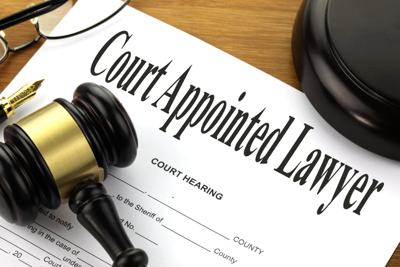

Large swaths of Alabama lack a sufficient number of attorneys to help residents with legal issues, according to Harvesters of Hope, a legal nonprofit that is recruiting attorneys to underserved areas.
Based on figures obtained from the organization, almost two-thirds of the counties in the state can be classified as legal deserts, places with less than one attorney per 1,000 people.
“That means some of those people are not getting legal services, or not as well because that is just the economics of it, time and effort,” said Tom Heflin, one of the founders of Harvesters of Hope.
The dearth of attorneys is particularly large in impoverished areas and minority communities. In theory, Alabama has enough attorneys listed in the Alabama Bar Association for the population, which is a ratio of roughly 340 people for every attorney. But the figure overstates the practical number who can serve the legal needs of the residents living in the state.
According to Harvesters of Hope, about 78% of attorneys in Alabama are based in seven counties.
Tom Perry, a co-founder of Harvesters of Hope and a former president of the Alabama Bar Association, said that the number is smaller after considering the people on the Alabama Bar Association website based outside the state or retired.
A subset of those serves as judges, prosecutors and counsel for governments who may not be able to provide legal services for the community.
“You can see that leaves us with a very low number in counties,” Perry said. “We had some counties with one lawyer or no lawyers.”
The national average for the U.S. is about four attorneys for every 1,000 residents, according to the American Bar Association.
Aging attorneys
According to Harvesters of Hope, Coosa County is in the worst shape with one licensed attorney per 3,397 people, with Lamar close behind at one attorney for 3,393 people. Hale County has a ratio of 2,462:1; Randolph County has a ratio of 2,344:1 and Pickens County has a ratio of 2,063:1.
Attorneys in affected areas are also getting older. Coosa County, for example, currently has three attorneys who can serve slightly more than 10,000 residents. However, by 2030, only one of them will be younger than 70 years old. In Lamar County, another legal desert, four attorneys are available to provide legal services to the 13,500 people living in the area, but by 2030, three will be less than 70 years old.
A report published last fall by the Legal Services Corporation, a federally funded nonprofit that provides funding for civil legal aid for people with lower incomes, estimated that about 41% of counties in the United States qualify as legal deserts.
A study published by Iowa State University in 2025 found that most rural counties in the contiguous U.S. qualify as legal deserts. Ronald Flagg, president of Legal Services Corporation, said in an interview on Friday that while about 20% of the population lives in rural areas, only 2% of attorneys practice there.
“Almost every state, at a minimum, has pockets of rural areas which are underserved, and are deserts, versus you go out west to Alaska and other places where they are even more prevalent,” he said.
Legal deserts have a particular impact on vulnerable populations because many of the people living in such places are people of color or with those who earn lower incomes.
Hale County, located in the Black Belt, has a poverty rate of almost 24% and a Black population of 55%. Greene County, also a legal desert, has a Black population of 80%, with more than a third of residents living in poverty.
“We have seen over time that people with professional opportunities, experiences, skills and education, are often moving out of the communities in which they were raised and going to urban areas where the jobs and economic opportunities are greater,” Flagg said.
A lack of earning power in rural areas can contribute to shortages, said Daniel Pasciuti, an associate professor in sociology at Georgia State University who studies access to justice.
“When you get done, you kind of have done all this work for school for years to get your law degree,” he said. “You are looking for an income, even if you are not looking to have some lavish lifestyle, you are looking to be able to survive and be able to pay off your student loans.”




That is not often possible in places that are considered legal deserts, where there are few residents to sustain a legal practice and many people unable to afford the services of an attorney.
The pull of urban areas
Even if those issues are fixed, Pasciuti said there is the issue of geography. Most law schools, and by extension law firms, are based in urban areas.
“Even as you get older, even having paid off your student loans and you don’t necessarily need the lifestyle anymore, you are now, probably, rooted in that space,” Pasciuti said. “You are not going to upend your life and move to the middle of nowhere, or the middle of some rural area, after you have been living in Atlanta for 10 years and you have your house, possibly a significant other, have kids, whatever it is.”
Absent private law firms, nonprofits may step in. Guy Lescault, executive director for Legal Services Alabama, which provides assistance on civil cases for those who qualify, said that there are one million people who are eligible for services, many of them living in rural areas.
“We have 120,000 calls in our call center a year,” he said. “Those are people who are in rural areas that we cannot serve. Just do the numbers, if there are a million eligible clients, and we have limited offices, limited services, then it is a big problem in terms of access to justice.”
Lescault said that the primary issue that people seek help from Legal Services Alabama is affordable housing, including legal representation during eviction procedures. With limited resources, many face legal proceedings without the assistance of an attorney. That often leads to less-than-ideal outcomes for tenants.
It also creates a logistical problem for clients. If a county has only one attorney who is representing one party in a divorce, then the other party needs to find a lawyer from outside the area to serve as counsel.
People can secure an attorney who can travel, but that can also be problematic.
“If I go and advise you on an expungement, and I practice law in Birmingham and I come over to a county in the Black Belt, Marengo County or Perry County, I come to you and you might like me, we may have a rapport, but I am probably I am not going to be back to answer your questions on future matters,” Heflin said.
Harvesters of Hope is trying to address the problem by recruiting attorneys to underserved areas directly. According to the website, the nonprofit provides financial assistance, mentoring and management tools to sustain a law office in a rural area.
The organization, launched last August, placed 10 attorneys in rural counties throughout the state. An additional eight attorneys may be placed in the coming months, Heflin said.
“We are well ahead of where we set our goals,” he said.
Flagg said addressing the shortages would require incentives like loan forgiveness to encourage attorneys to work in rural areas. Allowing people without a law degree to provide select legal services may also help.
States such as Alaska and Montana, with sparsely populated areas have developed such programs.
“They developed, in the last several years, a community justice worker program where trained people who were already in the community, they may be social workers or might be healthcare workers, can be trained to help people get food stamps or help with a denial of food stamps,” Flagg said.
Using technology like video conferencing may also help.
Flagg also mentioned establishing a booth in a location to allow people to speak with an attorney.
“There is a kiosk in the library or community center where you can easily connect to a lawyer either online, or otherwise to a lawyer in a city that is some distance away in terms of driving,” he said.
Ralph Chapoco is a reporter with Alabama Reflector, a nonprofit news agency based in Montgomery.

(0) comments
Welcome to the discussion.
Log In
Keep it Clean. Please avoid obscene, vulgar, lewd, racist or sexually-oriented language.
PLEASE TURN OFF YOUR CAPS LOCK.
Don't Threaten. Threats of harming another person will not be tolerated.
Be Truthful. Don't knowingly lie about anyone or anything.
Be Nice. No racism, sexism or any sort of -ism that is degrading to another person.
Be Proactive. Use the 'Report' link on each comment to let us know of abusive posts.
Share with Us. We'd love to hear eyewitness accounts, the history behind an article.