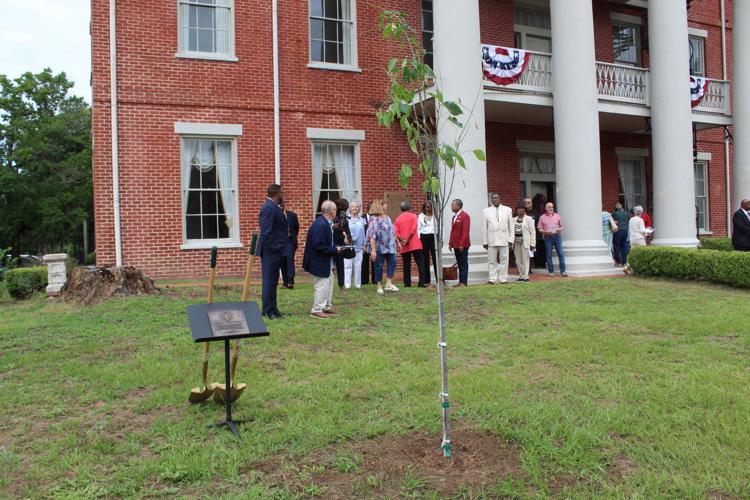
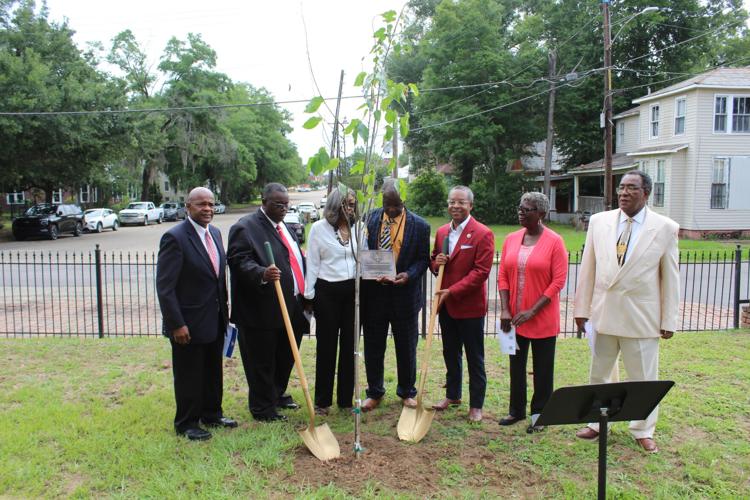
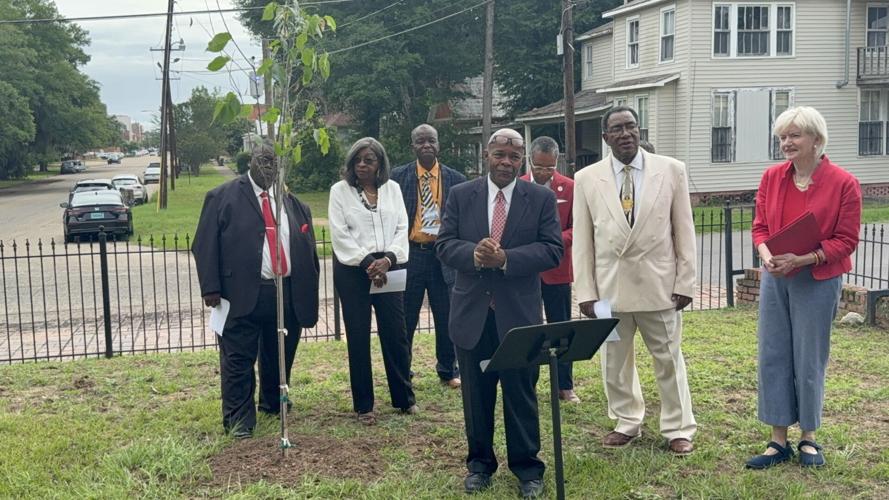

Selma-Dallas County leaders came together on Monday to celebrate the planting of a new Liberty Tree at Vaughan-Smitherman Museum.
Dallas County is one of 38 counties in Alabama to receive a Liberty Tree as part of a statewide initiative commemorating America’s 250th anniversary of signing of the Declaration of Independence.
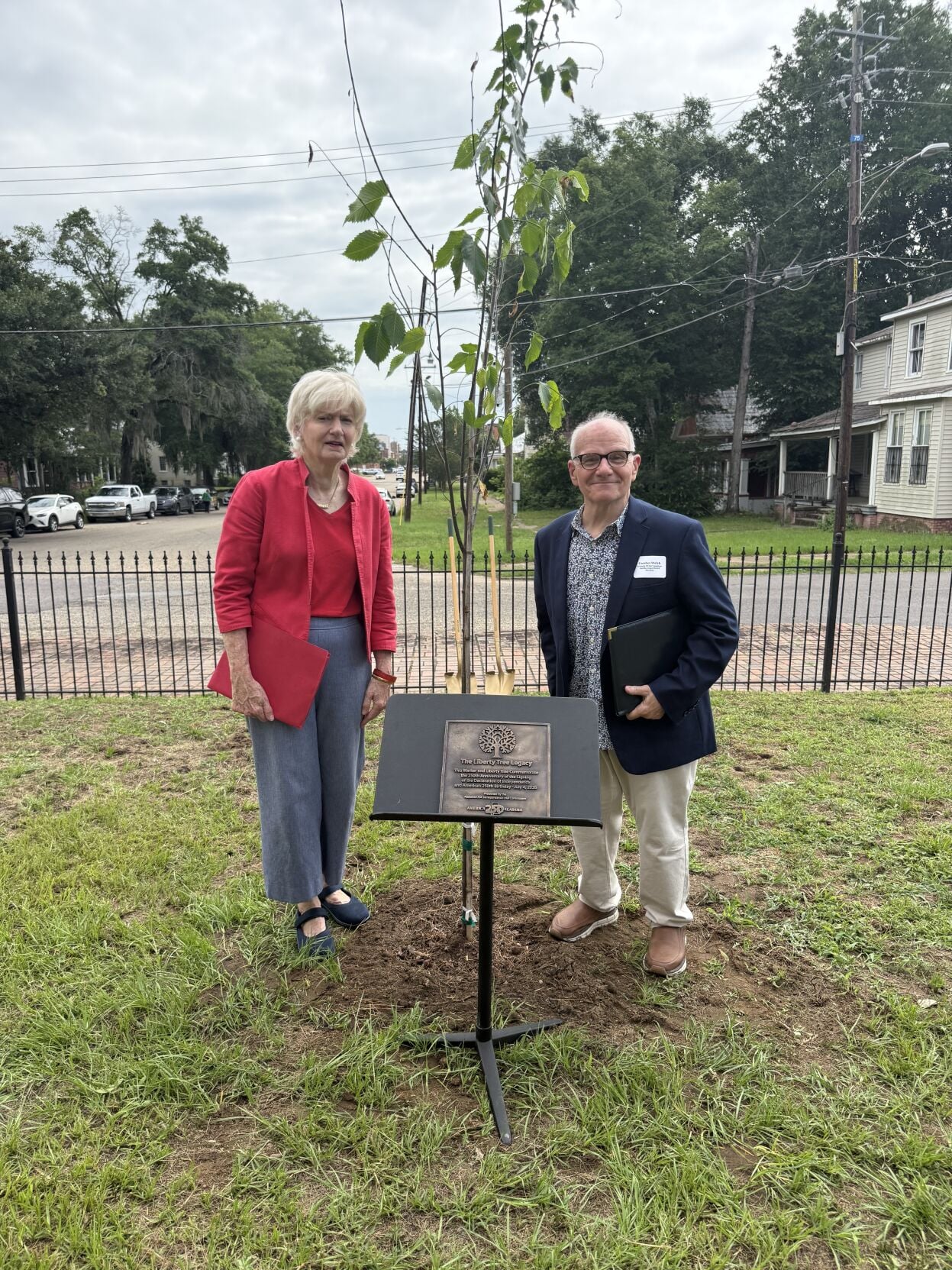
The Princeton Elm tree planted in the front of the museum on Union Street is only about 8 feet tall today, but officials say it will grow over the next 20 to 30 years to be 70 feet tall.
It came with a plaque that was made by Shelby County artist Nelson Grice and forged by the Shelby County Arts Council that will be placed with the tree.
Dallas County Commission Chairman and Probate Judge Jimmy Nunn said the trees are intended to serve as “a lasting, living legacy honoring the nation’s founding and encouraging future generations to reflect on the ideals of liberty and citizenship.”
Sheryl Smedley, executive director of the Selma-Dallas County Chamber of Commerce, applied for Selma to receive the tree. She picked it up at American Village in Montevallo. It is a product of Green Valley Farms in Montevallo.





Each county could select a location for the tree’s planting, and Dallas County chose the front of Vaughan Smitherman Museum on Union Street.
Gordon Welch, chairman of the museum board and member of Selma-Dallas Historical Society, said the agencies will take great care of the tree just as they do the building that was first occupied in 1847.
Selma Mayor Johnny Moss III said the tree stands as “a living symbol of freedom, resilience, and hope. Its roots remind us of the sacrifices made by those who came before us and its growth reminds us of our responsibility to leave a stronger nation for those who follow. There's no better place for this tree than Selma, Alabama, a city whose history helped expand liberty and justice for generations of Americans.”
Moss added that the serves as a reminder “that freedom, just like this tree, must be nurtured and protected.”
The Liberty Tree holds a special place in American History with the original tree on Boston Common serving as a gathering spot for colonists protesting British rule before the Revolution. Loyalists cut down the original tree in August 1775 to stop the movement but patriots across 13 colonies responded by designating new Liberty Trees as symbols of resistance and unity.

(0) comments
Welcome to the discussion.
Log In
Keep it Clean. Please avoid obscene, vulgar, lewd, racist or sexually-oriented language.
PLEASE TURN OFF YOUR CAPS LOCK.
Don't Threaten. Threats of harming another person will not be tolerated.
Be Truthful. Don't knowingly lie about anyone or anything.
Be Nice. No racism, sexism or any sort of -ism that is degrading to another person.
Be Proactive. Use the 'Report' link on each comment to let us know of abusive posts.
Share with Us. We'd love to hear eyewitness accounts, the history behind an article.