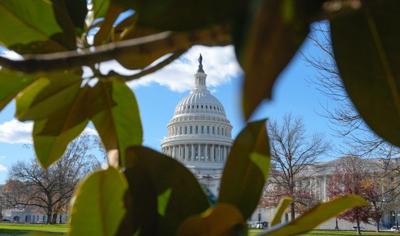
WASHINGTON — After more than 50 days out of session, the U.S. House returned Monday for its first full week back in Washington, with a long to-do list before the end of the year.
Members of Alabama’s congressional delegation told Alabama Daily News they would hone in on finalizing the annual defense policy bill, making health care more affordable and finishing the rest of the full-year spending bills before the next funding deadline at the end of January.
By Thanksgiving, House Armed Services Chairman Mike Rogers is optimistic that the House and Senate will reconcile their differences in competing National Defense Authorization Acts to set up an early December vote.
“There’s very few outstanding issues left, and the ones that are left are not big,” Rogers, R-Saks, told ADN. “And I don’t see anything external to the NDAA being dropped on the bill that could be problematic as far as keeping votes, there’s no debt ceiling or anything like that… that in the past have caused members to have a problem with the NDAA.”
The Senate passed the defense policy legislation with bipartisan support, while the House version passed mostly on party lines because it included “right-wing” amendments, Democrats said, such as adding further restrictions on trans service members.
The two chambers’ bills also have different toplines. The Senate’s measure authorizes $925 billion, a $32 billion increase from the House’s version, which sits at $893 billion. Rogers said he would be “thrilled” if the final NDAA had the higher number, but acknowledged that’s up to House Republican leadership. He acknowledged other recent defense funding, the One Big Beautiful Bill Act allocated a separate $150 billion.
Health care
Tackling health care and the expiring Affordable Care Act enhanced premium subsidies were at the core of the government shutdown, but a vote on the issue in the Senate was the only health-related guarantee that came from the 43-day standoff. So, lawmakers on both sides of the aisle will spend much of the next month and a half trying to hammer out legislation that could address the health care cliff expected next year.
Alabama’s House Democrats, Reps. Terri Sewell, D-Birmingham, and Shomari Figures, D-Mobile, are especially attune to what the tax credits mean for Alabamians. Sewell said that issue will be “first and foremost” for her.






“Whether you have employee-based health care or you get your health care from the Affordable Care Act, this is a health crisis that’s of the making of the Republicans, and they need to be across the table working with Democrats to get this fixed,” Sewell told ADN.
As part of a potential end-of-year legislative health care package, Sewell also hopes for her bipartisan bill, the Nancy Gardner Sewell Medicare Multi-Cancer Early Detection Screening Coverage Act, to pass out of the House.
Republicans want to see more of a focus on personalized health coverage plans, including sending subsidies directly to Americans instead of to insurance companies, which is how the ACA tax credits are issued. But that’s a big lift.
“You don’t try to cram something through this complicated in the short amount of time that we have,” Rep. Gary Palmer, R-Birmingham, told ADN last week.
In the meantime, Rep. Barry Moore, R-Enterprise, pointed to President Donald Trump posting on Truth Social earlier this month, calling for Republicans to directly give money to individuals’ personal health savings accounts. Moore called that an “option,” but no details on that post have been fleshed out.
Government funding
Most of the federal government funding approved in the shutdown-ending deal last week will run out again at the end of January, making full-year spending bills a priority for Congress during the next few months.
The House and Senate passed measures to fully fund military construction and programs related to veterans, agriculture and the legislative branch, but most agencies are still in need of long-term funding.
This week, no votes on any of the remaining appropriations bills are expected in the House. Nine bills still need to pass both chambers. That includes legislation to fund the health, labor and education departments, which Rep. Robert Aderholt, R-Haleyville, oversees as chairman. Alabama’s other House appropriator, Rep. Dale Strong, R-Huntsville, is also keeping an eye on the remaining bills now that the House is back in session.

(0) comments
Welcome to the discussion.
Log In
Keep it Clean. Please avoid obscene, vulgar, lewd, racist or sexually-oriented language.
PLEASE TURN OFF YOUR CAPS LOCK.
Don't Threaten. Threats of harming another person will not be tolerated.
Be Truthful. Don't knowingly lie about anyone or anything.
Be Nice. No racism, sexism or any sort of -ism that is degrading to another person.
Be Proactive. Use the 'Report' link on each comment to let us know of abusive posts.
Share with Us. We'd love to hear eyewitness accounts, the history behind an article.