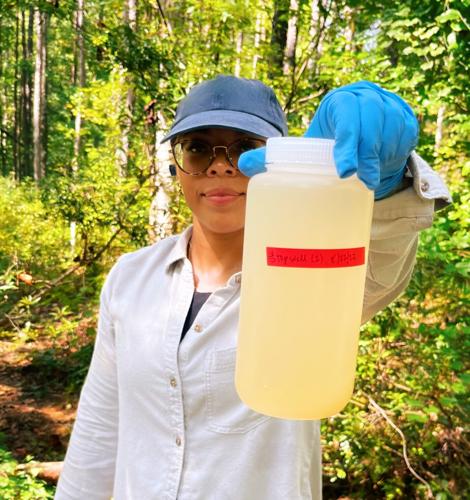
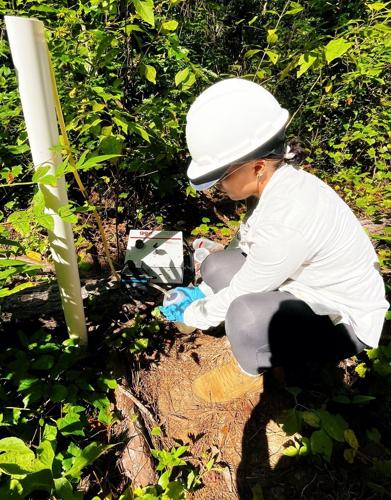

Students from The University of Alabama and Miles College are researching ways Alabamians who depend on private wells can make sure their water is safe to drink after a flood.
About 80,000 Alabamians, most of them in rural areas like the Black Belt, depend on well water. Private well owners and public water systems may pull their water from the same aquifers, but water public systems send to customers is tested based on strict state regulations. Owners of private wells are on their own.
That’s where a student project led by Dr. Leigh Terry at The University of Alabama and Dr. Nikaela Flournoy at Miles College comes in. Their students are studying the effects of floods on well water, and they are looking for the best test kits that well owners can buy to make sure their water is safe, especially after a flood.
According to Terry, it’s well documented that flood waters can carry harmful microbes and bacteria from nearby septic tanks or even waste from farm animals into wells. The multiyear study hopes to look at other ways bacteria can get into wells, especially in the Black Belt. When the clay beneath the Black Belt’s famous prairie soil gets dry, it cracks open, creating vertical channels deep into the ground. The study will examine if these channels create another way bacteria can get into an aquifer during a flood.
In later phases of the study, students will examine if well owners know if they are in a flood plain and therefore more susceptible to having contaminated well water.
The study is also looking at the types of well water testing kits available to consumers.






“Private well owners are responsible for assessing the quality of their groundwater wells,” Flournoy said. “This process typically involves contacting their local health department who will take samples and screen for harmful bacteria.” The study hopes to identify a suitable well water testing kit that private citizens can use to assess the quality of their private well water.
Terry said a longer range vision is to eventually have water testing kits available at volunteer fire departments.
In this early phase of the project, the students are honing their skills using water from a well at UA’s Tanglewood Biological Station University in Moundville. Terry said the well,the soil and the surroundings are typical of what students will see in the Black Belt, so it’s a valid place to start.
“This work will contribute to identifying areas at high risk of well contamination, as well as educating and equipping well owners to reduce their exposure to microbial contaminants,” the abstract for the study states. “By developing a comprehensive flood-induced contamination risk assessment model and providing accessible water quality testing resources, this research will support the protection of private wells and the well-being of communities in the Black Belt region of Alabama.”
Terry is an assistant professor of civil, construction and environmental engineering at UA. Flournoy is an assistant professor of biology in the division of natural sciences and mathematics at Miles College.


(0) comments
Welcome to the discussion.
Log In
Keep it Clean. Please avoid obscene, vulgar, lewd, racist or sexually-oriented language.
PLEASE TURN OFF YOUR CAPS LOCK.
Don't Threaten. Threats of harming another person will not be tolerated.
Be Truthful. Don't knowingly lie about anyone or anything.
Be Nice. No racism, sexism or any sort of -ism that is degrading to another person.
Be Proactive. Use the 'Report' link on each comment to let us know of abusive posts.
Share with Us. We'd love to hear eyewitness accounts, the history behind an article.