If Americans want to understand where democracy is headed next, they should continue watching Selma.
For more than two centuries, Selma and Dallas County have served as a testing ground for many of the nation’s defining struggles: representation, citizenship, education, voting rights, and political power. From Alabama’s first capital at Old Cahawba to Reconstruction, from Bloody Sunday to modern redistricting battles, the questions debated here have often foreshadowed the questions later debated across America.
When Americans think about Selma, they often think about the events of 1965 and the march across the Edmund Pettus Bridge. Yet Selma’s contribution to history extends far beyond a single march, a single bridge, or a single generation. Again and again, this community has found itself at the center of political, educational, and civic transformations that shaped Alabama and influenced the nation.
Alabama’s First Capital
Long before Selma became synonymous with voting rights, nearby Old Cahawba served as Alabama’s first permanent capital from 1820 until 1825. From the earliest days of statehood, this region produced leaders, institutions, and ideas that helped shape public life throughout Alabama.
Selma and Reconstruction
The story of Benjamin Sterling Turner reminds us that Selma’s influence did not begin in 1965. Turner, a formerly enslaved man, was elected to Congress in 1870 as a Republican during Reconstruction, a period when African Americans were entering public office and exercising political power on an unprecedented scale throughout the South.
Turner’s election represented the possibility of a new political order in which citizenship, participation, and representation could be expanded beyond the traditional power structures that existed before the Civil War. His leadership later earned him a reputation as a statesman who worked across political and racial divisions in pursuit of broader public interests.
Among Alabama’s most influential Redeemer leaders were Edmund Pettus and John Tyler Morgan, who emerged as Reconstruction weakened and conservative white Democrats sought to regain political control throughout Alabama and the South. Both had served the Confederacy during the Civil War and later became prominent political figures during the period when white Democratic leadership reestablished control of Alabama government. Morgan became one of Alabama’s most powerful United States Senators, while Pettus also served in the United States Senate and became a symbol of the political order that emerged after Reconstruction.
Turner emerged from an expanding coalition of newly enfranchised Black voters, Republicans, Unionists, and supporters of Reconstruction. Pettus and Morgan emerged from a movement that sought to restore political power to many of the interests that Reconstruction had displaced.
The conflict was never simply about political parties. It was fundamentally about who would be included in American democracy and who would be excluded from it. Reconstruction asked whether newly freed citizens would exercise political power as equals. The Civil Rights Movement asked whether those rights would be enforced. Today’s debates over voting access, representation, district boundaries, and election administration continue to ask many of the same questions through different institutions, different coalitions, and different political alignments.
Jim Crow and the Foundations of African American Organization
One of the earliest architects of organized Black political activity in Selma was C.J. Adams, who helped establish Selma’s NAACP chapter and later helped organize the Dallas County Voters League. That foundation was expanded by leaders such as Amelia Boynton Robinson and Marie Foster, who sustained voter registration efforts, citizenship education, and community organizing during the height of segregation.
Long before national attention focused on Selma, these local leaders were building the institutions that would eventually transform the city into an international symbol of voting rights and democratic participation.
By the early 1960s, that foundation evolved into what became known as the Courageous Eight. Comprised of Amelia Boynton Robinson, Marie Foster, Dr. Frederick D. Reese, Ulysses Blackmon, Ernest Doyle, James Gildersleeve, J.D. Hunter, and Henry Shannon, the Courageous Eight represented a uniquely local form of leadership. They coordinated voter registration efforts, organized community action, and sustained the movement despite economic retaliation, intimidation, and political resistance.
The Courageous Eight helped create the conditions that contributed to the passage of the Voting Rights Act of 1965 and expanded opportunities for political participation throughout Alabama. In many ways, they carried forward the unfinished work of Reconstruction.
Selma, Civil Rights, and Integration
The victories achieved during the 1960s produced profound changes in public life. The Civil Rights Act of 1964 and the Voting Rights Act of 1965 expanded federal legal protections, increased political participation, and accelerated the integration of public institutions throughout the South.
My mother, Lillie Smith Howard, graduated from Selma High School in 1971 as part of one of the school’s first integrated graduating classes. Members of that generation, including future Mayor James Perkins Jr., represented a new chapter in Selma’s history. They inherited the responsibility of turning legal victories into lived realities and demonstrating that integration could become more than a court order or legislative mandate.
Selma and the Tracking Movement
By 1990, Selma found itself confronting a new debate over educational opportunity. As a member of the Selma High School Class of 1991, I witnessed firsthand the controversy surrounding academic tracking and educational access. Dr. Norward Roussell became a central figure in that discussion, advocating for broader educational opportunities within Selma’s public schools.
Years before No Child Left Behind became federal law in 2002 and before educational equity became a national policy priority, Dr. Roussell was already challenging systems that limited academic opportunity for many students.
During that same era, Black students sought admission to Morgan Academy and were refused. Dr. Frederick D. Reese served as principal of Selma High School during this period of transition.
Community leaders such as J.L. Chestnut, Annie Lee Cooper, and former State Senator Hank Sanders helped preserve these stories and pass them to future generations.
Selma, Voting Rights, and Redistricting
The election of Barack Obama in 2008 and the election of Terri Sewell; Selma’s Sweetheart: Selma High School Graduate of 1983. in 2010 marked another period of political realignment in American history. Obama became the nation’s first African American president, while Sewell became the first woman to represent Alabama’s Seventh Congressional District and the first Black woman elected to Congress from Alabama.
In some respects, Sewell’s rise echoes that of Benjamin Sterling Turner more than a century earlier. Turner entered Congress during Reconstruction as Alabama’s first Black Congressman and became known as a statesman who sought to expand political participation while navigating a rapidly changing political landscape. Sewell entered Congress during a different era, one in which many believed the major voting-rights battles had largely been settled. Yet following Shelby County v. Holder and the redistricting battles that culminated in Allen v. Milligan, she increasingly found herself defending many of the same principles of representation and political access that defined Turner’s public service. In that sense, both leaders emerged from Selma and the Black Belt at pivotal moments in American democracy, carrying forward the work of generations that came before them.
By that time, African Americans had largely shifted from the Republican Party of Reconstruction to the Democratic Party, joining coalitions of younger voters, Hispanic voters, LGBTQ voters, and other historically underrepresented communities. Like Benjamin Sterling Turner before them, both Obama and Sewell emerged during periods of expanding political participation and coalition building, though under a very different political alignment than existed during Reconstruction.
In 2013, Shelby County v. Holder weakened key enforcement provisions of the Voting Rights Act and reshaped the legal landscape for voting-rights litigation.
Following the 2020 Census, Alabama again found itself before the courts through a series of congressional redistricting challenges filed in 2021, including Milligan v. Merrill, Singleton v. Merrill, and Caster v. Merrill. Named plaintiffs included State Senator Bobby Singleton and Marcus Caster, whose cases challenged Alabama’s congressional maps under the Voting Rights Act. Together, these challenges culminated in the landmark 2023 Supreme Court decision Allen v. Milligan, which reshaped Alabama’s congressional districts and renewed national debate over voting rights and representation.
State Senator Bobby Singleton, whose Black Belt district shares many of the same communities and voting-rights concerns represented by Congresswoman Terri Sewell’s Seventh Congressional District, became a named plaintiff in one of the major congressional redistricting challenges filed against Alabama’s 2021 congressional map. Alongside plaintiffs such as Marcus Caster and Evan Milligan, Singleton helped place Alabama once again at the center of a national debate over voting rights, representation, and the future of the Voting Rights Act.
In response to the changing legal landscape, Congresswoman Terri Sewell became one of the leading advocates for restoring federal voting-rights protections through legislation that eventually became known as the John R. Lewis Voting Rights Advancement Act.
Among the attorneys and policymakers who emerged during this period was Katherine Green Robertson, Daughter of Dallas County, a graduate of Morgan Academy class of 2002; who served as Chief Counsel in the Alabama Attorney General’s Office beginning in 2017. Her rise occurred during the same era of election-law and redistricting litigation that reshaped the political landscape of Alabama and the Black Belt.
On June 16, 2026, Katherine Green Robertson won the Republican nomination for Attorney General of Alabama. Consequently, Terri Sewell is up for re-election this upcoming August 11, 2026, as her congressional district has been redrawn through the litigation in which Robertson served as Chief Counsel for the Alabama Attorney General’s Office.
Although they stand on opposite sides of today’s partisan divide, Katherine Green Robertson and Terri Sewell illustrate a recurring Selma story: local leaders emerging onto the statewide and national stage during periods of significant political change. Their careers developed amid some of Alabama’s most consequential legal and political debates, demonstrating once again that Dallas County continues to produce figures who shape conversations far beyond its borders.
In a remarkable reflection of Selma’s continuing influence, many of the same civic, business, educational, legal, and political networks that helped elevate Terri Sewell to Congress in 2010 remain active in Alabama politics today. By 2026, some of those relationships could be found supporting Katherine Green Robertson’s statewide candidacy, illustrating how alliances, institutions, and leadership networks often evolve across time, party lines, and generations while remaining rooted in the same community. The observation serves as another reminder that Dallas County continues to exert influence far beyond its borders.
From Shelby County v. Holder to Allen v. Milligan, from the John R. Lewis Voting Rights Advancement Act to the ongoing debates over representation and redistricting, the questions first raised during Reconstruction and later confronted during the Civil Rights Movement remain unresolved. Once again, Selma and Dallas County find themselves at the center of a national conversation about democracy, representation, and political power.
Leadership, Legacy, and Political Transition
The evolution of Selma’s political leadership reflects many of the broader changes that have occurred across Alabama and the nation. Joe T. Smitherman served as mayor from 1964 until 2000, a remarkable thirty-six-year tenure that spanned the Civil Rights Movement, school integration, voting-rights expansion, and profound political change throughout the South. In 2000, James Perkins Jr. became Selma’s first African American mayor, marking a historic turning point in the city’s political history.
Since Perkins’ election, African Americans have held the mayor’s office continuously for twenty-six years. Yet even collectively, that period has not yet surpassed the length of Smitherman’s single tenure. Since then, Morgan Academy has opened its doors to a diverse group of students. The comparison serves as a reminder of both how much has changed and how recently many of those changes occurred.
When Johnny “Skip” Moss III was elected mayor in 2025, many people of his generation viewed his election as the passing of the torch. Moss represented a generation that had inherited the gains achieved through decades of struggle while facing a new set of challenges. By the 2026 Call to Action events surrounding the the voting rights act he had become the face of a different kind of movement—one focused less on securing access and more on deciding what comes next. In many ways, that transition mirrors the broader political shifts taking place across Alabama and the nation. Once again, Selma finds itself at the center of conversations about history, representation, political power, and the future of American democracy.
Under Construction: The Political Climate of 2026
Selma’s lesson is not that history repeats itself exactly. Rather, each generation inherits unfinished work and is called upon to confront its own version of the fundamental questions that define democratic society. The questions confronting Alabama and the nation today are remarkably similar to those confronted during Reconstruction, the Civil Rights Movement, and the many struggles for educational and political opportunity that followed. Who participates in democracy? Who is represented in government? Who has access to opportunity? And who ultimately gets to shape the future?
For generations, Americans have looked to Selma when the nation struggled to define citizenship, equality, representation, and political participation. They should continue to do so. From Alabama’s first capital at Old Cahawba to Reconstruction, from the Voting Rights Movement to modern redistricting battles, Selma has repeatedly served as a place where America rehearses its future. The bridge may be the symbol, but the lesson has always been larger than the bridge..
Over time, the names have changed. The coalitions have changed. The political parties have changed. Yet the underlying questions remain remarkably familiar. Once again, America finds itself debating issues of political power, representation, access, and belonging that generations of Selmians confronted long ago. That is why Selma remains more than a historical landmark. It remains a living classroom for democracy and a reminder that the work of building a more representative and inclusive society is never truly finished.
That is why Selma remains the main character.
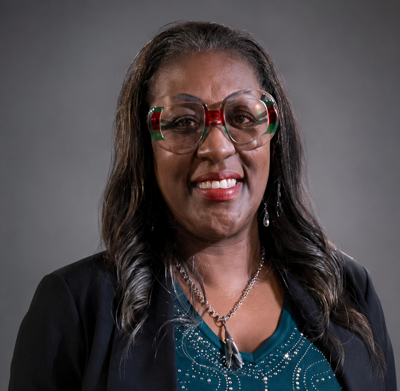
Kimesha Houston Alvarado, also known as “Sunshine” Alvarado, is a Selma-based community advocate, media personality, and civic commentator rooted in the historic Black Belt region. A military veteran with a background in logistics, communications, and public engagement, she uses media, community dialogue, and historical perspective to discuss voting rights, civic engagement, culture, and the evolving role of Black institutions in modern America.
(0) comments
Welcome to the discussion.
Log In
Keep it Clean. Please avoid obscene, vulgar, lewd, racist or sexually-oriented language.
PLEASE TURN OFF YOUR CAPS LOCK.
Don't Threaten. Threats of harming another person will not be tolerated.
Be Truthful. Don't knowingly lie about anyone or anything.
Be Nice. No racism, sexism or any sort of -ism that is degrading to another person.
Be Proactive. Use the 'Report' link on each comment to let us know of abusive posts.
Share with Us. We'd love to hear eyewitness accounts, the history behind an article.