There is a reason maps have always mattered in the American South.
Maps decide where highways go.
Where hospitals are built.
Where broadband expands.
Where investment flows.
Where schools thrive.
And ultimately, whose voices carry political weight.
In the South’s Black Belt, stretching across states like Alabama, Georgia, Mississippi, and Louisiana, redistricting is not simply a political exercise. It is a modern struggle over representation, resources, memory, and power.
Too often, the public conversation reduces redistricting to partisan warfare between Democrats and Republicans. But for many Black Belt communities, the issue runs much deeper than party labels. The question is whether communities with long histories of exclusion will have meaningful influence over the decisions shaping their futures.
That distinction matters.
The Black Belt is one of the most historically significant regions in America. The name originally described the area’s rich dark soil, which fueled an agricultural economy built through enslaved labor. Over time, the term became synonymous with large Black populations, civil rights activism, persistent poverty, and political underrepresentation existing side by side.
It is impossible to separate modern redistricting debates from that history.
When people hear phrases like “racial gerrymandering” or “Voting Rights Act compliance,” the language can sound distant or overly legalistic. But the lived consequences are tangible. Representation affects whether communities can effectively advocate for healthcare access, infrastructure investment, economic development, workforce resources, environmental protections, and educational opportunity.
Political lines eventually become economic lines.
And economic lines often become quality-of-life lines.
That is why the recent court battles over congressional and legislative maps across the South matter so much. In several states, federal courts have found that district lines diluted Black voting strength despite significant Black population growth. The issue was not whether Black residents existed in sufficient numbers. The issue was whether their collective voting power was intentionally fragmented.
History shows this is not new.
After Reconstruction, many Southern states created systems and policies designed to limit political influence and maintain control without directly taking away citizenship rights. Measures such as poll taxes, literacy tests, at-large voting structures, and carefully drawn districts became common tools used to shape political participation and influence power within the region.
The tactics evolved.
The objective often remained similar.
And yet, despite these barriers, Black Belt communities have consistently reshaped American democracy. From the marches in Selma to voting rights campaigns throughout rural Southern counties, these communities forced the nation to confront contradictions between its democratic ideals and its democratic practices.
What makes the current moment particularly important is that demographic and economic shifts are changing the South rapidly.
Metro regions are expanding. Rural populations are aging. A growing number of professionals are returning to the South as the region continues emerging as a center for business growth and innovation. Latino populations are growing. The Asian American population remains one of the fastest-growing demographic groups in the country. Infrastructure investments are reshaping development corridors. New industries are arriving, from logistics and manufacturing to data centers and clean energy projects.
Political maps drawn today will influence who benefits from that transformation for the next decade.
That should concern everyone, regardless of political affiliation.
Fair representation is not about guaranteeing outcomes. It is about guaranteeing access to participation. There is a difference.
A healthy democracy should not fear competitive districts, engaged voters, or communities capable of organizing around shared interests. In fact, that is precisely what democracy requires.
The danger emerges when citizens begin believing their voices no longer matter because outcomes appear predetermined before ballots are even cast.
That erosion of trust is costly.
Communities disengage.
Civic participation declines.
Polarization intensifies.
And public institutions lose legitimacy.
Ironically, many of the same regions fighting over political maps are simultaneously trying to attract economic investment, workforce talent, entrepreneurs, and younger residents. But modern competitiveness depends heavily on civic confidence and institutional trust.
Businesses notice instability.
Young professionals notice exclusion.
Families notice disinvestment.
Political fragmentation eventually affects economic competitiveness.
This is why redistricting should not be viewed solely through the lens of elections. It is also an economic development issue. Representation influences policy priorities, funding allocations, and long-term regional planning.
The future of the Black Belt cannot simply be reduced to commemorating history every February or marching across bridges every March. Symbolism matters, but symbolism without structural investment becomes performance.
Communities need representation capable of translating legacy into leverage.
That means leaders who understand that voting rights and economic mobility are deeply connected. It means citizens who remain engaged beyond presidential election cycles. And it means acknowledging uncomfortable truths about how power has historically operated in America.
None of this suggests democracy is failing beyond repair. In many ways, the continued public debate over maps, voting access, and representation demonstrates democracy still fighting to correct itself.
But correction requires participation.
It requires vigilance.
And it requires the courage to recognize that lines on a map are never just lines.
They are declarations about who counts.
The Black Belt has spent generations demanding that America answer that question honestly.
The country is still responding.
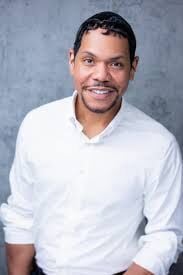
Dr. Shed Jackson is a marketing and communication professional with experience in economic development, higher education and business science. He is a 1997 graduate of Selma High School. Read more about his at https://about.me/shedjackson

(0) comments
Welcome to the discussion.
Log In
Keep it Clean. Please avoid obscene, vulgar, lewd, racist or sexually-oriented language.
PLEASE TURN OFF YOUR CAPS LOCK.
Don't Threaten. Threats of harming another person will not be tolerated.
Be Truthful. Don't knowingly lie about anyone or anything.
Be Nice. No racism, sexism or any sort of -ism that is degrading to another person.
Be Proactive. Use the 'Report' link on each comment to let us know of abusive posts.
Share with Us. We'd love to hear eyewitness accounts, the history behind an article.