
When you’re in ministry as long as I was, you frequently get asked this question: Where do we go—what happens—after death?
When I was a minister and chaplain, I would often smile, pause, and wonder why someone was asking, and why they were asking me. As a “professional religious person,” curious folks would expect that I knew things like this. Yet, the short answer was, and still is: I don’t know. The slightly longer answer is: No one knows. The much longer answer is: No one knows, including any religion, or pastor, priest, rabbi, guru, imam … or YouTube prophet. And certainly no chaplain has any idea what happens after we die. Well, all those who say they are “representatives for God” may think they know, or say they know, but, in my humble opinion, they don’t have a clue.
Are my loved ones in heaven, hell, purgatory (purging their sins), or dust in the ground? Who knows? Some believe they know exactly where everyone goes. Do they?
My grandparents are gone. So are my parents, my wife’s parents, all my aunts and uncles, my dearest cousins, and a number of good friends. I miss them, but I don’t wonder where they are. They live in my memory; their influence and legacy continue in the way each of them shaped my life, my viewpoints, my beliefs. Thinking of them often brings a smile or a tear; something they said or how they said it lingers in my mind. They aren’t completely “gone,” yet they are. Physically, I will never see them again. Mentally, I carry them every day. In this sense, they live on.
A reader recently assured me that believers in Christ go directly to heaven, while unbelievers “just die.” I understand the righteous certainty of the claim. “Hell, or nothingness, for others— bliss in heaven for me.” It was a wonderful feeling to know we were specially chosen and He was “preparing a place” exclusively for us in His kingdom in the clouds.
Yet, how wonderful was that really? On the one hand, we were delighted to believe a golden home awaited us after death. On the other hand, we were worried sick about all those souls who wouldn’t get there with us, if they didn’t believe like us. We prayed fervent prayers for them. We “witnessed”—desperate to see conversions. But we could always have faith that our faith would bring us to the promised land.
Rational thinkers I respect on the subject of “the beyond” include Stoic philosophers and humanistic naturalists. Like any good philosophers, they admit they don’t know, yet they are curious wonderers. Stoic teachers (like Epictetus and Marcus Aurelius) reasoned that death is a process of change, our bodies decay and our breath (spirit, mind) joins the surrounding expanse of air. Not some kind of reincarnation, but transformation. Naturalists, such as John Burroughs, might express death in a creative sense: “I shall not be imprisoned in the grave where you are to bury my body. I shall be diffused in great Nature, in the soil, in the air, in the sunshine, in the hearts of those who love me, in all the living and flowing currents of the world … . My elements and my forces go back into the original sources out of which they came … .” (“Accepting the Universe,” 1920). This seems to be a reasonable, secular and perhaps even spiritual view of death.
I’m of the opinion that many religious or spiritual beliefs originally arise directly or indirectly from fear. Fear of death, or maybe more a fear of dying. A fear of non-existence. A fear of the unknown. It’s sad and disappointing that some people live in fear because they worry and stress about going to heaven or hell. As I often say, fear-based faith is the cause of great suffering, and I place most of the blame on deficient doctrine taught by pastors and priests who use the Bible to scare people into faith. This is the worst kind of manipulation by “spiritual leaders.”
Hebrew scriptures (the “old testament”) do not present any definitive view of an afterlife. Beyond the grave, we live on through our family or community. Many Christians get their understanding of the “afterdeath” from the bizarre book of The Revelation. This is unwise since that last book of “last things” is a mythological vision that shouldn’t be taken literally (dragons, demonic wars, golden cities, etc). Jesus never gave any description of what may come after death. Paul made up different levels in heaven, so we can’t rely on him.
As with so many things in life and faith, a humble “I don’t know” or simple “Who knows?” may be the best response to the question: What comes next?
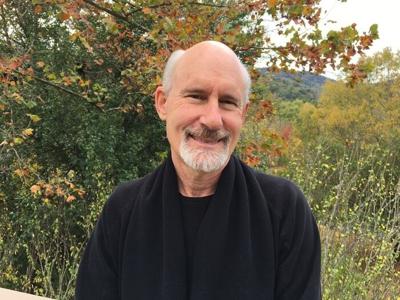
Chris Highland was a minister and chaplain for many years. He is a writer and teacher in Asheville, NC. www.chighland.com (chris.highland@gmail.com)
(0) comments
Welcome to the discussion.
Log In
Keep it Clean. Please avoid obscene, vulgar, lewd, racist or sexually-oriented language.
PLEASE TURN OFF YOUR CAPS LOCK.
Don't Threaten. Threats of harming another person will not be tolerated.
Be Truthful. Don't knowingly lie about anyone or anything.
Be Nice. No racism, sexism or any sort of -ism that is degrading to another person.
Be Proactive. Use the 'Report' link on each comment to let us know of abusive posts.
Share with Us. We'd love to hear eyewitness accounts, the history behind an article.