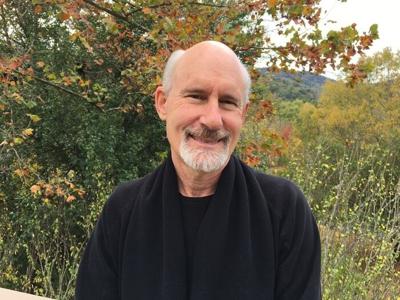

Serving nearly ten years behind bars was just what I deserved. I needed to learn some things that my educational degrees didn’t offer. Questionable life choices led me to follow a path influenced by someone who “served time” too, long ago in Palestine. He modeled a way of life I admired, though I knew it would be a rough road. Through honest contemplation, I knew it was my responsibility for choosing a potentially unwise way that led me straight to jail. They say prison is a “college for criminals,” where people locked away learn things—good and bad—they may never learn in the “freeworld.” If prison is a kind of college, a county jail is a kind of primary school of life. That was certainly true for me.
Though many told me I did more time than they did—which may have been true now and then—that wasn’t completely accurate. You see, I could walk out anytime into the fresh air and sunshine of the outside world. I chose to go inside—that was my privilege, as a chaplain. As the first interfaith chaplain in the Marin County Jail, north of San Francisco, I was a pioneer of sorts, but that couldn’t go to my head; I was too busy trying to figure out what I was supposed to be doing. It felt as if my real education was just beginning. That decade-long experience turned me inside out in ways I’m still processing. The contradictions were always troubling (as they needed to be in order to learn), and the questions I faced daily in the faces of human beings were constantly challenging.
My regular weekly schedule took me into 7 units of the jail system from minimum to maximum security. Locked in with detainees (most were not sentenced), we could get “locked into” some serious discussions as well as joyous singing (I often brought my guitar inside for our inter-religious services). After visiting with inmates throughout the week, I would take every opportunity to speak in congregations, schools or business groups about the “inside world.” Though I was an ordained Presbyterian minister, the chaplaincy was directed by a nonprofit board representing many faiths. I grew to embody the meaning of “interfaith,” practicing a way of human service that went beyond any kind of traditional ministry. It was a pleasure to bring prayerbooks, meditational resources, and scriptures from various faiths with me, to give out to prisoners. At the time, I believed I was following the Teacher of Nazareth in a profound way, without proselytizing, as some did who took advantage of the chance to preach to a captive audience.
Over the years since I was “released” from those confined facilities, I’ve held onto many memories of faces and encounters. Sometimes I can’t quite believe I did that work, and for that amount of time. But I continue to be grateful for the men and women I met and what I learned, and perhaps keep learning. Some lingering lessons include the following:
Lesson one: Freedom. What does freedom really mean? Inner or outer, personal or communal? I found it true that losing freedom, even for a few hours or a day, can teach the great value of liberty far beyond imagination.
Lesson two: Justice. Again, are we sure we know what justice means? Hebrew prophets linked justice with kindness, humility and true faith. Do we practice justice, or vengeance?
Lesson three: Responsible Ownership. Who owns a jail? Who’s responsible for Who is in jail and What happens inside? We all pay for the “Justice System”and should know what goes on in “our jail.”
Lesson four: Religion can help … and religion can hurt. “God has abandoned me and he’s punishing me,” one would say. After hundreds of hours listening to these cries, I’d sometimes hear a healthier response: “I’m using my time to learn.” In a very dark place, enlightenment can open hopeful doors.
Lesson five: The Power of Human Touch. Probably one of the most meaningful elements of being a chaplain is offering a handshake or hug. The simple act of touching an “untouchable” can have a deep impact. I also touched many of the victims of crimes, both inside and outside the walls. Unforgettable moments.
Like the fingers on our hand, these five lessons can cause us to clench a fist in anger at those “doing time” inside, or maybe shake a fist at our treatment of incarcerated people. On the “other hand,” we might dare to reach out and in, choosing a more open-handed response to those who offend us.
Probably the most difficult and lasting lesson from my chaplain years, is how to simply remember, and honor, all those faces and stories I recall, inside and out.
Chris Highland
2026

(0) comments
Welcome to the discussion.
Log In
Keep it Clean. Please avoid obscene, vulgar, lewd, racist or sexually-oriented language.
PLEASE TURN OFF YOUR CAPS LOCK.
Don't Threaten. Threats of harming another person will not be tolerated.
Be Truthful. Don't knowingly lie about anyone or anything.
Be Nice. No racism, sexism or any sort of -ism that is degrading to another person.
Be Proactive. Use the 'Report' link on each comment to let us know of abusive posts.
Share with Us. We'd love to hear eyewitness accounts, the history behind an article.