Evolution cannot explain biological complexity without bumping up against some fundamental laws of nature. If you recall, we mentioned the Second Law of Thermodynamics a few articles ago to help establish that the stars have a limited fuel supply and that, eventually, all the stars will run out of fuel, leaving the universe very dark and very cold. Since the stars have not run out of fuel, the universe must have had a beginning, which suggests a Beginner. Nonetheless, it is curious that, even though the Second Law technically applies only to closed systems, many, many open systems adhere to its tenets as well. Scientists call this state of disorder entropy, but everyone knows that the house tends to be messy rather than clean, and the lawn tends to look ragged rather than fresh-mown. All systems tend toward disorder. Have you ever seen an orderly abandoned house?
On the other hand, Darwinian evolution requires the opposite: that unguided systems naturally evolve from simple to complex. As we saw last time, the “evolution” of the eye is a great example. Darwinian evolution holds that the first “eye” arose as a cluster of light-sensitive cells on the surface of a prehistoric life form. Over millions of years, random, unguided mutations (and not just any mutations but only mutations that positively influence the species) added complexity to this cluster of light-sensitive cells, eventually forming the modern human eye step by step, from very simple to extremely complex.
Biochemist Michael Behe explains the massive leap of faith required of the evolutionist to go from simple to complex using the hypothetical example of a bicycle and a motorcycle. Behe says that for a bike to evolve into a motorcycle requires hundreds, maybe thousands, of random steps that must be made in the correct order, and each one must benefit the species. First, adding a motorcycle engine block to your everyday bicycle as a first evolutionary step is not much of a benefit. In fact, all that has been done is add a good deal of useless weight. But the bicycle is far from being a functional motorcycle. The engine block needs pistons with rings attached to a crankshaft that runs on bearings, which are lubricated by an oil system. Not to mention spark plugs, fuel tank, valves, clutch, transmission, drive train, and so on and so on. The simplest motorcycle imaginable is an irreducibly complex system because, until every part is in place and functional, it is not a functioning motorcycle but a very heavy, useless bicycle.
Astronomer Fred Hoyle summed up the absurd improbability that irreducibly complex systems in biology and in human beings developed by slight genetic mutations over long periods. Hoyle said, “The chance that higher life forms might have emerged through the evolutionary process is comparable to the chance that a tornado sweeping through a junkyard might assemble a Boeing 747 from the materials therein.”
The universe is finely tuned for life, suggesting a purposeful Designer. Design is also evident in many biological systems, including human beings. Looking at the fine-tuning of the universe and the complexity of observed biological systems, we can say a few additional things about the First Cause that created everything. From what we have looked at concerning the fine-tuning of the universe and the irreducible complexity in biological systems, we can say that “The design, unity, order, and complexity of creation itself implies the Creator of the universe is a highly intelligent Designer who purposefully designed and brought the universe into existence with such precise characteristics as to allow human life to thrive.”
But what is the purpose? If we say that the Creator of the universe is purposeful, then He must have had a purpose when He created mankind. If we step back and look at all created life, there is little doubt that man is at the peak of creation. And not by just a little bit. Man is far and away more advanced than the primates. The one characteristic that sets humans far above the rest of creation is man’s capacity for self-consciousness and high intelligence. But if we are just a bunch of atoms, as evolution argues, then “How do you get from simple atoms to self-consciousness and complex human thought?”
That is an important question we will dig deeper into in a few weeks. However, at this point in our conversation with the Bible skeptic Michael, he may very well ask an important question: “Isn’t the idea of God just something human beings make up in their mind as a coping mechanism?” After all, isn’t it easier to face life’s hardships if you have convinced yourself that there is a God who cares? Even if there really is no such God? Join us next time as we take a short detour to answer Michael’s essential question.
Gloria in excelsis Deo!
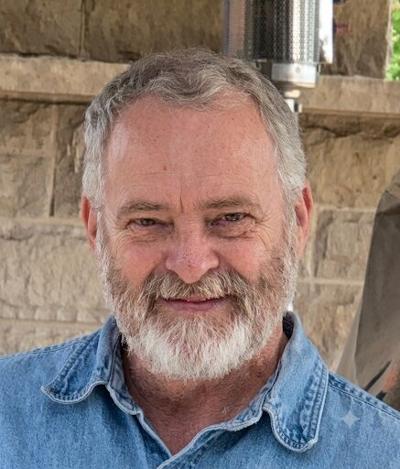
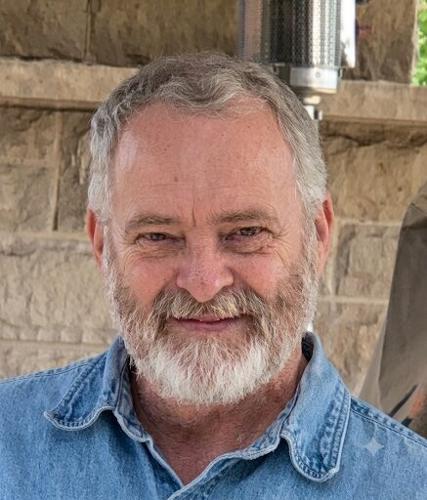
Ty B. Kerley, DMin., is an ordained minister who teaches Christian apologetics and relief preaches in Southern Oklahoma. Dr. Kerley and his wife, Vicki, are members of the Waurika church of Christ and live in Ardmore, OK. You can contact him at dr.kerley@isGoddead.com.
(0) comments
Welcome to the discussion.
Log In
Keep it Clean. Please avoid obscene, vulgar, lewd, racist or sexually-oriented language.
PLEASE TURN OFF YOUR CAPS LOCK.
Don't Threaten. Threats of harming another person will not be tolerated.
Be Truthful. Don't knowingly lie about anyone or anything.
Be Nice. No racism, sexism or any sort of -ism that is degrading to another person.
Be Proactive. Use the 'Report' link on each comment to let us know of abusive posts.
Share with Us. We'd love to hear eyewitness accounts, the history behind an article.