Selma and Dallas County’s history and outdoor resources have helped tourism increase by 7.1 percent in 2018 over the year before, according to a study out of Auburn University at Montgomery.
Tourism is on the rise statewide, growing by more than $1 billion and adding 11,984 jobs, according to Brian Jones of the State of Alabama Tourism Department.
Dallas County’s portion of that comes to a $76 million economic impact that has brought 1,028 jobs in Dallas County, said economist Dr. Keivan Deravi, who released the study.
Jones said there are a number of factors leading to the tourism increase, but he and Selma Dallas Chamber of Commerce Executive Director Sheryl Smedley attribute much of the tourism boost to the U.S. Civil Rights Trail. This initiative was launched in January 2018. It includes points outside of Alabama but here in the state there is what Jones referred to as the Civil Rights Triangle that is Birmingham, Montgomery and Selma.
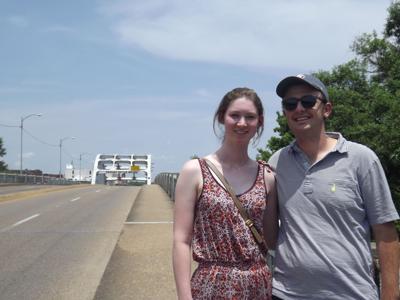
Jones points out must-see landmarks in Birmingham the 16thStreet Baptist Church, in Montgomery, the Dexter Avenue Baptist Church and the Equal Justice Initiative museum and memorial. In Selma, the civil rights history is centered around the Edmund Pettus Bridge and Bloody Sunday, but there is more for tourists to see.
Ancient Africa Enslavement and Civil War Museum
On Water Avenue in downtown Selma is the Ancient Africa Enslavement and Civil War Museum. This museum covers the history of Africans from ancient times through the 21stcentury. The museum focuses on slavery and how it affected America from its beginnings to emancipation and beyond. There are exhibits on the KKK, Bloody Sunday and individuals who were key in the Civil Rights Movement. The museum also has special areas dedicated to various African societies that existed before the slave trade started.
National Voting Rights Museum
On the south side of the Edmund Pettus Bridge, is the National Voting Rights Museum and Institute, which is dedicated to preserving the history of the struggle for the right to vote all across the South but centering on the Selma to Montgomery march and Bloody Sunday. There are exhibits, archives of documents and records of the voting rights struggle and regular program to teach the past struggles and present future possibilities. http://nvrmi.com/
Civil Rights Memorial
Also at the foot of the Edmund Pettus Bridge on the south side and directly across from the NVRMI, is the Civil Rights Memorial. Here tourists will find various memorials to the Civil Rights Movement, including several memorials to key individuals and The Tomb of the Unknown Slave and Tomb of the Unknown Soldier.
The most important and interesting find at the Civil Rights Memorial is 90-year-old George Sallie. Sallie is a Korean War Veteran and was on the bridge marching during the Bloody Sunday Selma to Montgomery March. Sallie has a scar on his forehead from a table leg that hit him during the violence. He is there every day meeting tourists and telling them stories of the Bloody Sunday March. Sallie said he prays every day for those involved in the Civil Rights Movement and for our current leaders. Columbus Mitchell greets visitors to the memorial with a smile and a wealth of information. Mitchell said he volunteers at the memorial daily, passing down stories his grandfather told him.
Old Depot Museum
The Old Depot Museum on Martin Luther King Street at the end of Water Avenue is the most complete museum covering Selma and Dallas County from its earliest days to the civil war through the civil rights era and beyond. Exhibits include a bill of sale for a slave girl, numerous items from the civil war, a “colored only” drinking fountain from the segregation era, and exhibits on Bloody Sunday. There are numerous items representing everyday life in the 1800’s. They even have the original deed for the plot of land that became the city of Selma. And in the back yard is a building that houses a Firefighter museum with exhibits of early firefighting equipment, much of which was used in Selma.
Vaughan-Smitherman Museum
The Vaughan-Smitherman museum is housed in a building built in 1847 as a university. During the Civil War, it was a Confederate hospital, it later became the Vaughan Memorial Hospital and then a military school. Now it houses many exhibits and collections from the Civil War. Much of the collection is documents and records from the era, and numerous items related to the Civil War that have been recovered from the Alabama River. Selma was a major manufacturing center during the Civil War, and many of these items were produced here.
Sturdivant Hall museum is a Greek revival home completed in 1856 and is an excellent example of a plantation mansion furnished with period furnishings.
Old Cahawba Archeological Park
A 15-minute drive down Highway 22 West is Old Cahawba Archeological Park. Cahawba, located at the spot where the Cahaba River flows into the Alabama River, was Alabama’s first capitol. Once the capitol moved to Tuscaloosa, Cahawba eventually became a thriving and rather wealthy town. It was also a major player during the Civil War with a notorious POW camp there. Today there are a few scattered ruins and old cemeteries for visitors to explore. The visitor center is an old house that was originally located in the town. Visitors can walk the streets, ride bikes or ride horses. There are numerous programs throughout the year that give visitors a unique way of learning the early history of the town and our state. In the works are walking and horse trails.
Outdoor recreation
Another tourist attraction for the state and for Dallas County is the wide abundance of outdoor recreation. The Black Belt region is one of the richest for hunting and fishing. There are numerous waterways that offer aquatic recreational options. With the recent development of the Cahaba Blue Way on the Cahaba River Canoers and kayakers can start in Leeds and end up at Old Cahawba, making Selma and Dallas County a destination.
Jones and Smedley agree there needs to be more development of Dallas County’s outdoor resources. One area that could be developed further is the Selma Marina which could be an excellent launch site for large fishing tournaments.
When tourists come to an area, they buy souvenirs, food and gasoline. Jones said the key is getting tourists to stay in an area longer and spend more money. He said when the St. James Hotel reopens, this will give tourists a good place to stay. But there needs to be events and attractions to entice visitors to stay a while.
Across the state, tourism was up 8.5 percent and was responsible for $681 million dollars in state taxes, and additional $273 million in local revenue. The Deravi study shows that without these taxes, each household would need to pay an additional $507 in state taxes to maintain current service levels.


(0) comments
Welcome to the discussion.
Log In
Keep it Clean. Please avoid obscene, vulgar, lewd, racist or sexually-oriented language.
PLEASE TURN OFF YOUR CAPS LOCK.
Don't Threaten. Threats of harming another person will not be tolerated.
Be Truthful. Don't knowingly lie about anyone or anything.
Be Nice. No racism, sexism or any sort of -ism that is degrading to another person.
Be Proactive. Use the 'Report' link on each comment to let us know of abusive posts.
Share with Us. We'd love to hear eyewitness accounts, the history behind an article.