
Data center proposals are surfacing across the Black Belt, from Lowndes County to Hale and Marengo counties, and the debate has quickly become one of the most divisive local issues in years.
Residents are overwhelmingly opposed. Many county commissioners and city council members are strongly in favor. Into that divide steps Jeff Berry, a Lowndes County resident with 36 years of experience managing and building data centers for major corporations. In an interview, Berry laid out what he believes communities need to understand before approving projects of this scale.
Lowndes County held a public hearing on April 28 about a data center proposal in the Burksville community. Marengo and Hale residents had a meeting on April 30 in Demopolis to hear from environmental groups about a possible data center.
Berry, a US Army veteran certified in multiplex data communications, spent his 36-year career in data networking and data center operations, including designing and building new data center facilities.
Berry said the industry has changed dramatically. Early data centers were located in industrial parks or office buildings, far from homes, farms, churches and livestock. Equipment loads were smaller and the noise and magnetic frequency emissions were manageable.
But the rise of cloud computing and artificial intelligence has created what he called an “insatiable demand for computing power.” Companies like Google, Amazon, Meta and Oracle now build large, centralized facilities rather than smaller corporate data centers. Berry said the proposed Lowndes County facility would be five million square feet under roof.
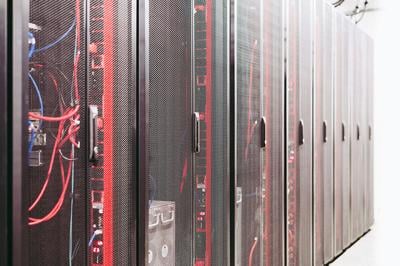
Berry describes refrigerator-sized computing appliances packed with processors and memory that generate heat and low frequency magnetic emissions. He said a facility of this size could contain as many as one million of these appliances. “Just that equipment alone is going to generate an un silenceable magnetic frequency hum that will emanate for miles,” he said. “And it is worse at night.”
Cooling such a facility, he said, requires enormous quantities of water. Berry said it is unlikely the Lowndes County project would use only a few hundred thousand gallons per day as proposed.
“That is completely incorrect,” he said. “Something like this is going to burn two to five million gallons a day.” He said the water could come from the Alabama River or from wells that would deplete the local water table. He pointed to areas near Atlanta where residents near a Meta data center have experienced water shortages.
Berry also warned that the public should understand how these projects are structured. He said companies like Cloverleaf Infrastructure are not the builders or operators of the data centers. They are broker/developers who secure land options, power agreements and water concessions, then sell the prepared site to a major tech company.
“They are going to leave town in a plane so full of cash it will barely make it off the ground,” he said. Any promises made by the broker developer, he added, are not binding on the eventual owner. He used the example of a promised closed loop cooling system. He said such systems are rare, experimental, expensive and require periodic flushing of antifreeze. “They are in no position to make such a commitment,” he said.
In a statement, Cloverleaf recently outlined the positive impact the data center would have in Lowndes County and pledged up to $10 million to support local needs and priorities in the area, with an initial $1 million up front and an additional $9 million to be distributed as the project advances through development.
Berry also challenged job claims. He said the promise of 1,000 construction jobs is unrealistic because data centers are built by specialized out-of-state firms that bring their own crews. He estimated 300-400 workers who are mostly temporary and said few would be from Lowndes County.
The high-tech jobs would be performed remotely, often overseas, he said.
“They are not going to be in Lowndes County,” he said. “They are not even going to be in the United States for the most part.”
Berry said the rush to build data centers is happening across the South and across the country. Landowners are approached with options that seem lucrative, but he said many are misled. He gave examples of land optioned for $30,000 an acre and later sold to a tech company for more than $270,000 an acre, with the broker/developer capturing the difference.
He also raised concerns about tax abatements. He said the president of the Lowndes County Economic Development Commission recently proposed a schedule of abatements so large that the facility would pay no property taxes for years. “The top four tech billionaires in this country are worth a combined $1.5 trillion dollars,” he said. “These guys are standing there with a straight face proposing giving those tech billionaires a tax break at the expense of Lowndes County citizens.”
Berry said he supports responsible economic development and believes data centers can benefit communities when properly planned. But he said the current proposals in the Black Belt are not responsible. “You would think I would be in favor of this thing after 36 years of working in them,” he said. “This is not a responsible proposal and therefore I am adamantly opposed to it.”
He said the public should understand the full impact before any county approves a project. “It is a plague on the country, especially in the South,” he said.
(0) comments
Welcome to the discussion.
Log In
Keep it Clean. Please avoid obscene, vulgar, lewd, racist or sexually-oriented language.
PLEASE TURN OFF YOUR CAPS LOCK.
Don't Threaten. Threats of harming another person will not be tolerated.
Be Truthful. Don't knowingly lie about anyone or anything.
Be Nice. No racism, sexism or any sort of -ism that is degrading to another person.
Be Proactive. Use the 'Report' link on each comment to let us know of abusive posts.
Share with Us. We'd love to hear eyewitness accounts, the history behind an article.