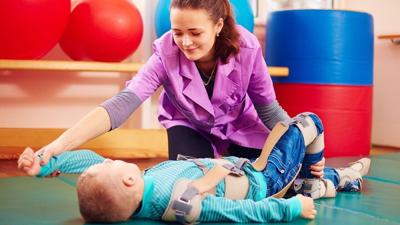


Beyond symptoms: Inside the push to finally change cerebral palsy outcomes
If you are a parent of a child with cerebral palsy, you have probably heard the same conversation at every appointment: treating symptoms and working on mobility. What you likely have not heard is: We think we know how to make things better.
More than 1 million Americans live with CP. For years, treatment helped people adapt instead of aiming for real change. But in 2025, things started to shift. The Cerebral Palsy Center reviewed the most promising research from the past year and found three standout developments.
Cord Blood Therapy Is Producing Real Motor Gains
Every parent of a child with CP eventually asks if there is a cure. For a long time, the answer was a gentle no. The brain injury was considered permanent, so treatment focused on working around the damage.
A 2025 meta-analysis in Pediatrics is changing that conversation. Children who received cord blood therapy scored 1.36 points higher on the GMFM-66 motor skills scale after six months compared to those who only had rehabilitation. By 12 months, the difference grew to 1.42 points. Researchers see this as a major treatment effect for CP.
One major finding: 68% of treated children did better than everyone in the control group. The best results were seen in younger children, especially those under 5 and with milder CP (GMFCS levels 1-3). This treatment is not yet approved as standard care anywhere, so you still need to join a clinical trial or expanded access program. But the results are now real, not just theory. If your child is young, ask your care team about joining a trial. In 2026, the focus is on identifying who benefits, when treatment works best, and how to pair regenerative approaches with cerebral palsy therapy for stronger gains.
A Phone App Is Helping Diagnose CP Over a Year Earlier
In Australia, the average age at diagnosis of CP is 19 months. The Baby Moves VIEW app can lower that to as early as 3 months. This difference is important because a baby’s brain is most flexible in the first year.
Parents can record their baby’s movements at home and send the videos to trained clinicians using the app. The General Movements Assessment, which is the standard first screening for CP, usually requires a hospital visit during a short four-week window. Many families lose this chance.






The app uses a built-in AI algorithm to check video quality. The prototype has already been used in over 20 international studies with more than 10,000 families. The team expects it to be available to the public within two years. Every month of earlier diagnosis gives your child another month of therapy when their brain is most adaptable.
A Wearable Device Is Retraining Muscles Between Clinic Visits
Motor learning takes repetition. A few hours of therapy each week can help, but the brain needs much more practice to change movement patterns. Most of a child’s day is outside the clinic.
The Cionic Neural Sleeve 2, which was cleared by the FDA in September 2025, was designed for those times. This leg-worn device uses sensors, AI, and electrical stimulation to help activate the right muscle sequences as you walk.
In testing, 94% of participants showed better walking patterns. People who tried the device at home reported a 68% boost in foot clearance, a 44% improvement in ankle stability, and a 30% reduction in spasticity. The device has been used for over 2 million hours and is available through 1,500 prescribers nationwide.
This is not a brace; it is a retraining tool. Every step taken while wearing the sleeve gives muscles another chance to practice the correct movement pattern, helping build new motor pathways during important activities like walking to school, moving around the house, and playing outside.
What Comes Next
These tools are real and supported by data, but there are still gaps. Cord blood therapy needs phase 3 trials, the screening app is awaiting a commercial launch, and wearable devices need wider insurance coverage. For the first time in 20 years, families are asking a new question. It is no longer "How do we manage this?" Now it is "What else is out there for us?"
Summary
From cord blood therapy research to at-home screening apps and FDA-cleared wearables, 2026 is bringing progress in many areas. The next challenge is precision: making sure the right tools reach the right patients at the right time. As Cerebral Palsy Awareness Month turns 20, that goal finally feels within reach.
This story was produced by Cerebral Palsy Center and reviewed and distributed by Stacker.
(0) comments
Welcome to the discussion.
Log In
Keep it Clean. Please avoid obscene, vulgar, lewd, racist or sexually-oriented language.
PLEASE TURN OFF YOUR CAPS LOCK.
Don't Threaten. Threats of harming another person will not be tolerated.
Be Truthful. Don't knowingly lie about anyone or anything.
Be Nice. No racism, sexism or any sort of -ism that is degrading to another person.
Be Proactive. Use the 'Report' link on each comment to let us know of abusive posts.
Share with Us. We'd love to hear eyewitness accounts, the history behind an article.