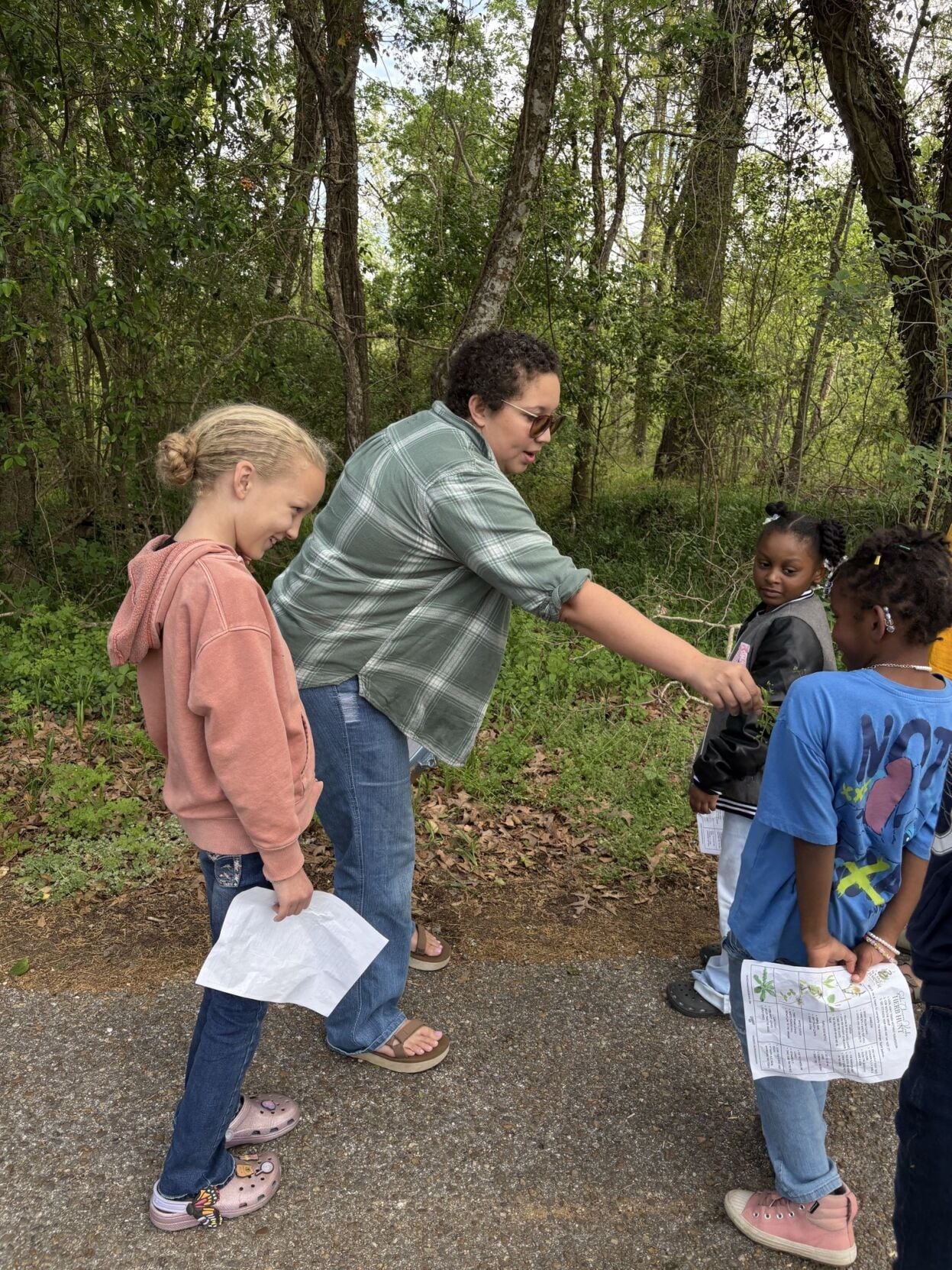

Community herbalist and longtime youth advocate Ashley Colburn has launched a hands-on learning initiative that is quickly gaining attention.
Her program, Snake Charmer Herbs, teaches children to identify and understand the useful plants growing right in their own yards, and she’s doing it for free.
Colburn, who has spent more than 15 years working with children in programs ranging from CASA to cultural enrichment initiatives, said the idea came naturally. “Kids and herbs, my two true passions… we’ve been able to combine it with a totally free way to get kids outside, confident, and teach them life skills,” she said.
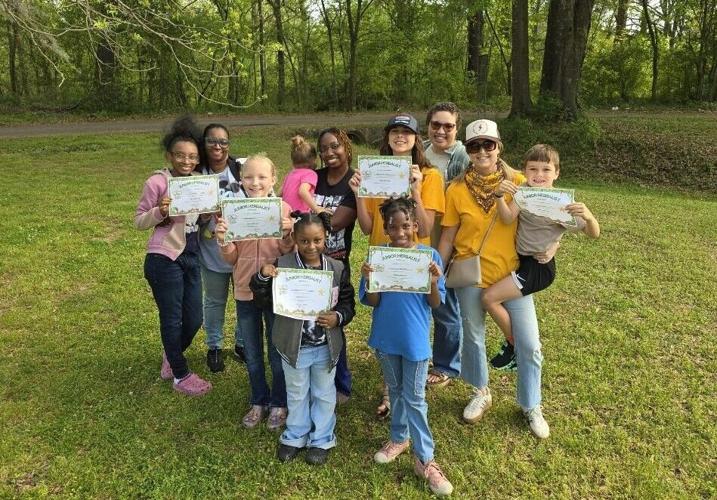
Snake Charmer Herbs hosts what Colburn calls “herb walks,” but they’re not the typical adult-style tours. Instead of lecturing, she uses scavenger hunts, games and kid-friendly challenges to help children ages 5-12 identify safe, common plants such as dandelion and plantain.
“We’re talking about common plants they see every day, it’s kind of like unlocking a secret language,” she explained.
Children search for plants using photos and simple descriptions. Once they find them, Colburn steps in to explain uses, history and fun facts. One of her favorites: in French, the dandelion is known as “the wet-the-bed plant” because of its natural diuretic properties.
The goal, she said, is to reconnect kids with food and nature. “There’s no difference between a dandelion leaf and a lettuce leaf, it’s just where it grows,” she told us.
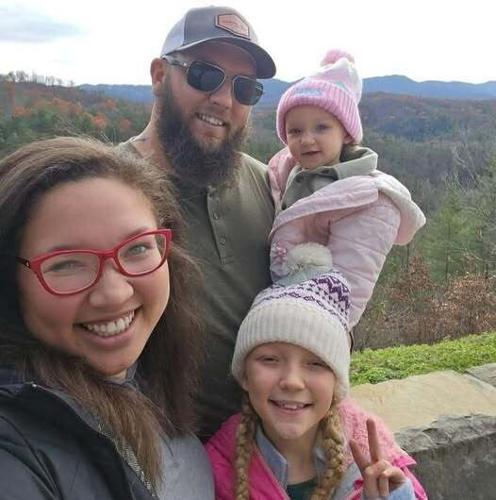
Colburn’s passion for herbalism is personal. Her family heritage includes MOWA Choctaw, African and European roots, and she said learning traditional plant knowledge has been a way to reconnect with her ancestors.
“I didn’t grow up learning the plants my ancestors used, so I’ve had to seek it out myself,” she said. “I want my daughters to grow up with this knowledge in a way I didn’t.”






She is a member of Herbalists Without Borders and describes Snake Charmer Herbs as a volunteer-driven community effort, not a business. “This isn’t a job… I’m doing it for fun. It’s fun for me, really,” she said.
The program’s next major event is a special collaboration with Old Cahawba Archaeological Park, which will host a free herb walk for children on April 18 at 11 a.m.
Old Cahawba has waived admission fees for all participating children. Parents pay $2.
“Old Cahaba collaborated with us, they are sponsoring every child that comes to my herb walk,” Colburn said. “That was so wonderful of them.”
Families can sign up through the Snake Charmer Herbs Facebook page, where Colburn also posts free educational materials, weekly “herb of the week” features, and a playful video series called Touch Grass, encouraging kids to get outside and explore.
Colburn said several children have already registered, but there is room for many more.
“However many come, that’s what comes,” she said with a smile. “It’s always really fun.
And for those wondering, Colburn explained how she got the name Snake Charmer. “I’ve been bitten by snakes four separate times in my life. Most of that probably comes from growing up carefree, barefoot, outside and with poor eyesight. If there was a patch of woods, tall grass or a creek nearby, that’s where you’d find me. My family always used to joke, ‘If it had been a snake it would’ve bit you.’ Apparently they were right. Later when I got into herbs, they started calling me a root doctor, and the name Snake Charmer Herbs just kind of stuck. Thankfully I’ve survived all four bites… and I’m still outside most days.”


(0) comments
Welcome to the discussion.
Log In
Keep it Clean. Please avoid obscene, vulgar, lewd, racist or sexually-oriented language.
PLEASE TURN OFF YOUR CAPS LOCK.
Don't Threaten. Threats of harming another person will not be tolerated.
Be Truthful. Don't knowingly lie about anyone or anything.
Be Nice. No racism, sexism or any sort of -ism that is degrading to another person.
Be Proactive. Use the 'Report' link on each comment to let us know of abusive posts.
Share with Us. We'd love to hear eyewitness accounts, the history behind an article.