





(Photo by Gustavo Fring via Pexels)
By Stephen Beech
Listening to your favorite music reduces pain during medical procedures, reveals new research.
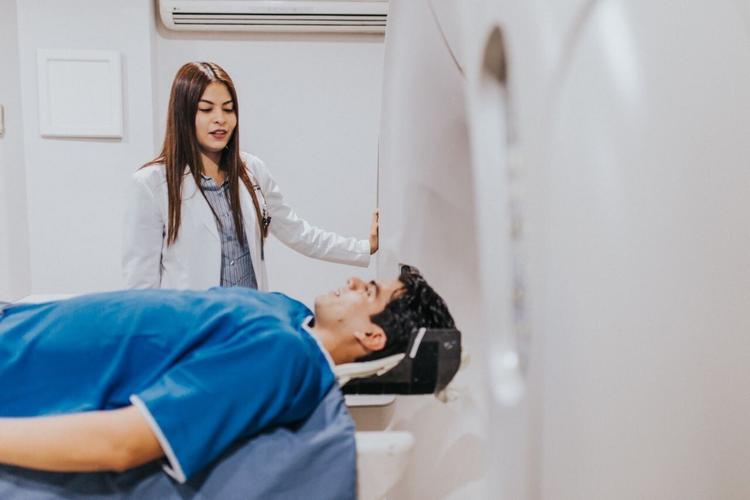
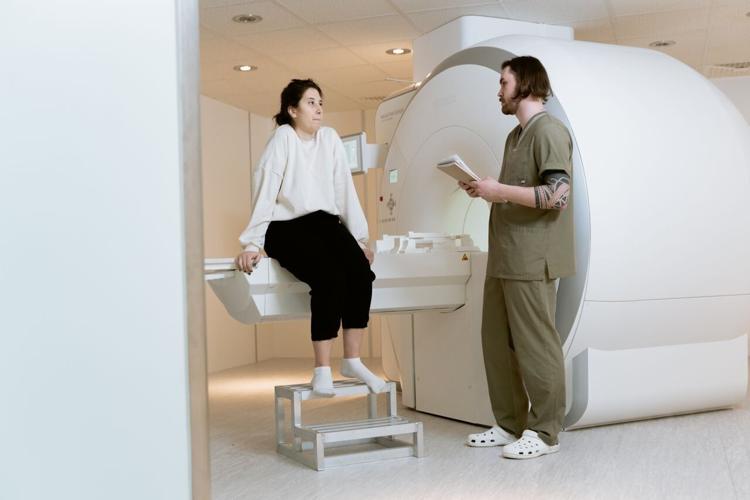
Scientists found that playing patients’ preferred tunes while a thin tube called a cannula was inserted before an MRI scan minimized pain and stress.
But the soothing effects don’t work with just any kind of music, according to the study.
Although different musical interventions have previously been reported to help with pain and stress, the evidence varies widely for different genres of music.
To investigate, Swiss scientists played different kinds of music for patients about to undergo an intravenous cannula before an MRI — either Mozart, relaxation music or the patients’ own favorite tunes.
Their findings, published in the journal Frontiers in Pain Research, showed that playing patients’ favorite music worked best.

(Photo by Charlss GonzHu via Pexels)
Lead author Dr. Andrei-Cristinel Dragnea, of University Hospital Zurich, said: “Although a needle puncture is a minor procedure, the level of pain can vary significantly from person to person.
“In modern medicine, the goal of treating physicians is not only to provide a successful diagnosis and therapy, but also to ensure that the procedure causes as little discomfort as possible.”
The researchers recruited 204 patients undergoing a nonemergency MRI of the brain, spine, or head and neck.
The procedures called for a contrast agent inserted into their veins with a cannula, which can hurt.
A quarter of them acted as a control group, meaning they listened to no music.
The three other groups listened to either their favorite music, music specifically designed for relaxation, or a piece of Mozart, Sonata KV448, which several studies have found to have therapeutic properties.
Before the procedure started, patients assigned to the “favorite music” group were asked to name an artist or song they would like to hear, and all patients were shown a visual scale that describes pain from a level of one (no pain) to 10 (worst pain of their life).







(Photo by Jepoy Fabian via Pexels)
That allowed the researchers to ask patients to rate their pain before and during the procedure, and then at two points afterward — 30 seconds and two minutes later.
Patients who were listening to their favorite tunes experienced less pain both 30 seconds and two minutes after the cannula was inserted.
In a subgroup of patients who reported preexisting pain before cannulation, listening to their favorite music also reduced pain at the time of needle insertion, while listening to Mozart reduced pain two minutes after needle insertion.
Pain levels seemed to improve more two minutes after cannulation than at the earlier time points, although the data can’t explain why.
The researchers said it could be that the initial discomfort of the cannula pulled people’s attention from the music, or that the mechanisms which make music helpful for pain reduction need some time to kick in.
However, Mozart only seemed to work for the patients who reported being in pain before the cannulation, and the patients who listened to relaxation music or no music didn’t experience any change in their pain.

(Photo by MART PRODUCTION via Pexels)
Study senior author Dr. Meritxell Garcia Alzamora, also of University Hospital Zurich, said: “From the four conditions we examined, only favorite music and Mozart showed a positive effect.
“Favorite music manifested a significant pain reduction effect both in patients with and without baseline pain — i.e. with preexisting pain before needle puncture.
“Mozart only showed significant pain relief in patients with preexisting pain.”
Garcia Alzamora added: “I would recommend listening to music to patients, especially patients who like music in general.
“In view of our results we will increase the application of music in venous punctures performed for radiological procedures, especially in anxious or claustrophobic patients.
“Relaxation music is usually characterized by a slow speed and low volume, and does not show noticeable dynamics.
“These characteristics may have contributed to the patients disregarding relaxation music, which would explain the lack of pain relief.”
She said the findings indicate that it would be worth evaluating the benefits of music for patients undergoing procedures that are more painful and last longer.
(0) comments
Welcome to the discussion.
Log In
Keep it Clean. Please avoid obscene, vulgar, lewd, racist or sexually-oriented language.
PLEASE TURN OFF YOUR CAPS LOCK.
Don't Threaten. Threats of harming another person will not be tolerated.
Be Truthful. Don't knowingly lie about anyone or anything.
Be Nice. No racism, sexism or any sort of -ism that is degrading to another person.
Be Proactive. Use the 'Report' link on each comment to let us know of abusive posts.
Share with Us. We'd love to hear eyewitness accounts, the history behind an article.