


(Photo by Pavel Bak via Pexels)
By Stephen Beech
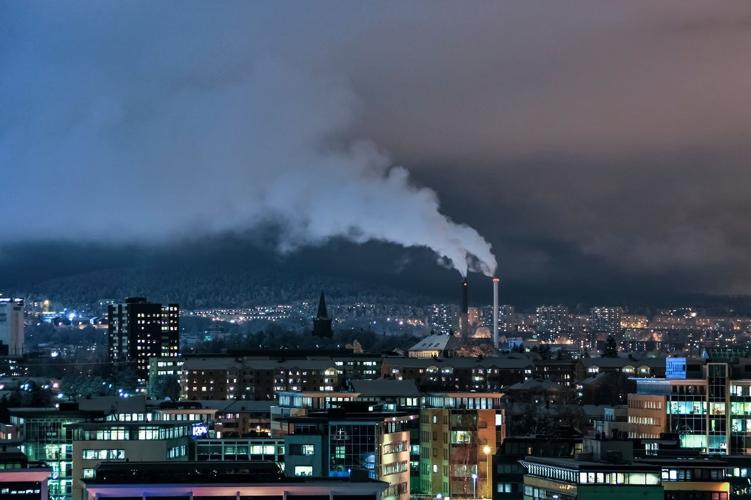
Poor sleep may be down to air pollution, according new research.
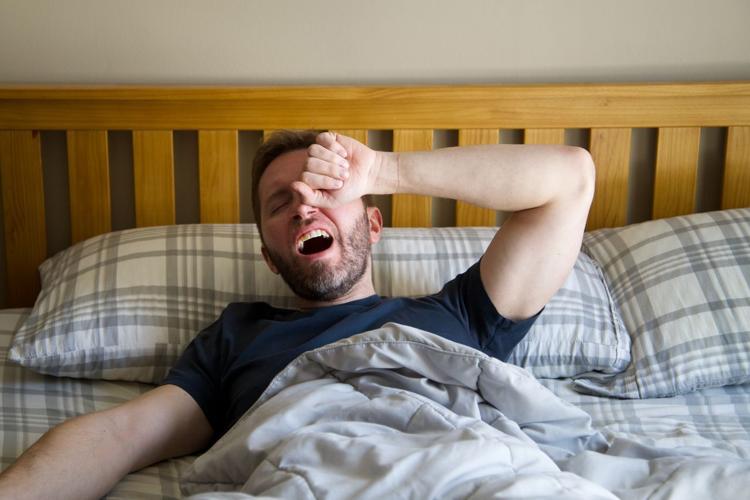
Waking up coughing at night could be due to even low levels of pollutants in the local area, suggests sleep tracking app data gathered worldwide.
Cambridge University researchers teamed up with colleagues in China and tech firm Sleep Cycle to analyze coughing sounds from 32 cities in 12 countries recorded over 500 days.
They found that higher daily air pollution levels were "strongly linked" to nighttime coughing levels — even where local pollution levels were below the World Health Organization (WHO) recommended daily exposure limit.
The research team used cough sounds passively recorded by the mobile app via the phone's microphone.
Cough sounds were counted on individual devices and pooled by city to build an "unprecedented" dataset.

(Photo by Andrew Patrick Photo via Pexels)
The researchers accounted for external factors that could lead to an increase in coughing levels, such as weather conditions or levels of flu.
Analysis of the anonymized data, published in the journal Communications Health, also found that when pollution levels rose by 10 micrograms of particulate matter per meter cubed, there was a 2.4% rise in coughing levels.
In Los Angeles, one of the cities included in the study, coughing levels spiked at the same time as the January 2025 wildfires.
The researchers say that further supported the short-term association between daytime pollution and nighttime coughing.
Air pollution leads to an estimated 7 million premature deaths per year.
Previous research has shown that, among airborne pollutants, tiny particles of less than 2.5 micrometers (PM2.5) are particularly dangerous as they can penetrate deep into the lungs and into the bloodstream.
That can lead to inflammation throughout the body, heart disease or respiratory conditions including asthma and chronic obstructive pulmonary disease (COPD).
Study lead author Tong Xia, of Tsinghua University, China, said: "Everyone coughs from time to time, but coughing, whether it's a one-off or more persistent, is a sign of irritation or inflammation in the lungs.
"A cough could be a sign of something that hasn't become chronic yet, but might in future."
Sleep Cycle is a mobile app that uses sounds — such as breathing, snoring or coughing — to track sleep quality.







(Photo by cottonbro studio via Pexels)
The sounds are recorded locally and analyzed by an AI algorithm.
The firm's technology has analyzed more than 4 billion sleep sessions, which the researchers say makes it a "useful complement" to traditional public health surveillance and epidemiological research.
Study leader Cecilia Mascolo, from Cambridge's department of computer science and technology, said: "The dataset from Sleep Cycle is really valuable, because the app is widely used worldwide.
"Most public health studies only have data from one country, so having a dataset of this size gives it much more power."
Co-author Mikael Kågebäck, from Sleep Cycle, said: "Every night, Sleep Cycle's technology turns millions of smartphones into precise sound analysis instruments.
"Coughs are detected and counted directly on each user's device, so no audio ever leaves the phone.
"The combination of scale and privacy lets researchers see the health effects of air pollution city by city, night by night, at a scale no sleep lab could match."
The dataset contained information on cough sounds from tens of thousands of users over 18 months.
The researchers used data from the 32 cities worldwide where usage rates of the app were highest.
The cities were in the the U.K., the United States, Australia, Brazil, Chile, China, France, Germany, Italy, Japan, South Africa and Sweden.

(Photo by Ron Lach via Pexels)
The research team linked the cough data with city-level PM2.5 concentrations, meteorological variables and flu surveillance data over a period of 18 months.
Analysis of the data, even when accounting for the annual flu season when cough rates would normally be higher, showed a "strong link" between daytime pollution levels and nighttime cough frequency.
Tong, formerly a Ph.D. student in Mascolo's group, said: "I was surprised we could still see the signal at all.
"I thought that adding in the confounding factor of flu season would make the link in the data disappear, but it didn't."
The link between pollution and coughing persisted in the data, even when pollution levels were below the WHO's recommended safe daily exposure limit.
Mascolo added: "This suggests that there may be no such thing as a safe threshold for exposure to air pollution, although our research is purely observational.
"However, people may wish to consider how they might mitigate their own exposure to air pollution, by using masks or air filters, for example."
(0) comments
Welcome to the discussion.
Log In
Keep it Clean. Please avoid obscene, vulgar, lewd, racist or sexually-oriented language.
PLEASE TURN OFF YOUR CAPS LOCK.
Don't Threaten. Threats of harming another person will not be tolerated.
Be Truthful. Don't knowingly lie about anyone or anything.
Be Nice. No racism, sexism or any sort of -ism that is degrading to another person.
Be Proactive. Use the 'Report' link on each comment to let us know of abusive posts.
Share with Us. We'd love to hear eyewitness accounts, the history behind an article.