

Key Takeaways
The first baby conceived through robot-controlled fertilization has been born
The baby boy was born to a 40-year-old woman in Mexico
An automated process created the embryo by injecting sperm into an egg
FRIDAY, April 11, 2025 (HealthDay News) -- The world’s first baby conceived through robot-controlled fertilization has been born, researchers say.
The boy was born to a 40-year-old woman in Guadalajara, Mexico, following a previous in vitro fertilization (IVF) attempt that had produced only one mature egg and no embryos, researchers said.
Her newborn was conceived using a fully automated, digitally controlled version of an IVF procedure called intracytoplasmic sperm injection, or ICSI.
Remote operators in Guadalajara and in New York – 2,300 miles away – oversaw the automated system as it selected a sperm, prepared it for injection, and then injected it into a waiting egg.
In ICSI, skilled lab technicians manually inject a single sperm directly into an egg, potentially creating an embryo that can then be implanted into the mother.
The process involves 23 painstaking steps, and results can vary between technicians, researchers said.
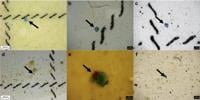
To try to improve the process, a research team created an automated workstation in which these steps are performed under AI control or under the digital control of a remote operator.
‘With AI, the system autonomously selects sperm and precisely immobilizes its midsection with a laser ready for injection — executing this rapid, precise process with a level of accuracy beyond human capability,” lead researcher Gerardo Mendizabal Ruiz, director of the Computational Perception Laboratory at the University of Guadalajara, said in a news release.
For this study, five eggs were assigned to fertilization with the automated ISCI system, while three were fertilized by human lab technicians using standard methods. The eggs came from a 23-year-old donor, and were injected with sperm from the new mother’s 43-year-old partner.
Four of the five injected eggs in the automated system achieved fertilization, compared with all three in the standard method group.



One high-quality embryo fertilized with the automated system was transferred into the mother, who became pregnant and gave birth to a healthy baby boy, researchers said.
The system “represents a transformative solution that promises to enhance precision, improve efficiency, and ensure consistent outcomes,” Jacques Cohen, an embryologist with Conceivable Life Sciences in New York, said in a news release.
Conceivable Life Sciences created the automated system and funded this clinical trial.
The entire automated fertilization procedure took an average of about 10 minutes per egg, slightly longer than routine, manual ICSI, researchers reported.
“We expect to reduce procedure time significantly” as the automated process is further honed, Mendizabal-Ruiz said.
Next, researchers plan to validate the system’s effectiveness by testing its performance in a clinical trial involving more cases.
The findings were published April 9 in the journal Reproductive BioMedicine Online.
More information
The Cleveland Clinic has more on intracytoplasmic sperm injection.
SOURCE: Reproductive BioMedicine Online, news release, April 9, 2025
What This Means For You
The IVF process could become fully automated if a new system is proven to be safe and effective.
(0) comments
Welcome to the discussion.
Log In
Keep it Clean. Please avoid obscene, vulgar, lewd, racist or sexually-oriented language.
PLEASE TURN OFF YOUR CAPS LOCK.
Don't Threaten. Threats of harming another person will not be tolerated.
Be Truthful. Don't knowingly lie about anyone or anything.
Be Nice. No racism, sexism or any sort of -ism that is degrading to another person.
Be Proactive. Use the 'Report' link on each comment to let us know of abusive posts.
Share with Us. We'd love to hear eyewitness accounts, the history behind an article.