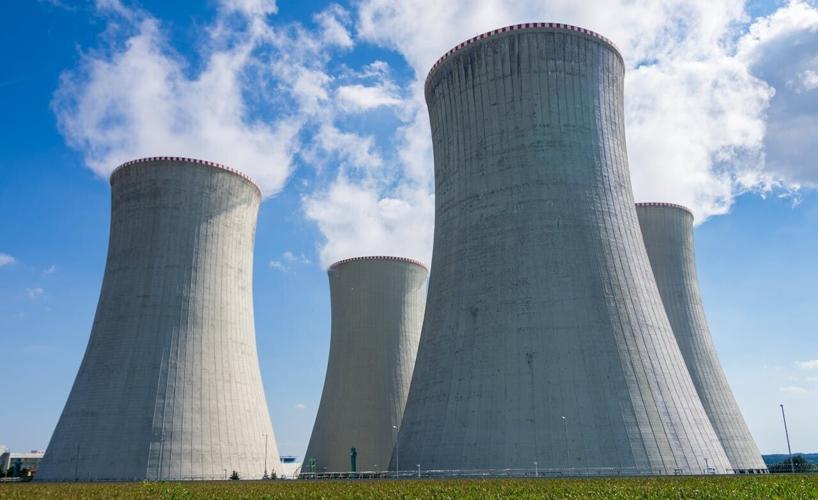
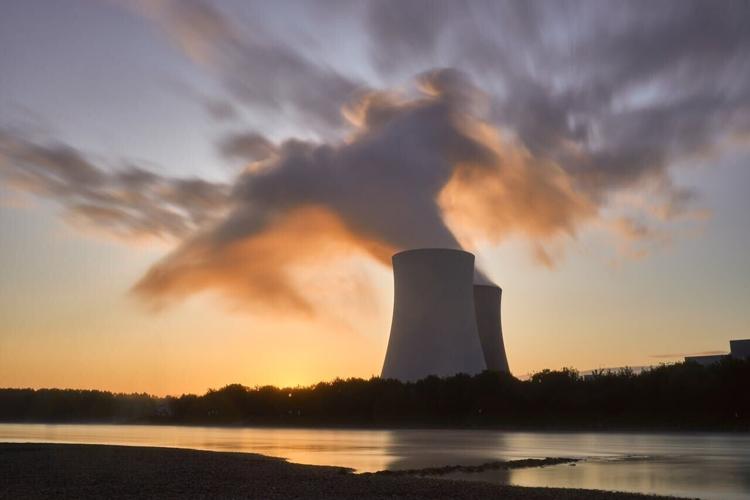
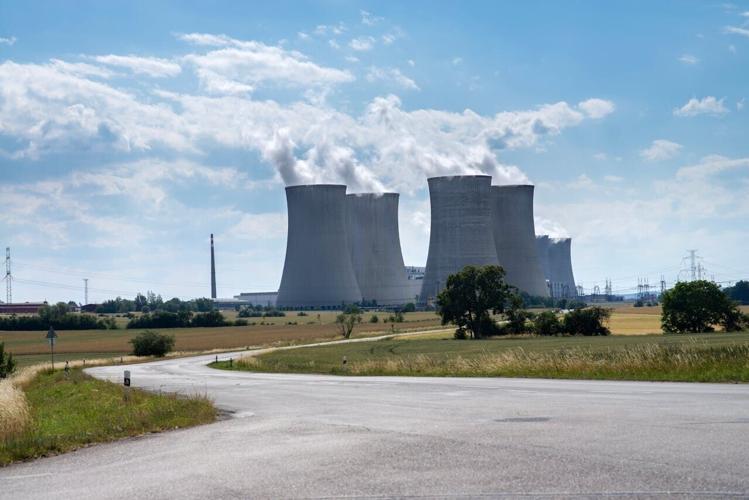

(Photo by Rob via Pexels)
By Stephen Beech
People who live near nuclear power plants are more likely to die of cancer, according to a new study.
Researchers found that counties located closer to operational nuclear power plants have higher rates of cancer mortality than those located further away.
The findings remain the same even after accounting for socio-economic, environmental, and health care factors.
The study, published in the journal Nature Communications, is the first of the 21st Century to analyze proximity to nuclear power plants (NPPs) and cancer mortality across all NPPs and every U.S. county.
Several previous studies on the potential link between NPPs and cancer have been conducted around the world, with conflicting results.

(Photo by Markus Distelrath via Pexels)
The research team, led by scientists from Harvard T.H. Chan School of Public Health in Boston, Massachusetts, conducted a national assessment of NPPs and cancer mortality between 2000 and 2018 for the new study,
The researchers used advanced statistical modelling that captured the cumulative impact of all nearby NPPs, rather than just one.





The locations and dates of operation of U.S. NPPs - as well as some nearby in Canada - were obtained from the U.S. Energy Information Administration, and county-level data on cancer mortality was also obtained.
The research team took into consideration potential confounders in each county, including educational attainment, average household income, racial composition, average temperature and relative humidity, smoking prevalence, body mass index (BMI), and proximity to the nearest hospital.

(Photo by Vladimír Sládek via Pexels)
The study found that counties located closer to nuclear power plants experienced higher cancer mortality rates, even after accounting for socio-economic, environmental, and health care factors.
The researchers estimated that over the course of the study period, around 115,000 cancer deaths across the US - about 6,400 deaths per year - were attributable to proximity to NPPs.
The association was strongest among older adults, according to the findings.
Study senior author Professor Petros Koutrakis said: “Our study suggests that living near a NPP may carry a measurable cancer risk - one that lessens with distance."
The researchers noted that the results are consistent with the findings of a similar study they conducted in Massachusetts, which identified elevated cancer incidence among populations living closer to NPPs.
Koutrakis added: “We recommend that more studies be done that address the issue of NPPs and health impacts, particularly at a time when nuclear power is being promoted as a clean solution to climate change.”



(0) comments
Welcome to the discussion.
Log In
Keep it Clean. Please avoid obscene, vulgar, lewd, racist or sexually-oriented language.
PLEASE TURN OFF YOUR CAPS LOCK.
Don't Threaten. Threats of harming another person will not be tolerated.
Be Truthful. Don't knowingly lie about anyone or anything.
Be Nice. No racism, sexism or any sort of -ism that is degrading to another person.
Be Proactive. Use the 'Report' link on each comment to let us know of abusive posts.
Share with Us. We'd love to hear eyewitness accounts, the history behind an article.