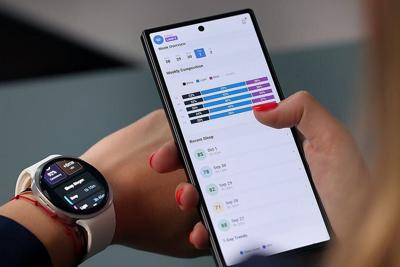

Sleep used to be something people simply did. Now, for a growing corner of wellness culture, it is something to optimize. “Sleepmaxxing,” a social-media-driven trend focused on maximizing sleep quality, can involve carefully timed routines, blackout curtains, smart rings, supplements, mouth tape, and nightly sleep scores. Fueled by wearable technology, sleep influencers, and biohacking culture, the trend reflects growing recognition that rest matters.
But the pursuit of better sleep can become complicated when optimization starts to look like a performance. Data from resources such as the American Academy of Sleep Medicine (AASM) have shown growing consumer interest in understanding sleep, while wearables and apps have made personal sleep data widely available. Below, Sleeping.com examines whether that information helps people sleep better or encourages them to mistake better numbers for better health.
Why Sleep Became Wellness's New Obsession
Sleep has moved to the center of the wellness conversation partly because its importance is increasingly difficult to ignore. The Centers for Disease Control and Prevention recommends that adults ages 18 to 60 get at least seven hours of sleep each day, while emphasizing that both sufficient duration and good-quality sleep matter.
Technology has also transformed sleep from a largely subjective experience into something consumers can quantify. Smartwatches, rings and phone apps generate estimates for sleep duration, stages, timing and recovery. A 2026 AASM survey found that 48% of adults surveyed had used a sleep-tracking device, up from 35% in 2023.
The pandemic also intensified attention to sleep as routines, stress, and working patterns changed. Research examining online search behavior found that general interest in sleep remained elevated from the middle of the pandemic into the post-pandemic period.
That attention fits neatly into wellness and longevity movements already built around quantification. Steps, heart rate, workouts, and nutrition can all become data points. Sleep is especially appealing because technology appears to make an unconscious process visible and potentially controllable.
The Benefits and Risks of Constant Sleep Tracking
That visibility can be useful. Tracking may reveal inconsistent schedules, short nights, or patterns users otherwise overlook. In the same AASM survey, 55% of tracker users reported changing their behavior based on what their devices told them.
But that influence works in both directions. A score can encourage an earlier bedtime, but it can also persuade someone who feels rested that they slept badly. The same survey found that 51% of sleep-tracker users had felt anxious or stressed about achieving a good sleep score.
Researchers have a term for an extreme version of that preoccupation: “orthosomnia.” First described in the clinical literature in 2017, the term was proposed after researchers presented three cases involving patients preoccupied with improving sleep data from wearable devices. They observed that efforts to optimize tracker-reported sleep could contribute to anxiety or unhelpful sleep behaviors.
That creates a paradox at the heart of sleepmaxxing. Sleep requires letting go of conscious control, yet optimization culture can turn bedtime into a nightly performance review. Instead of asking, “Do I feel rested?” someone may begin asking, “Did I hit the right number?”
Sleep Scores Don't Tell the Whole Story
Part of the problem is that consumer sleep data can look more definitive than it is.
Wearables typically estimate sleep using physiological and behavioral signals collected by their sensors. Clinical polysomnography evaluates sleep using multiple physiological measurements. The difference between consumer technology and polysomnography matters because precise-looking charts of light, deep, and REM sleep can create a sense of certainty that the underlying technology may not support.






The AASM notes that consumer devices offer sleep staging with limited validation of accuracy outside laboratory settings. Performance can also vary among devices, manufacturers, and software versions.
That does not make trackers useless. Their strength may be in showing patterns over time rather than delivering a clinical verdict about an individual night. The AASM has said these technologies can contribute to conversations between patients and clinicians as part of an appropriate clinical evaluation.
Sleep scores also compress complex information into a single number. A score of 82 rather than 92 feels meaningful because it is precise. But precision in presentation is not necessarily precision in measurement, and neither number establishes whether someone has a sleep disorder.
When Optimization Can Delay Real Treatment
The stakes become higher when optimization starts substituting for the evaluation of persistent symptoms.
Someone who repeatedly wakes exhausted may interpret a tracker's explanation—too little deep sleep, poor recovery, or frequent awakenings—as a problem to solve with another routine, supplement, or device. But persistent sleep problems can have causes that optimization alone cannot address. The AASM clinical classification includes insomnia, sleep-related breathing and circadian rhythm disorders, including chronic insomnia, obstructive sleep apnea and circadian rhythm sleep-wake disorders.
Consumer sleep technology should not replace validated diagnostic testing. The AASM says that without appropriate validation and regulatory clearance, consumer sleep technologies cannot diagnose or treat sleep disorders. Tracker data may provide useful observations to discuss with a clinician, but persistent symptoms may warrant professional evaluation regardless of a nightly score.
The useful distinction is between optimization and investigation. Adjusting habits may improve otherwise healthy sleep. Repeatedly optimizing around an unexplained problem can delay finding out the cause.
Healthy Sleep Is About Consistency, Not Perfection
The sleepmaxxing trend gets one big thing right: Sleep deserves attention. The trouble begins when attention becomes a demand for nightly perfection.
Healthy sleep does not require winning against an algorithm every morning. Sustainable practices such as maintaining reasonably consistent sleep and wake times, allowing adequate opportunity for sleep, and creating a comfortable environment may be less exciting than the latest optimization hack, but they are easier to maintain.
Variation is normal. Stress, travel, illness, work schedules, and ordinary life can produce occasional restless nights. Trying to compensate aggressively for every deviation can make sleep another source of pressure rather than a means of recovery.
Technology can be useful when it helps people notice broad patterns. It becomes less useful when a metric overrides lived experience or creates anxiety about normal fluctuations.
Sleep has never been more measurable, but measurement and health are not the same thing. The most useful approach may be to treat sleep data as information rather than a grade: Build consistent habits, pay attention to daytime well-being, and seek professional evaluation when problems persist. Sleepmaxxing can help people take rest seriously. It does not have to turn rest into something else to perfect.
This story was produced by Sleeping.com and reviewed and distributed by Stacker.
(0) comments
Welcome to the discussion.
Log In
Keep it Clean. Please avoid obscene, vulgar, lewd, racist or sexually-oriented language.
PLEASE TURN OFF YOUR CAPS LOCK.
Don't Threaten. Threats of harming another person will not be tolerated.
Be Truthful. Don't knowingly lie about anyone or anything.
Be Nice. No racism, sexism or any sort of -ism that is degrading to another person.
Be Proactive. Use the 'Report' link on each comment to let us know of abusive posts.
Share with Us. We'd love to hear eyewitness accounts, the history behind an article.