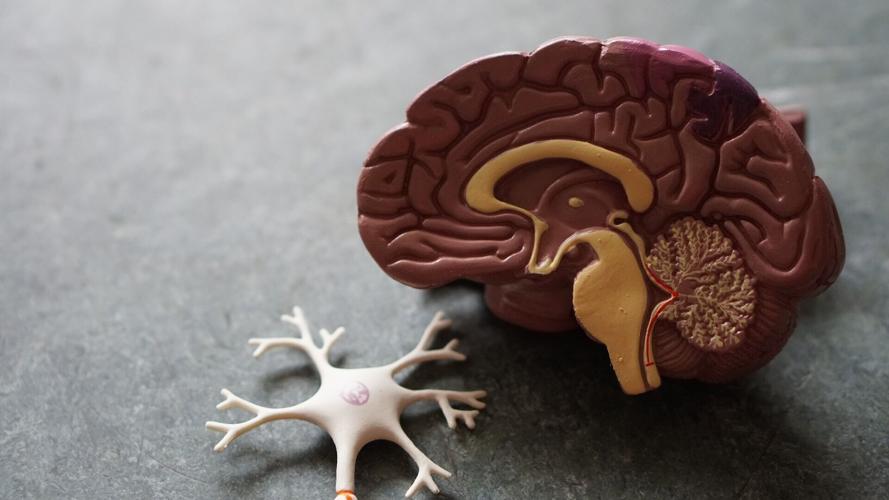






Photo by Robina Weermeijer via Unsplash
By Stephen Beech
Hormone therapy lowers the risk of dementia for women, suggests a new study.
Estrogen-only hormone therapy later in life was associated with a lower risk of developing the neurodegenerative condition, according to the findings.
American researchers examined medical records from 21,462 female participants from two groups who had clinical tests taken while they were still alive.
A total of 728 participants from one data set completed brain scans or biomarker tests while they were living and 2,959 participants from the other data set had autopsies after death, at an average age of 82, to look for signs of Alzheimer's disease.
The participants were followed for around three to five years, starting at an average age of 71.
A total of 1,953 participants took hormone therapy while 19,509 didn't.
Those who used hormone therapy started using it when they were over age 70, on average.
The researchers looked at participants who took estrogen-only therapy, since previous studies had indicated that estrogen plus progestin combination therapy may increase the risk of dementia.

Photo by Marta Branco via pexels
In current standard practice, estrogen-only therapy is prescribed only for those who have undergone a hysterectomy due to the risk of endometrial cancer.
Among the group with autopsy information available, participants who had taken hormone therapy were less likely to have signs of Alzheimer's disease in their brains than those who hadn't taken hormone therapy.






The autopsy assessment used a composite score that measures three hallmarks of Alzheimer's disease.
Of those who had taken hormone therapy, 18% had no signs of Alzheimer's in their brains at autopsy, compared to 10% of those who had not taken the therapy, and 40% of hormone therapy users had all three signs of Alzheimer's disease, compared to 51% of those who had not taken the therapy.
After adjusting for age, education, genetics, race and high blood pressure, the research team found that participants who took hormone therapy had 35% lower odds of signs of Alzheimer's disease at autopsy when compared to those who did not take hormone therapy.
The research team say the study, published in the journal Neurology, does not prove that HRT prevents dementia, it only shows an association.

Mario Heller
But study author Jennifer Bruno said: "While these findings help us better understand the relationship between hormone therapy use and various markers of dementia, more research needs to be done before we can make recommendations to women about their use of these therapies in relation to their brain health.
"This study looked back at women who were using hormone therapy decades ago with the timing and type of use differing from what is current practice for most women today, so the results are informative, but they may not apply to today's standards."
In a separate analysis using biomarker tests performed when women were living, those who used hormone therapy had levels of amyloid biomarkers in their blood and spinal fluid that indicated less amyloid build-up in the brain compared to women who did not take hormone therapy.
Specifically, higher levels of amyloid-beta protein in blood and spinal fluid suggest that less of this protein was being deposited as plaques in the brain.
Use of hormone therapy was also associated with 39% lower odds of receiving a clinical diagnosis of dementia and less risk of showing symptoms of memory problems or decline in functional abilities.
Bruno, of Stanford Medicine, California, noted that participants who used hormone therapy had an average age of 70, which differs from current standard practice of starting hormone therapy usually in the late 40s to early 50s and stopping it before age 60.
She added: "Despite these limitations, our findings provide evidence of an association between use of estrogen-only hormone therapy during later life and better outcomes on dementia and brain health."

(0) comments
Welcome to the discussion.
Log In
Keep it Clean. Please avoid obscene, vulgar, lewd, racist or sexually-oriented language.
PLEASE TURN OFF YOUR CAPS LOCK.
Don't Threaten. Threats of harming another person will not be tolerated.
Be Truthful. Don't knowingly lie about anyone or anything.
Be Nice. No racism, sexism or any sort of -ism that is degrading to another person.
Be Proactive. Use the 'Report' link on each comment to let us know of abusive posts.
Share with Us. We'd love to hear eyewitness accounts, the history behind an article.