

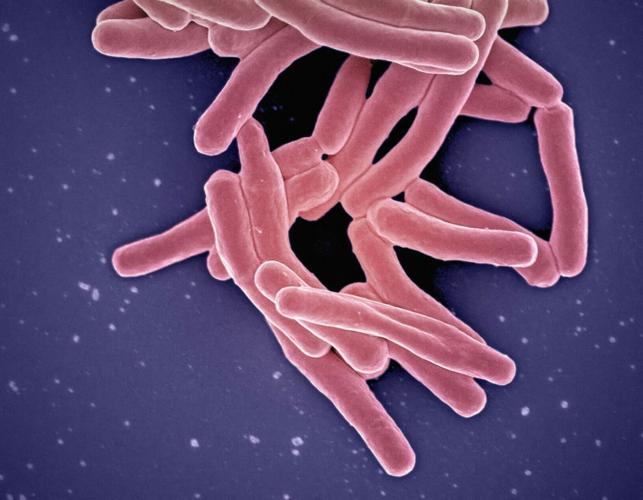

CDC
By Stephen Beech
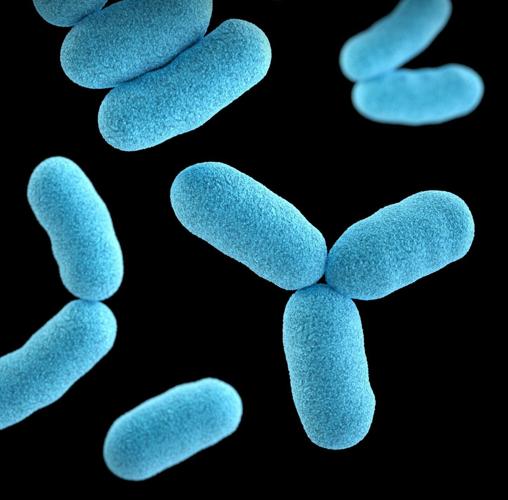
Hospital samples from the 1970s helped reveal how a deadly antibiotic-resistant "superbug" spread around the world.
The germ lurked in hospital corridors for decades — largely unnoticed by the wider public, say scientists.
Now, an international research team, led by scientists from the University of East Anglia (UEA), has uncovered how now what is one of the world's most feared superbugs rose to global dominance.
They pieced together the genetic history of Acinetobacter baumannii — a notoriously stubborn hospital pathogen — using samples dating back 50 years to the 1970s.
The groundbreaking study, published in the journal Microbial Genomics, uncovered how the bacterium evolved and adapted quietly for decades, accumulating small changes that eventually made it resistant to antibiotics.
Lead researcher Benjamin Evans said: "We know that bacteria that cause infections in people can adapt to the antibiotics we use to treat them, rendering the antibiotics ineffective.
"We looked at a specific type of bacterium called Acinetobacter baumannii from the 1970s to the present day.

Mufid Majnun
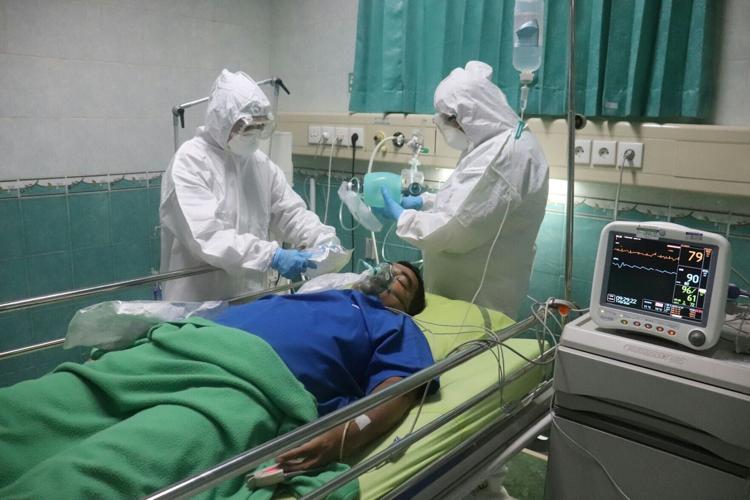
"This bacterium particularly thrives in hospital environments and can cause infections that are extremely difficult to treat - particularly for vulnerable patients.
"Understanding how it evolved into such a formidable threat is really important in stopping its spread. But until now, the genetic events behind this bacterium's success were poorly understood.
"What we found is that it has adapted in waves, with each wave producing bacteria that were better adapted to resist antibiotics than the previous wave.
"Our work provides one of the clearest pictures yet of how antibiotic resistance can accumulate gradually - and then suddenly tip the balance in favor of the pathogen.
"One thing is clear - this superbug didn't just appear. It was decades in the making, and it's still evolving."
Scientists made the breakthrough by combining decades-old bacterial samples with cutting-edge genome sequencing.
The team assembled a unique collection of 226 Acinetobacter baumannii samples dating from the 1970s to the early 2000s.
The historical samples were carefully grown in the lab before their DNA was extracted, purified and sequenced.
To build a global picture, the newly sequenced genomes were merged with more than 1,000 more recent genomes from six continents around the world.
Using high-performance computing, the scientists compared all 1,281 chromosomes and created a detailed evolutionary tree.
They paired this analysis with a comprehensive scan of antimicrobial resistance genes, tracking how these genes appeared, disappeared and reshaped the bacteria over time.

Aconitum



By aligning genetic changes with sample dates and locations, the researchers identified when key resistance traits emerged and how they spread globally.
The combination of historical and modern approaches allowed the researchers to reconstruct the pathogen's evolution over decades, revealing how it became a dominant, drug-resistant threat.
Evans, from UEA's Norwich Medical School, said: "Comparing patterns in the DNA sequence in the genomes allowed us to see how this bacteria has evolved over time, and how it has become more resistant to antibiotics.
"We found that it didn't suddenly emerge as a superbug.
"Instead, it crept into dominance - and by around 2005, it had become the leading lineage of A. baumannii worldwide."
But he explained that what happened around that time is key.
The researchers identified the acquisition of two major genetic elements — including a gene called oxa23, known for conferring resistance to powerful antibiotics — as a "turning point".
That effectively "supercharged" the bacterium's ability to survive treatment. It became much harder to kill.
The team also found that the bacterium in question isn't a single uniform strain.
Instead, it can be divided into at least four distinct groups, each following its own evolutionary path.
Three of the groups appear to show a gradual, step-by-step evolution over time — like a slow genetic arms race against modern medicine.
But a fourth group stands apart.

National Institute of Allergy and Infectious Diseases
Evans said: "This 'group 4' lineage appears to have branched off independently and is now being detected more frequently in recent samples.
"This is worrying because it means that a newer and potentially better adapted variant may already be on the rise."
He added: "This work is really important because understanding how antibiotic-resistant bacteria respond to changes in antibiotic use over time is essential for guiding policies on how we use antibiotics now and in the future.
"This is particularly important for bacteria like Acinetobacter baumannii.
"These bacteria represent a serious threat to healthcare systems worldwide, and we need new approaches to combat them otherwise infections will become untreatable."
The research was supported with funding from the Biotechnology and Biological Sciences Research Council (BBSRC).
Sadhana Sharma, UKRI-Biotechnology and Biological Sciences Anti-Microbial Resistance lead, said: "This study shows how a major hospital superbug evolved over decades, quietly adapting into distinct, drug-resistant groups and spreading globally.
"It underlines how antimicrobial resistance builds over time, and why understanding these changes is critical to staying ahead."
Sharma added: "It also highlights the importance of international collaboration, and sustained BBSRC investment in fundamental bioscience to protect health, advance knowledge, improve lives and drive growth."

(0) comments
Welcome to the discussion.
Log In
Keep it Clean. Please avoid obscene, vulgar, lewd, racist or sexually-oriented language.
PLEASE TURN OFF YOUR CAPS LOCK.
Don't Threaten. Threats of harming another person will not be tolerated.
Be Truthful. Don't knowingly lie about anyone or anything.
Be Nice. No racism, sexism or any sort of -ism that is degrading to another person.
Be Proactive. Use the 'Report' link on each comment to let us know of abusive posts.
Share with Us. We'd love to hear eyewitness accounts, the history behind an article.