



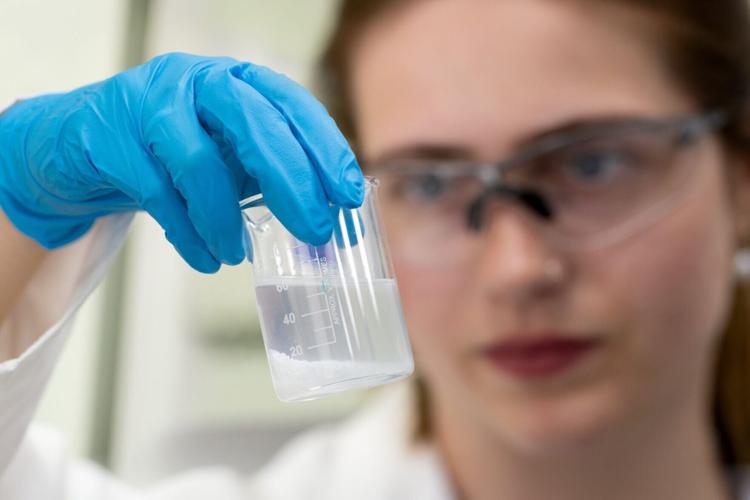
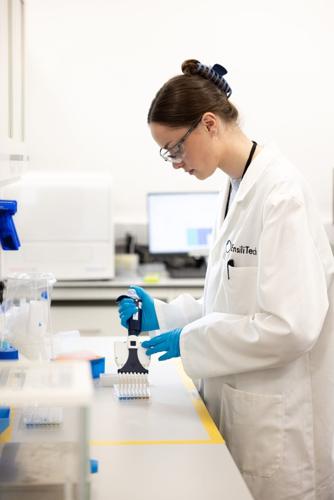

A laboratory in the UK working to develop a vaccine against hantavirus. (Anthony Brown / EnsiliTech via SWNS)
By Filipa Gaspar
Pictures show a laboratory in the UK working to develop a vaccine against hantavirus - suspected of killing three people on a cruise ship.
The team of scientists from the University of Bath have developed a new antigen against the Hantaan disease - a type of hantavirus.
Hantaviruses are a group of viruses carried by rodents such as mice and rats, transmitted by their droppings and urine.
Transmission of hantavirus between people is rare, and both the WHO and the UK Health Security Agency have said the risk to the public is low.
There is currently no vaccine or specific antiviral treatment for hantavirus infections.

Scientists from the University of Bath working to develop a vaccine against hantavirus. (Anthony Brown / EnsiliTech via SWNS)
Treatment is supportive and based on symptoms, such as hospital care and respiratory support, said the UK Health Security Agency (UKHSA).
Many vaccines can only be transported at freezing temperatures, but Asel Sartbaeva and the team at EnsiliTech, a Bristol-based startup, which spun out from the University of Bath in July 2022, who started work on the current vaccine prior to the MV Hondius outbreak, want to change that with a method called ensilication.
EnsiliTech's ensilicated mRNA platform removes the need for cold storage and has the potential to revolutionize vaccine distribution.






Sartbaeva, Chemistry researcher at the University and co-founder Ensilitech said: "Currently there is no effective vaccine against Hanta viruses, leaving large populations in Southeast Asia, Africa and South America vulnerable to diseases that are originated and transmitted by rodents.

The team of scientists from the University of Bath have developed a new antigen against the Hantaan disease - a type of hantavirus. (Anthony Brown / EnsiliTech via SWNS)
"Our team has developed a new antigen against Hantaan disease, from the Hanta virus group.
"This is a completely new vaccine that has now been tested in the laboratory and in animal models, indicating excellent immune response.
"While more work needs to be done to bring this vaccine to public (clinical trials and approvals) this is a very promising development of a completely new and needed vaccine."
Hantaviruses are present throughout the world and they can be found in some areas of Europe, Africa and Asia.

Hantaviruses are a group of viruses carried by rodents such as mice and rats, transmitted by their droppings and urine. (Anthony Brown / EnsiliTech via SWNS)
Where they are present, they can cause a range of diseases from mild, flu-like illness to severe respiratory illness.
The MV Hondius cruise ship set sail from Argentina last month and three people have died following an outbreak of the Andes hantavirus strain.
The World Health Organization has said it is not the start of a pandemic, but the origin of the outbreak is still unknown and it is not known whether other people have been infected.
In its latest update, the WHO said eight cases of hantavirus - three confirmed and five suspected - have so far been identified in people who were on the ship.

(0) comments
Welcome to the discussion.
Log In
Keep it Clean. Please avoid obscene, vulgar, lewd, racist or sexually-oriented language.
PLEASE TURN OFF YOUR CAPS LOCK.
Don't Threaten. Threats of harming another person will not be tolerated.
Be Truthful. Don't knowingly lie about anyone or anything.
Be Nice. No racism, sexism or any sort of -ism that is degrading to another person.
Be Proactive. Use the 'Report' link on each comment to let us know of abusive posts.
Share with Us. We'd love to hear eyewitness accounts, the history behind an article.