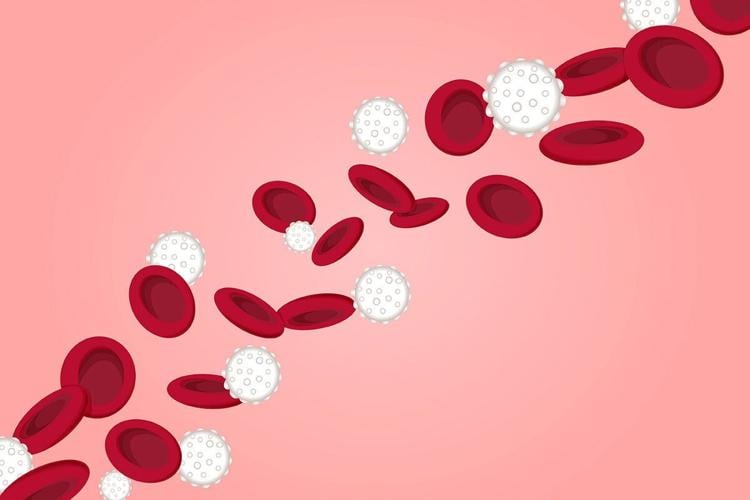






(Nature Medicine via SWNS)
By Stephen Beech
Genetically engineered stem cell transplants could be used to treat aggressive blood cancers — without toxic side effects.
Stem cell transplantation is often the only potential cure for some highly aggressive types of blood cancer such as leukemia, say scientists.
But even after a transplant, the cancers often return.
Now, a clinical trial in the United States has shown that a stem cell transplant in which donor cells have been genetically engineered to remove a particular protein helps prevent toxic side effects and potentially improves the effectiveness of therapies given after a transplant to help prevent cancer recurrence.
The study, published in the journal Nature Medicine, was conducted at 15 sites in the U.S. and Canada.
Study corresponding author John DiPersio says the gene-editing technology could help address a longstanding frustration in the field.

(Photo by Roger Brown via Pexels)
CAR-T cell therapy — an immunotherapy that effectively treats some aggressive blood cancers — has not worked against all blood cancers, including acute myeloid leukemia (AML) and myelodysplastic syndrome (MDS).
DiPersio, of Washington University in St. Louis, says myeloid cancers such as AML and MDS are tricky to treat with CAR-T cells because the same proteins on cancer cells that the immunotherapy homes in on for destruction are also present on healthy myeloid cells, including therapeutic donor stem cells.






As such, the anti-cancer therapy carries a high risk of toxicity because it also destroys healthy blood stem cells, which can trigger a dangerous inflammatory cascade.
DiPersio says the effect also could dilute the effectiveness of the anti-cancer therapy because so many of the CAR-T cells are attacking the wrong targets, leaving many cancer cells untouched.
For the clinical trial, patients with AML and MDS received donor stem cells that had a target protein, called CD33, removed, in hopes that immunotherapy targeted against CD33 would kill the cancer and ignore the healthy cells.

(Photo by kaboompics via Pexels)
DiPersio said: "We are encouraged by the results of this study showing that a CD33-deleted stem cell transplant looks very similar to the outcomes of standard stem cell transplantation.
"In the future, we are hopeful we will be able to combine this with CD33-targeted immunotherapies, such as CAR-T cells, and improve treatment options for patients with these very aggressive blood cancers."
DiPersio and his colleagues also published a single case study of a patient with high-risk AML who received a CD33-deleted stem cell transplant and later, upon relapse after the transplant, received a CD33-targeted CAR-T cell therapy.
It used T cells from the same donor who provided the stem cell transplant, according to the research published in the journal JCO Precision Oncology.
The patient, who had one of the most aggressive forms of AML, achieved complete remission and remains cancer free over one year after receiving the CAR-T cell therapy.
The patient also had normal blood cell production return with all blood cells lacking CD33, providing evidence that the genetically engineered donor cells had established themselves in the bone marrow.
DiPersio said the results lay the groundwork for developing paired CD33-deleted stem cell transplant and CD33-targeted immunotherapy treatments that avoid destruction of healthy donor cells.

(0) comments
Welcome to the discussion.
Log In
Keep it Clean. Please avoid obscene, vulgar, lewd, racist or sexually-oriented language.
PLEASE TURN OFF YOUR CAPS LOCK.
Don't Threaten. Threats of harming another person will not be tolerated.
Be Truthful. Don't knowingly lie about anyone or anything.
Be Nice. No racism, sexism or any sort of -ism that is degrading to another person.
Be Proactive. Use the 'Report' link on each comment to let us know of abusive posts.
Share with Us. We'd love to hear eyewitness accounts, the history behind an article.