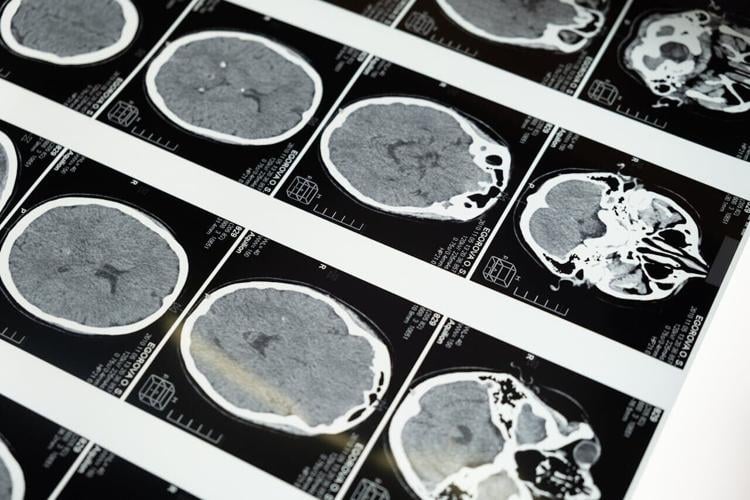



Photo by cottonbro studio via Pexels
By Stephen Beech
Dementia could be identified earlier after AI-powered brain scans provided fresh insights into how the debilitating condition develops.
The scans have shown for the first time how patterns of neurodegeneration in specific brain regions relate to changes in cognitive function as people grow older.
The American research team believes that moving beyond a single measure of "brain age" represents an "important advance" for neuroscience - and could lead to better treatments for dementia patients.
Scientists at the University of Southern California (USC) developed the new approach that uses artificial intelligence (AI) to generate detailed maps that highlight differences in how distinct parts of the brain age.
The research team, led by Andrei Irimia, used magnetic resonance imaging (MRI) from nearly 15,000 cognitively healthy people to train a deep learning AI model.
The data provided a baseline against which the model could measure local brain age, or how old specific regions of the brain appear.
When the AI model was then used to analyse MRI images from people with mild cognitive impairment and Alzheimer's disease, it revealed "distinct" patterns of accelerated aging in brain regions known to be affected early in neurodegeneration.
While most studies of brain age measure the phenomenon using a single number, Irimia explained that the new model provides a "much richer" picture of typical aging and neurodegeneration.

(SWNS)
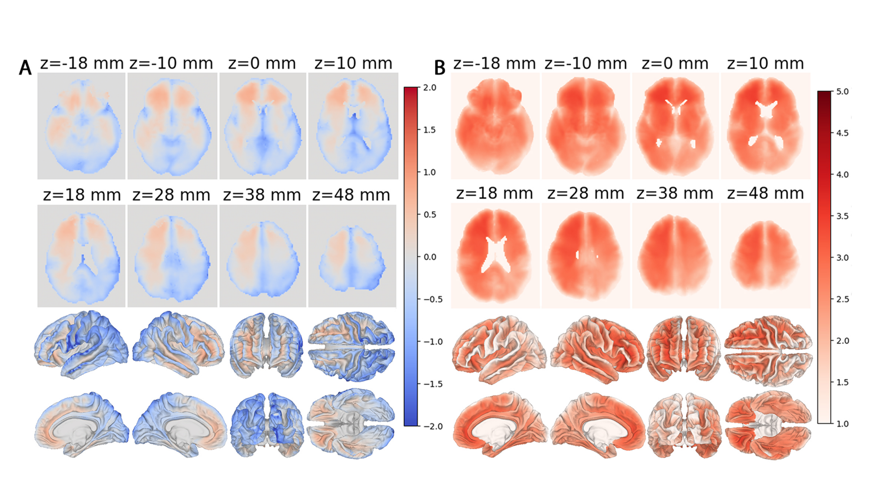
Rather than assigning a single "brain age" to an individual, the approach generates a detailed map showing how old different parts of the brain appear relative to what is typical for someone of the same chronological age.
Irimia said: "Not all brain regions age at the same rate.
"Some areas appear to be more resilient, while others are more vulnerable to aging and disease.
"By measuring local brain aging, we can identify where the brain is aging faster than expected and how those changes relate to cognitive function."
The research, published in the journal Proceedings of the National Academy of Sciences (PNAS), builds on previous efforts to estimate "brain age" - an emerging neuroimaging biomarker that compares a person's brain structure to patterns seen in healthy people across the lifespan.
Irimia says traditional methods usually reduce the brain to a single age estimate, which can obscure important regional differences.
The new approach instead measures local brain age at the voxel level - the three-dimensional units that make up an MRI scan - producing a much more detailed picture of structural aging throughout the brain.





Irimia said: "This more nuanced understanding of how the brain ages could pave the way for earlier identification of dementia, a better understanding of what factors affect risk and new ideas for treatment approaches."
To develop the model, the research team trained a deep-learning neural network using MRI scans from 14,748 cognitively normal adults ages 19 to 100, including some from the UK.
The team then tested the model using MRI scans from more than 1,900 additional participants in the Alzheimer's Disease Neuroimaging Initiative, including cognitively normal adults, people with mild cognitive impairment and people with Alzheimer's disease.
Across healthy adults, the model consistently found that the frontal and temporal lobes - regions involved in decision-making, memory and other higher cognitive functions - appeared biologically older than the parietal and occipital regions, which are involved in spatial awareness and sensory processing functions.
The researchers also found that the brain's right hemisphere tended to show slightly more advanced aging than the left, a pattern that persisted regardless of whether participants were right- or left-handed.

Photo by Yeye via Pexels
As cognitive impairment progressed, the differences became even more pronounced.
Compared with cognitively normal adults, participants with mild cognitive impairment or Alzheimer's disease showed "significantly older" local brain ages in structures that are among the first affected by Alzheimer's - including the hippocampus, amygdala and several deep brain regions involved in memory and cognitive processing.
The research team also found that older local brain age was associated with poorer performance on cognitive assessments, strengthening the link between structural brain changes and real-world function.
The strongest relationships appeared in people with Alzheimer's disease, suggesting that regional brain aging may become increasingly informative as neurodegeneration advances.
Because the model produces anatomically detailed maps, it could eventually help scientists better understand why some people experience faster decline in specific cognitive abilities than others.
The research team say the approach may also prove useful for tracking disease progression or evaluating whether experimental therapies are slowing degeneration in targeted brain regions.
Although the findings are promising, Irimia says that the method remains a research tool.
The model was trained primarily on research-quality MRI data and will require additional validation using more diverse clinical datasets before it can be adopted in routine patient care.
But the researchers believe that moving beyond a single measure of brain age represents an important step forward.
Irimia said: "Brain aging isn't uniform.
"By understanding how individual regions age, as well as how those patterns differ from person to person, we're moving toward a much more precise understanding of healthy aging and neurodegenerative disease."
He added: "Ultimately, that could help us identify people at risk earlier and develop more personalized approaches to preserving brain health."

(0) comments
Welcome to the discussion.
Log In
Keep it Clean. Please avoid obscene, vulgar, lewd, racist or sexually-oriented language.
PLEASE TURN OFF YOUR CAPS LOCK.
Don't Threaten. Threats of harming another person will not be tolerated.
Be Truthful. Don't knowingly lie about anyone or anything.
Be Nice. No racism, sexism or any sort of -ism that is degrading to another person.
Be Proactive. Use the 'Report' link on each comment to let us know of abusive posts.
Share with Us. We'd love to hear eyewitness accounts, the history behind an article.